Photosynthesis is one of the most important biological processes on Earth, allowing plants to produce their own food and sustain life. At the heart of this process lies a green pigment called chlorophyll. Chlorophyll plays a crucial role by absorbing sunlight and converting it into chemical energy, which plants use to grow and survive.
What is Chlorophyll?
Chlorophyll is a natural pigment found in the chloroplasts of plant cells. It gives plants their green color and is essential for photosynthesis. There are different types of chlorophyll, mainly chlorophyll-a and chlorophyll-b, both of which help capture light energy from the sun.
This pigment is specifically designed to absorb light in the blue and red wavelengths while reflecting green light, which is why leaves appear green to our eyes.
The Role of Sunlight in Photosynthesis
Sunlight is the primary source of energy for photosynthesis. Without sunlight, plants cannot produce food. Chlorophyll captures this sunlight and initiates the process of converting light energy into chemical energy.
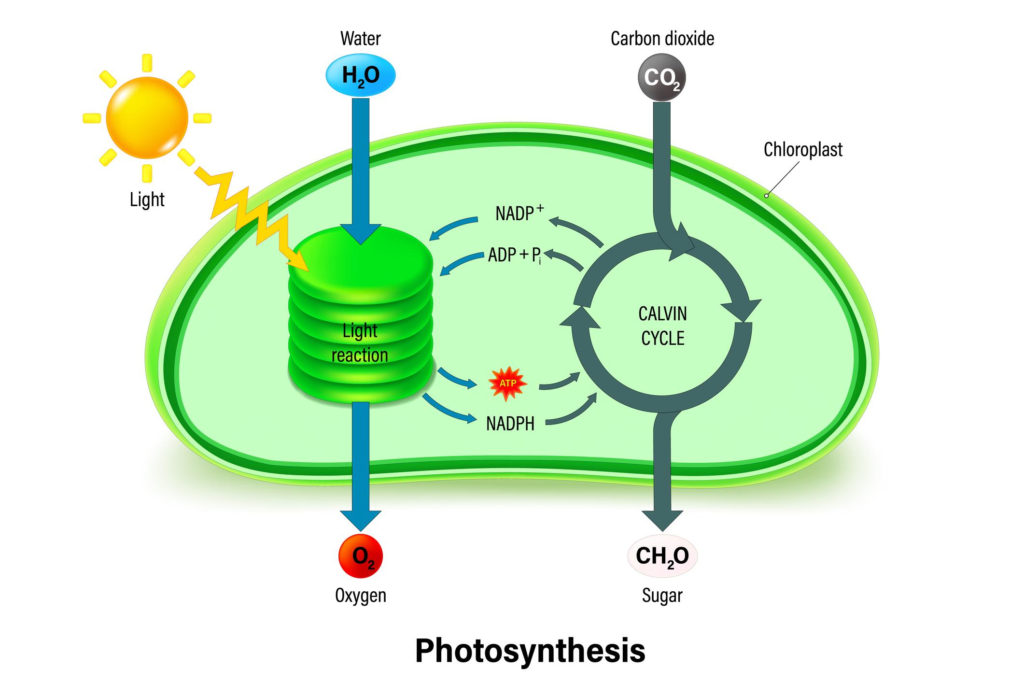
The overall process of photosynthesis can be summarized as:
- Plants take in carbon dioxide from the air
- Roots absorb water from the soil
- Chlorophyll absorbs sunlight
- These components are used to produce glucose (food) and oxygen
This process not only provides energy for plants but also releases oxygen into the atmosphere, which is essential for all living organisms.
How Chlorophyll Absorbs Sunlight
Chlorophyll molecules are located in the thylakoid membranes inside chloroplasts. When sunlight strikes these molecules, electrons within chlorophyll become excited. This excitation triggers a series of chemical reactions known as the light-dependent reactions.
During these reactions:
- Light energy is absorbed by chlorophyll
- Electrons gain energy and move to a higher energy level
- This energy is used to produce ATP and NADPH (energy carriers)
These energy carriers are then used in the next stage of photosynthesis to produce glucose.
Light-Dependent and Light-Independent Reactions
Photosynthesis occurs in two main stages:
1. Light-Dependent Reactions
These reactions require sunlight and take place in the thylakoid membranes. Chlorophyll plays a direct role here by absorbing light and converting it into chemical energy.
2. Light-Independent Reactions (Calvin Cycle)
These reactions occur in the stroma of the chloroplast and do not require light directly. Instead, they use the energy produced in the first stage to convert carbon dioxide into glucose.
Importance of Chlorophyll in Plants
Chlorophyll is essential for plant survival. Without it, plants would not be able to produce food, and the entire ecosystem would collapse. Its importance includes:
- Enabling plants to make their own food
- Supporting growth and development
- Producing oxygen as a byproduct
- Maintaining the balance of gases in the atmosphere
Chlorophyll is not just important for plants but for all life on Earth, as it forms the base of the food chain.
Factors Affecting Chlorophyll Function
Several factors can influence how effectively chlorophyll absorbs sunlight:
- Light intensity: More light increases the rate of photosynthesis up to a certain point
- Water availability: Lack of water can slow down the process
- Carbon dioxide levels: Higher CO₂ levels can enhance photosynthesis
- Temperature: Extreme temperatures can affect enzyme activity
If any of these factors are not optimal, the efficiency of photosynthesis decreases.
Why Leaves Change Color
During autumn, leaves often change color because chlorophyll breaks down due to reduced sunlight. As the green pigment fades, other pigments like carotenoids (yellow and orange) become visible. This change highlights the importance of chlorophyll in maintaining the green color and photosynthetic activity of plants.
Chlorophyll is a vital component of photosynthesis, acting as the primary absorber of sunlight. By capturing light energy and converting it into chemical energy, chlorophyll enables plants to produce food and sustain life on Earth. Without this remarkable pigment, the balance of nature would be disrupted, and life as we know it would not exist.
Understanding how chlorophyll absorbs sunlight not only helps us appreciate the complexity of plants but also highlights the importance of preserving our natural environment.
For More Information and Updates, Connect With Us
- Name Survi kumari
- Phone Number: +91-7488713635
- Email ID: survi.eeplclassroom@gmail.com
- Our Platforms:
- Digilearn Cloud
- EEPL Test
- Live Emancipation
- Follow Us on Social Media:
- Instagram – EEPL Classroom
- Facebook – EEPL Classroom
Stay connected and keep learning with EEPL Classroom!

Leave a Reply