Category: Blog

Your blog category

  • Newton’s First Law Explains Inertia

    Newton’s First Law of Motion is one of the fundamental principles of physics that explains the concept of inertia. This law, often called the Law of Inertia, describes how objects behave when no external force acts on them. It forms the foundation for understanding motion and is widely used in everyday life and scientific applications.

    What is Newton’s First Law?

    Isaac Newton stated his First Law of Motion as:

    “An object at rest stays at rest, and an object in motion continues in motion with the same speed and direction unless acted upon by an external force.”

    In simple terms, objects do not change their state of motion on their own. They require an external force to start moving, stop moving, or change direction.

    Understanding Inertia

    Inertia is the property of a body that resists any change in its state of rest or motion. It means that an object will continue doing what it is already doing unless something forces it to change.

    There are three types of inertia:

    1. Inertia of Rest

    An object at rest tends to remain at rest.
    Example: A book lying on a table will not move unless someone pushes it.

    2. Inertia of Motion

    An object in motion continues to move with the same velocity unless acted upon by an external force.
    Example: A moving bicycle will keep rolling unless brakes are applied.

    3. Inertia of Direction

    An object moving in a particular direction tends to continue in that direction.
    Example: A ball thrown forward keeps moving in a straight path unless forces like gravity or air resistance act on it.

    Everyday Examples of Inertia

    Newton’s First Law can be observed in many daily situations:

    1. Sudden Stop in a Bus

    When a moving bus stops suddenly, passengers tend to fall forward. This happens because their bodies were in motion and want to continue moving due to inertia.

    2. Dusting a Carpet

    When you beat a carpet, dust particles come out. The dust was at rest and tends to remain at rest while the carpet moves, causing the dust to separate.

    3. Coin and Card Experiment

    If you place a coin on a card over a glass and flick the card quickly, the coin falls straight into the glass. The coin remains at rest due to inertia while the card moves away.

    4. Use of Seatbelts

    Seatbelts in cars prevent passengers from moving forward during sudden braking. They counteract inertia and ensure safety.

    Why is Inertia Important?

    Inertia is an essential concept because it helps explain how objects behave in the absence of forces. Its importance includes:

    • Understanding motion and rest
    • Designing safety systems like seatbelts and airbags
    • Explaining natural phenomena
    • Forming the basis for advanced physics concepts

    Without the concept of inertia, it would be difficult to predict how objects move in the real world.

    Factors Affecting Inertia

    The amount of inertia an object has depends on its mass:

    • More mass = More inertia
    • Less mass = Less inertia

    For example, a heavy truck is harder to stop than a bicycle because it has greater inertia.

    External Forces and Change in Motion

    According to Newton’s First Law, a change in motion only occurs when an external force acts on an object. These forces can include:

    • Push or pull
    • Friction
    • Gravity
    • Air resistance

    Without these forces, objects would continue in their current state indefinitely.

    Applications in Real Life

    The concept of inertia is widely used in practical applications:

    • Vehicle safety systems (seatbelts, airbags)
    • Sports (ball movement, running)
    • Engineering (designing machines and structures)
    • Space science (motion of planets and satellites)

    In space, where there is very little friction, objects continue moving for long distances due to inertia.

    Newton’s First Law of Motion clearly explains the concept of inertia—the tendency of objects to resist changes in their state of motion. Whether an object is at rest or in motion, it will continue in that state unless an external force acts upon it.

    From everyday experiences like riding a bus to advanced scientific applications, inertia plays a crucial role in understanding how the physical world works. By studying this law, we gain deeper insight into motion, forces, and the behavior of objects around us.

    For More Information and Updates, Connect With Us

    Stay connected and keep learning with EEPL Classroom!

  • Understanding Reduction: Addition and Removal in Chemistry

    Reduction is a fundamental concept in chemistry, especially in the study of chemical reactions. It is commonly defined as the addition of hydrogen, removal of oxygen, or gain of electrons from a substance. Understanding reduction is essential because it is always paired with another process called oxidation. Together, they form what is known as a redox (reduction-oxidation) reaction.

    What is Reduction?

    Reduction refers to a chemical process in which a substance undergoes a change that leads to a decrease in its oxidation state. In simple terms, reduction can be understood in three main ways:

    • Addition of hydrogen to a substance
    • Removal of oxygen from a substance
    • Gain of electrons

    These definitions are interconnected and help explain how substances transform during chemical reactions.

    Reduction as Addition of Hydrogen

    One of the easiest ways to understand reduction is by looking at the addition of hydrogen. When a substance gains hydrogen atoms, it is said to be reduced.

    For example, consider a reaction where hydrogen is added to a compound:

    • A substance combines with hydrogen
    • Its chemical structure changes
    • It becomes more “reduced”

    This type of reaction is commonly seen in organic chemistry, especially in processes like hydrogenation.

    Reduction as Removal of Oxygen

    Another way to define reduction is the removal of oxygen from a substance. If a compound loses oxygen atoms during a reaction, it is undergoing reduction.

    A simple example:

    • Metal oxide → Metal + Oxygen

    Here, the metal oxide loses oxygen and becomes a pure metal. This process is widely used in industries, such as extracting metals from their ores.

    Reduction as Gain of Electrons

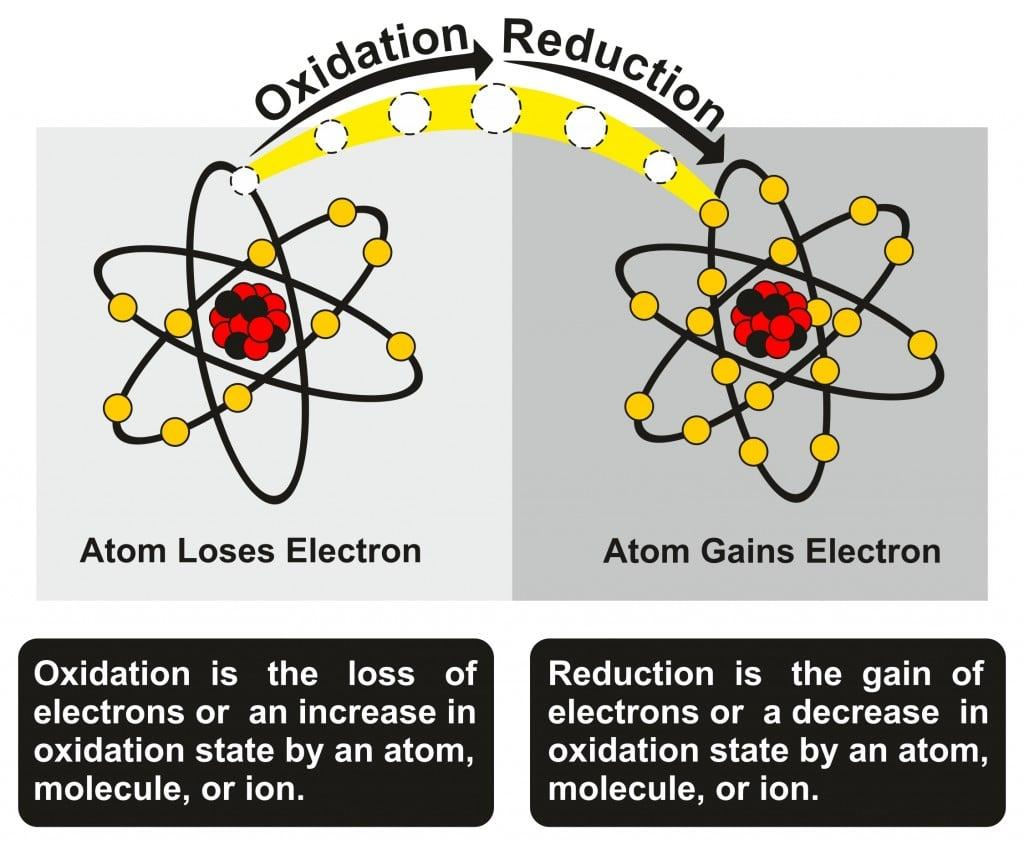
    In modern chemistry, reduction is most accurately defined as the gain of electrons. When a substance gains electrons, its oxidation state decreases, meaning it is reduced.

    For example:

    • Cu²⁺ + 2e⁻ → Cu

    In this reaction, copper ions gain electrons and are reduced to metallic copper.

    Relationship Between Oxidation and Reduction

    Reduction cannot occur alone. It always happens alongside oxidation. While one substance is reduced, another is oxidized.

    • Oxidation: Loss of electrons, addition of oxygen, or removal of hydrogen
    • Reduction: Gain of electrons, addition of hydrogen, or removal of oxygen

    This simultaneous process is called a redox reaction.

    Everyday Examples of Reduction

    Reduction is not just a theoretical concept; it occurs in everyday life and industrial processes:

    1. Rust Removal

    When rust (iron oxide) is converted back into iron, oxygen is removed. This is a reduction process.

    2. Photosynthesis

    Plants reduce carbon dioxide into glucose by adding hydrogen during the process.

    3. Metal Extraction

    In metallurgy, metals like iron are extracted from their ores by removing oxygen.

    4. Fuel Combustion

    In some stages of fuel reactions, reduction processes help in energy production.

    Importance of Reduction

    Reduction plays a vital role in both natural and industrial processes:

    • It helps in the production of metals
    • It is essential for energy transfer in cells
    • It is involved in biochemical reactions like respiration and photosynthesis
    • It supports many industrial chemical processes

    Without reduction, many essential reactions in nature and technology would not occur.

    Easy Way to Remember Reduction

    A popular way to remember reduction is:

    “OIL RIG”

    • Oxidation Is Loss (of electrons)
    • Reduction Is Gain (of electrons)

    You can also remember:

    • Reduction = Gain of electrons
    • Reduction = Addition of hydrogen
    • Reduction = Removal of oxygen

    Reduction is a key concept in chemistry that describes how substances gain electrons, add hydrogen, or lose oxygen during reactions. It is always linked with oxidation, forming redox reactions that drive countless natural and industrial processes.

    By understanding reduction, students can better grasp how chemical reactions work and how they impact the world around us. Whether it’s extracting metals, producing energy, or supporting life processes, reduction plays a crucial role in maintaining the balance of chemical systems.

    For More Information and Updates, Connect With Us

    Stay connected and keep learning with EEPL Classroom!
  • Chlorophyll Absorbs Sunlight for Photosynthesis

    Photosynthesis is one of the most important biological processes on Earth, allowing plants to produce their own food and sustain life. At the heart of this process lies a green pigment called chlorophyll. Chlorophyll plays a crucial role by absorbing sunlight and converting it into chemical energy, which plants use to grow and survive.

    What is Chlorophyll?

    Chlorophyll is a natural pigment found in the chloroplasts of plant cells. It gives plants their green color and is essential for photosynthesis. There are different types of chlorophyll, mainly chlorophyll-a and chlorophyll-b, both of which help capture light energy from the sun.

    This pigment is specifically designed to absorb light in the blue and red wavelengths while reflecting green light, which is why leaves appear green to our eyes.

    The Role of Sunlight in Photosynthesis

    Sunlight is the primary source of energy for photosynthesis. Without sunlight, plants cannot produce food. Chlorophyll captures this sunlight and initiates the process of converting light energy into chemical energy.

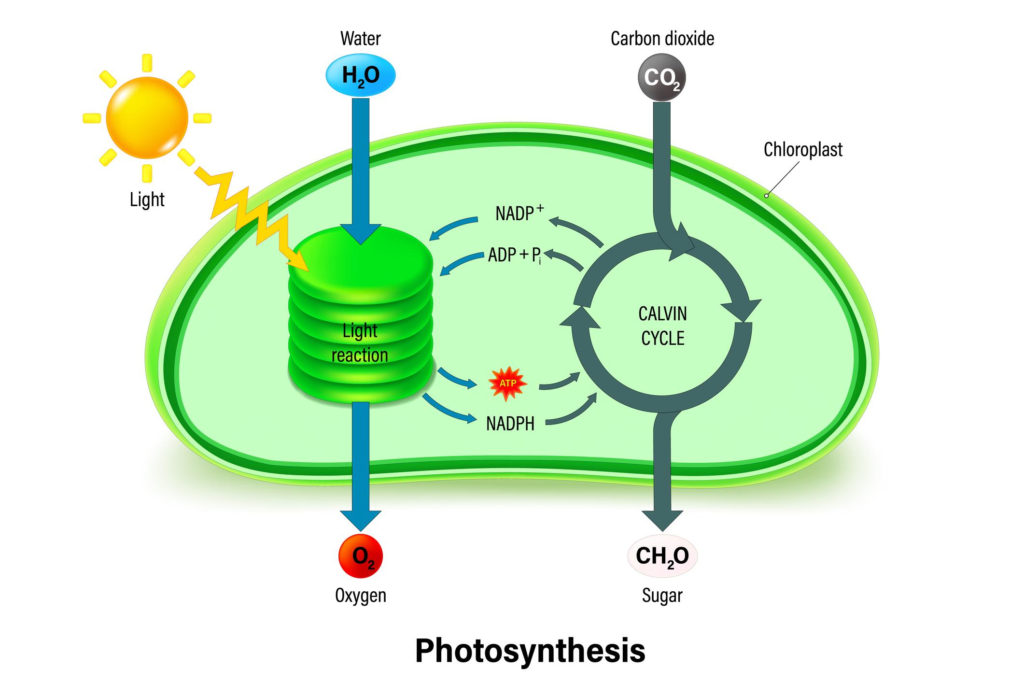
    The overall process of photosynthesis can be summarized as:

    • Plants take in carbon dioxide from the air
    • Roots absorb water from the soil
    • Chlorophyll absorbs sunlight
    • These components are used to produce glucose (food) and oxygen

    This process not only provides energy for plants but also releases oxygen into the atmosphere, which is essential for all living organisms.

    How Chlorophyll Absorbs Sunlight

    Chlorophyll molecules are located in the thylakoid membranes inside chloroplasts. When sunlight strikes these molecules, electrons within chlorophyll become excited. This excitation triggers a series of chemical reactions known as the light-dependent reactions.

    During these reactions:

    • Light energy is absorbed by chlorophyll
    • Electrons gain energy and move to a higher energy level
    • This energy is used to produce ATP and NADPH (energy carriers)

    These energy carriers are then used in the next stage of photosynthesis to produce glucose.

    Light-Dependent and Light-Independent Reactions

    Photosynthesis occurs in two main stages:

    1. Light-Dependent Reactions

    These reactions require sunlight and take place in the thylakoid membranes. Chlorophyll plays a direct role here by absorbing light and converting it into chemical energy.

    2. Light-Independent Reactions (Calvin Cycle)

    These reactions occur in the stroma of the chloroplast and do not require light directly. Instead, they use the energy produced in the first stage to convert carbon dioxide into glucose.

    Importance of Chlorophyll in Plants

    Chlorophyll is essential for plant survival. Without it, plants would not be able to produce food, and the entire ecosystem would collapse. Its importance includes:

    • Enabling plants to make their own food
    • Supporting growth and development
    • Producing oxygen as a byproduct
    • Maintaining the balance of gases in the atmosphere

    Chlorophyll is not just important for plants but for all life on Earth, as it forms the base of the food chain.

    Factors Affecting Chlorophyll Function

    Several factors can influence how effectively chlorophyll absorbs sunlight:

    • Light intensity: More light increases the rate of photosynthesis up to a certain point
    • Water availability: Lack of water can slow down the process
    • Carbon dioxide levels: Higher CO₂ levels can enhance photosynthesis
    • Temperature: Extreme temperatures can affect enzyme activity

    If any of these factors are not optimal, the efficiency of photosynthesis decreases.

    Why Leaves Change Color

    During autumn, leaves often change color because chlorophyll breaks down due to reduced sunlight. As the green pigment fades, other pigments like carotenoids (yellow and orange) become visible. This change highlights the importance of chlorophyll in maintaining the green color and photosynthetic activity of plants.

    Chlorophyll is a vital component of photosynthesis, acting as the primary absorber of sunlight. By capturing light energy and converting it into chemical energy, chlorophyll enables plants to produce food and sustain life on Earth. Without this remarkable pigment, the balance of nature would be disrupted, and life as we know it would not exist.

    Understanding how chlorophyll absorbs sunlight not only helps us appreciate the complexity of plants but also highlights the importance of preserving our natural environment.

    For More Information and Updates, Connect With Us

    Stay connected and keep learning with EEPL Classroom!
  • Importance of IT Courses for Skill Development

    In today’s fast-paced digital world, technology is shaping every aspect of our lives—from communication and education to business and entertainment. As industries continue to evolve, the demand for skilled professionals in the IT sector is growing rapidly. This makes IT courses an essential part of skill development for students, job seekers, and working professionals. Learning IT skills not only enhances your knowledge but also prepares you for a competitive and technology-driven future.

    What Are IT Courses?

    IT (Information Technology) courses are programs designed to teach technical skills related to computers, software, networking, and data management. These courses can range from basic computer knowledge to advanced topics like programming, cybersecurity, and artificial intelligence. Popular IT courses include web development, data science, cloud computing, and programming using languages like Python and Java.

    Why IT Courses Are Important

    IT courses play a crucial role in building practical and job-ready skills. In a world where most industries rely on technology, having IT knowledge is no longer optional—it is a necessity.

    1. Enhances Employability

    Employers today look for candidates who have technical skills along with academic qualifications. IT courses help individuals gain hands-on experience, making them more attractive to employers.

    2. Builds Practical Skills

    Unlike traditional learning, IT courses focus on practical training. Students learn how to solve real-world problems using technology, which prepares them for industry challenges.

    3. Opens Multiple Career Opportunities

    IT skills can lead to various career paths such as software development, web development, data analysis, networking, and cybersecurity. This flexibility allows individuals to choose a field based on their interests.

    4. Keeps You Updated with Technology

    Technology is constantly evolving, and IT courses help you stay updated with the latest tools and trends. This is essential for long-term career growth.

    Key IT Skills You Can Learn

    IT courses cover a wide range of skills that are highly valuable in today’s job market.

    Programming Skills

    Learning programming languages like Python and Java helps in building software, applications, and websites.

    Web Development

    Skills in HTML, CSS, and JavaScript allow you to create and design websites.

    Data Management

    Understanding databases and tools helps in organizing and analyzing data effectively.

    Networking

    Networking skills are important for managing computer systems and communication networks.

    Cybersecurity

    With increasing cyber threats, learning how to protect data and systems is becoming essential.

    Real-World Applications of IT Skills

    IT skills are used in almost every industry today:

    • Healthcare: Managing patient data and medical systems
    • Finance: Online banking and fraud detection
    • Education: E-learning platforms and digital classrooms
    • Business: Managing operations and customer data
    • Entertainment: Streaming platforms and gaming

    These applications show how IT skills are integrated into everyday life.

    Benefits of Learning IT Courses

    • High demand in the job market
    • Opportunities for freelancing and remote work
    • Better salary prospects
    • Continuous learning and growth
    • Ability to build your own projects or startups

    IT skills not only provide job opportunities but also encourage innovation and entrepreneurship.

    Challenges in Learning IT Skills

    While IT courses are beneficial, learners may face some challenges:

    • Understanding complex concepts
    • Keeping up with rapidly changing technology
    • Practicing consistently
    • Choosing the right course

    However, with dedication and the right guidance, these challenges can be overcome.

    Tips for Effective Skill Development

    • Choose a course based on your interest
    • Practice regularly and build projects
    • Learn from online resources and communities
    • Stay updated with new technologies
    • Focus on both technical and soft skills

    Consistency and practice are key to mastering IT skills.

    Future of IT Skills

    The future of IT is bright, with emerging technologies like artificial intelligence, machine learning, and cloud computing creating new opportunities. Professionals with strong IT skills will continue to be in high demand across industries.

    Learning IT today means preparing for the future. It not only helps in career growth but also enables individuals to adapt to technological changes.

    IT courses are essential for skill development in the modern world. They provide practical knowledge, improve employability, and open doors to a wide range of career opportunities. Whether you are a student or a professional, investing time in learning IT skills can significantly enhance your future prospects.

    By choosing the right course and practicing consistently, you can build a strong foundation in technology and achieve success in your career. In a world driven by innovation, IT skills are the key to staying ahead and making a meaningful impact.

    For More Information and Updates, Connect With Us

    Stay connected and keep learning with EEPL Classroom!

  • ADCA Course at EEPL Classroom: Build Your IT Skills

    In today’s digital age, computer knowledge is no longer optional—it is essential. Whether you are a student, job seeker, or working professional, having strong computer skills can significantly improve your career opportunities. One of the most popular courses for building a solid IT foundation is the ADCA (Advanced Diploma in Computer Applications). Learning ADCA from a reputed institute like EEPL Classroom can help you gain practical skills and industry knowledge needed in today’s competitive world.

    What is ADCA?

    ADCA stands for Advanced Diploma in Computer Applications. It is a comprehensive course designed to provide in-depth knowledge of computer fundamentals, software applications, and basic programming. The course is ideal for beginners who want to develop technical skills and become job-ready in a short period.

    ADCA covers a wide range of topics, making it a versatile course suitable for students from any academic background.

    Why Choose EEPL Classroom for ADCA?

    Choosing the right institute is important for effective learning. EEPL Classroom is known for its practical approach and student-focused teaching methods.

    Key Features of the Course:

    • Experienced Faculty: Learn from trained professionals
    • Practical Training: Hands-on sessions for better understanding
    • Updated Curriculum: Covers the latest tools and technologies
    • Doubt Support: Personalized attention for every student
    • Job-Oriented Training: Focus on real-world skills

    These features ensure that students gain both theoretical and practical knowledge.

    What You Will Learn in ADCA Course

    The ADCA course at EEPL Classroom includes multiple modules that build a strong foundation in IT.

    1. Computer Fundamentals

    Students learn the basics of computers, including hardware, software, and operating systems.

    2. MS Office Applications

    Training in tools like Word, Excel, and PowerPoint helps in office-related tasks.

    3. Programming Basics

    Introduction to programming languages such as C and Python.

    4. Database Management

    Understanding how to store, manage, and retrieve data efficiently.

    5. Internet and Web Basics

    Learning about web browsing, email, and basic web development.

    6. Accounting Software

    Introduction to tools like Tally for financial management.

    These modules help students develop a wide range of computer skills.

    Importance of Practical Learning

    ADCA is a skill-based course, and practical learning plays a key role. EEPL Classroom focuses on hands-on training where students work on real-life tasks. This helps them gain confidence and understand how to apply their knowledge in practical situations.

    Benefits of ADCA Course

    • Improves computer literacy
    • Enhances job opportunities
    • Builds technical and professional skills
    • Suitable for beginners
    • Short-term and career-focused

    ADCA is a great starting point for students who want to enter the IT field.

    Career Opportunities After ADCA

    After completing the ADCA course, students can explore various career options:

    • Data Entry Operator
    • Computer Operator
    • Office Assistant
    • Accountant (with Tally knowledge)
    • Junior Programmer

    With experience, students can move into advanced roles in IT and software development.

    Real-World Applications

    The skills learned in ADCA are useful in many areas:

    • Office work and documentation
    • Data management
    • Financial accounting
    • Internet and communication
    • Basic software development

    These applications make ADCA a practical and valuable course.

    Challenges Students May Face

    While learning ADCA, students may face some challenges:

    • Understanding technical concepts
    • Learning multiple software tools
    • Managing time for practice

    However, with proper guidance and regular practice, these challenges can be overcome.

    Tips for Success in ADCA

    • Practice regularly
    • Focus on understanding concepts
    • Work on real-life projects
    • Stay consistent
    • Ask questions and clear doubts

    Consistency is the key to mastering computer skills.

    Why EEPL Classroom is the Right Choice

    EEPL Classroom provides a supportive and interactive learning environment. The focus on practical training, experienced faculty, and career-oriented approach makes it an ideal choice for students who want to build strong computer skills.

    The ADCA course is an excellent opportunity for students to develop essential computer skills and build a strong foundation in IT. It prepares students for various job roles and helps them become confident in using technology.

    By enrolling in EEPL Classroom, students gain the knowledge, practical experience, and confidence needed to succeed in the digital world. With dedication and continuous practice, ADCA can be the first step toward a successful and rewarding career in the IT industry.

    For More Information and Updates, Connect With Us

    Stay connected and keep learning with EEPL Classroom!

  • Tally Course at EEPL Classroom: Build Your Accounting Skills

    In today’s business-driven world, accounting skills are essential for managing finances, tracking transactions, and ensuring business growth. Whether you are a student, job seeker, or aspiring entrepreneur, learning accounting software can give you a strong advantage. One of the most popular accounting tools in India is Tally, and learning it through a structured program like EEPL Classroom can open the door to numerous career opportunities.

    Tally is widely used by businesses of all sizes to manage financial records, generate reports, and handle taxation. With the growing demand for skilled accountants, a Tally course has become an important step for anyone looking to build a career in finance or accounting.

    What is Tally?

    Tally is an accounting software designed to simplify financial management. It helps businesses record transactions, manage inventory, calculate taxes, and generate financial reports. Its user-friendly interface makes it easy for beginners to learn and use.

    From small shops to large enterprises, Tally is used across industries, making it a valuable skill in the job market.

    Why Learn Tally at EEPL Classroom?

    Choosing the right training institute plays a key role in learning effectively. EEPL Classroom provides a practical and industry-focused approach to teaching Tally.

    Key Features of the Course:

    • Experienced Trainers: Learn from professionals with real-world experience
    • Practical Training: Hands-on sessions with real accounting scenarios
    • Updated Syllabus: Covers GST, taxation, and latest features
    • Doubt Support: Personalized guidance for every student
    • Job-Oriented Training: Focus on skills required in the industry

    This approach ensures that students gain both theoretical knowledge and practical expertise.

    What You Will Learn in the Tally Course

    A well-structured Tally course at EEPL Classroom covers all essential topics:

    1. Basics of Accounting

    Students learn fundamental concepts like assets, liabilities, income, and expenses.

    2. Company Creation

    Learn how to create and manage company accounts in Tally.

    3. Recording Transactions

    Understand how to enter daily transactions such as sales, purchases, and payments.

    4. Inventory Management

    Track stock, manage inventory, and generate reports.

    5. GST and Taxation

    Learn how to calculate and manage GST, which is crucial for businesses in India.

    6. Financial Reports

    Generate reports like balance sheets, profit & loss statements, and ledgers.

    These topics help students gain complete knowledge of accounting processes.

    Importance of Practical Training

    Accounting is a skill that requires hands-on practice. EEPL Classroom focuses on real-time exercises where students work on practical examples. This helps them understand how accounting works in actual business environments.

    By practicing regularly, students gain confidence and accuracy in handling financial data.

    Career Opportunities After Learning Tally

    Learning Tally opens up various career paths:

    • Accountant
    • Accounts Executive
    • Billing Executive
    • GST Practitioner
    • Financial Analyst (entry-level)

    With experience, students can also start their own accounting services or consultancy.

    Benefits of Learning Tally

    • High demand in the job market
    • Easy to learn and use
    • Suitable for students from commerce and non-commerce backgrounds
    • Helps in managing personal and business finances
    • Improves job opportunities in finance roles

    Real-World Applications

    Tally is used in many areas such as:

    • Managing business accounts
    • Filing GST returns
    • Preparing financial statements
    • Tracking expenses and income
    • Handling payroll and inventory

    These applications make Tally a practical and valuable skill.

    Challenges Students May Face

    While learning Tally, students may face challenges like:

    • Understanding accounting concepts
    • Learning taxation rules
    • Handling complex transactions

    However, with proper guidance and practice, these challenges can be easily overcome.

    Tips for Success in Tally

    • Practice regularly
    • Focus on understanding concepts
    • Work on real-life examples
    • Stay updated with GST rules
    • Ask questions and clear doubts

    Consistency and practice are the keys to mastering Tally.

    Why EEPL Classroom Stands Out

    EEPL Classroom focuses on skill-based learning rather than just theory. The institute provides a supportive environment where students can learn, practice, and grow. With expert guidance and practical training, students are well-prepared for real-world accounting tasks.

    A Tally course is a valuable investment for anyone looking to build a career in accounting and finance. With its practical applications and high demand in the job market, Tally skills can significantly boost your career prospects.

    By enrolling in EEPL Classroom, students gain the knowledge, confidence, and experience needed to succeed in the accounting field. With dedication and consistent practice, mastering Tally can open the door to a stable and rewarding career.

    For More Information and Updates, Connect With Us

    Stay connected and keep learning with EEPL Classroom!

  • Spoken English at EEPL Classroom: Your Path to Confidence

    In today’s competitive world, the ability to speak English fluently is more than just a skill—it is a necessity. Whether it’s for education, job opportunities, interviews, or daily communication, English plays a vital role in shaping a person’s future. Many learners struggle with speaking confidently despite understanding grammar and vocabulary. This is where EEPL Classroom steps in, offering a structured and practical approach to mastering spoken English.

    Learning spoken English is not about memorizing complex grammar rules; it is about developing confidence, improving pronunciation, and practicing regularly. EEPL Classroom focuses on real-life communication skills that help learners speak naturally and fluently.

    Why Spoken English is Important

    English is a global language used in business, education, and communication worldwide. Being fluent in spoken English opens doors to better career opportunities, higher education, and global exposure. It also boosts self-confidence and helps individuals express their thoughts clearly.

    Many students and professionals face challenges such as hesitation, lack of confidence, fear of making mistakes, and limited vocabulary. A proper learning environment and guidance can help overcome these barriers effectively.

    EEPL Classroom Approach to Learning

    EEPL Classroom follows a student-friendly and practical teaching methodology. Instead of focusing only on theory, it emphasizes speaking practice, interactive sessions, and real-life conversations.

    Key Features of the Course:

    • Interactive Classes: Students actively participate in discussions and activities
    • Daily Speaking Practice: Regular practice sessions to improve fluency
    • Group Discussions: Helps build confidence and communication skills
    • Personality Development: Enhances overall confidence and presentation skills
    • Doubt Clearing Sessions: Personalized support for every student

    This approach ensures that learners not only understand English but also use it effectively in daily life.

    Building Confidence in Speaking

    One of the biggest challenges in learning spoken English is hesitation. Many learners are afraid of making mistakes or being judged. EEPL Classroom creates a supportive environment where students feel comfortable speaking and learning.

    Confidence is built through:

    • Continuous practice
    • Positive feedback
    • Encouragement from trainers
    • Real-life conversation practice

    Over time, students become more confident and start speaking without fear.

    Focus on Practical Communication

    Unlike traditional methods that emphasize grammar rules, EEPL Classroom focuses on practical communication. Students learn how to:

    • Introduce themselves confidently
    • Participate in conversations
    • Speak in interviews and meetings
    • Express opinions clearly

    This real-world approach makes learning more effective and relevant.

    Importance of Vocabulary and Pronunciation

    A strong vocabulary and correct pronunciation are essential for fluent communication. EEPL Classroom helps students:

    • Learn commonly used words and phrases
    • Improve pronunciation through practice
    • Understand sentence formation
    • Use English in daily situations

    This helps learners speak naturally and clearly.

    Activities and Practice Sessions

    Learning spoken English becomes easier when it is fun and engaging. EEPL Classroom includes various activities such as:

    • Role plays
    • Group discussions
    • Public speaking sessions
    • Conversation practice

    These activities make learning interactive and help students apply their knowledge in real-life situations.

    Benefits of Joining EEPL Classroom

    Students who join EEPL Classroom experience significant improvement in their communication skills.

    Key benefits include:

    • Improved fluency and confidence
    • Better pronunciation and vocabulary
    • Enhanced personality and communication skills
    • Preparation for interviews and presentations
    • Increased career opportunities

    Real-Life Applications

    Spoken English skills are useful in many areas:

    • Job interviews
    • Workplace communication
    • Academic presentations
    • Social interactions
    • Public speaking

    Mastering spoken English helps individuals succeed in both personal and professional life.

    Tips for Improving Spoken English

    • Practice speaking daily
    • Listen to English conversations and videos
    • Read books and articles
    • Think in English
    • Avoid fear of making mistakes

    Consistency is the key to improvement.

    Learning spoken English is a journey that requires practice, patience, and the right guidance. With its practical approach, supportive environment, and expert training, EEPL Classroom helps students transform their communication skills and build confidence.

    By focusing on real-life communication, regular practice, and personality development, EEPL Classroom ensures that learners are ready to face real-world challenges. If you want to speak English fluently and confidently, joining the right institute can make all the difference.

    For More Information and Updates, Connect With Us

    Stay connected and keep learning with EEPL Classroom!

  • NEET Preparation at EEPL Classroom: Complete Guide

    Preparing for NEET (National Eligibility cum Entrance Test) is a crucial step for students aspiring to build a career in the medical field. With increasing competition every year, students need the right guidance, structured preparation, and consistent practice to succeed. One institute that is gaining attention for quality coaching is EEPL Classroom, known for its focused approach and student-centric learning methods.

    Understanding the NEET Exam

    NEET is one of the most competitive entrance exams in India for admission to MBBS, BDS, and other medical courses. It tests students on three main subjects:

    • Physics
    • Chemistry
    • Biology

    The exam requires strong conceptual understanding, time management, and accuracy. Therefore, proper guidance and preparation strategy are essential.

    Why Choose EEPL Classroom for NEET Preparation?

    Choosing the right coaching institute can make a big difference in your preparation journey. EEPL Classroom provides a structured learning environment that helps students stay focused and motivated.

    Key advantages:

    • Experienced faculty
    • Concept-based teaching
    • Regular doubt-clearing sessions
    • Mock tests and performance analysis
    • Personalized attention

    These features help students build a strong foundation and improve their performance consistently.

    Structured Study Plan

    A well-organized study plan is essential for NEET success. EEPL Classroom helps students follow a systematic approach:

    1. Concept Building

    Teachers focus on clearing basic concepts before moving to advanced topics. This ensures a strong understanding of fundamentals.

    2. Practice and Revision

    Regular assignments and practice questions help reinforce learning. Revision sessions are conducted to keep concepts fresh.

    3. Mock Tests

    Frequent mock tests simulate the real exam environment. This helps students improve speed, accuracy, and confidence.

    4. Performance Analysis

    Detailed analysis of test results helps identify strengths and weaknesses, allowing students to focus on improvement areas.

    Subject-Wise Preparation Strategy

    Physics

    Physics requires strong conceptual clarity and problem-solving skills. Students should focus on understanding formulas and practicing numerical problems regularly.

    Chemistry

    Chemistry is divided into Physical, Organic, and Inorganic sections. Regular revision and memorization of reactions and formulas are important.

    Biology

    Biology is the most scoring subject in NEET. Students should focus on NCERT textbooks, diagrams, and key concepts.

    Importance of Time Management

    Time management plays a crucial role in NEET preparation. Students should:

    • Create a daily study schedule
    • Allocate time for each subject
    • Include breaks to avoid burnout
    • Practice solving questions within time limits

    EEPL Classroom guides students in managing their time effectively to maximize productivity.

    Role of Mock Tests and Practice

    Mock tests are one of the most important aspects of preparation. They help students:

    • Understand exam patterns
    • Improve speed and accuracy
    • Build confidence
    • Reduce exam fear

    Regular practice ensures that students are well-prepared for the actual exam.

    Tips for Effective NEET Preparation

    • Focus on NCERT books, especially for Biology
    • Revise regularly to retain concepts
    • Practice previous years’ question papers
    • Stay consistent with your study routine
    • Avoid last-minute cramming

    Following these tips can significantly improve performance.

    Staying Motivated During Preparation

    NEET preparation can be stressful, and maintaining motivation is important. Students should:

    • Set realistic goals
    • Track their progress
    • Stay positive and confident
    • Take short breaks to relax

    Support from teachers and peers at EEPL Classroom helps students stay motivated throughout their journey.

    Real-World Benefits of Coaching

    Joining a coaching institute like EEPL Classroom provides:

    • Competitive environment
    • Expert guidance
    • Discipline and routine
    • Better exam preparation

    These factors increase the chances of success in NEET.

    Cracking NEET requires dedication, smart strategy, and the right guidance. With structured learning, expert faculty, and regular practice, EEPL Classroom helps students prepare effectively and achieve their goals.

    By staying consistent, focusing on concepts, and practicing regularly, students can overcome challenges and perform well in the exam. With the right mindset and proper support, success in NEET is definitely achievable.

    For More Information and Updates, Connect With Us

    Stay connected and keep learning with EEPL Classroom!

  • ADCA Course Guide: Skills, Syllabus & Career Scope

    In today’s digital world, computer skills are no longer optional—they are essential. One of the most popular computer courses for beginners is the ADCA (Advanced Diploma in Computer Applications). This course is designed to provide practical knowledge and technical skills required to work efficiently in the IT and office environment.

    What is ADCA Course?

    ADCA stands for Advanced Diploma in Computer Applications. It is a professional diploma course that focuses on both theoretical and practical aspects of computers. The course is ideal for students who want to build a career in the IT field after completing Class 10 or 12.

    The duration of the ADCA course usually ranges from 6 months to 1 year, depending on the institute.

    ADCA Course Syllabus

    The syllabus of ADCA is designed to cover essential computer skills and software knowledge. Some of the major topics include:

    1. Basic Computer Fundamentals

    Students learn about computer components, operating systems, and basic operations.

    2. Microsoft Office

    This includes:

    • MS Word (document creation)
    • MS Excel (data handling and formulas)
    • MS PowerPoint (presentations)

    These tools are widely used in offices and businesses.

    3. Programming Basics

    Introduction to programming languages such as C, C++, or Python helps students understand coding fundamentals.

    4. Database Management

    Students learn how to manage data using tools like MS Access or other database systems.

    5. Internet and Web Technology

    This includes internet usage, email, web browsing, and basic web designing concepts like HTML.

    6. Tally and Accounting Software

    Basic accounting and financial management using Tally software are also included in many ADCA courses.

    Skills You Gain from ADCA

    After completing the ADCA course, students develop several important skills:

    • Computer literacy and technical knowledge
    • Typing and documentation skills
    • Data management and analysis
    • Basic programming understanding
    • Internet and communication skills

    These skills are highly useful in both IT and non-IT jobs.

    Benefits of ADCA Course

    ADCA is a great option for students who want quick entry into the job market. Some key benefits include:

    • Short duration: Complete the course in less than a year
    • Job-oriented: Focuses on practical skills
    • Affordable: Low-cost compared to degree programs
    • Beginner-friendly: No advanced knowledge required

    It is an excellent starting point for building a career in computers.

    Career Opportunities After ADCA

    After completing ADCA, students can apply for various entry-level jobs such as:

    • Computer Operator
    • Data Entry Operator
    • Office Assistant
    • Web Designer (basic level)
    • Tally Operator

    With experience and additional certifications, students can move to higher-level positions.

    Scope for Higher Studies

    ADCA also opens doors for further learning. Students can pursue:

    • Advanced programming courses
    • Web development or app development
    • Graphic designing
    • Degree courses like BCA or B.Sc IT

    Continuous learning helps in career growth and better job opportunities.

    Who Should Choose ADCA?

    ADCA is suitable for:

    • Students after Class 10 or 12
    • Beginners with no technical background
    • Individuals looking for quick job-oriented courses
    • Small business owners wanting computer skills

    It is a flexible course that suits a wide range of learners.

    Study Tips for ADCA Students

    • Practice regularly on a computer
    • Focus more on practical learning than theory
    • Complete assignments and projects seriously
    • Stay updated with new technology trends
    • Improve typing speed and accuracy

    The ADCA course is a valuable stepping stone for anyone looking to start a career in the computer and IT field. It provides essential skills, practical knowledge, and job opportunities in a short time.

    In a world driven by technology, having computer knowledge gives you a strong advantage. If you are looking for an affordable and career-oriented course, ADCA is a smart choice. With dedication and continuous learning, it can open the door to a successful future in the digital world.

    For More Information and Updates, Connect With Us

    Stay connected and keep learning with EEPL Classroom!

  • Class 11 & 12 Commerce: Complete Student Guide

    Commerce is one of the most popular streams chosen by students after Class 10. It offers a strong foundation in business, finance, economics, and management, making it ideal for students interested in corporate careers, entrepreneurship, and finance-related fields. Class 11 and 12 Commerce play a crucial role in shaping your understanding of how businesses and economies function.

    Subjects in Class 11 Commerce

    Class 11 introduces the basic concepts of commerce and business. The main subjects include:

    1. Accountancy

    Accountancy focuses on recording, classifying, and summarizing financial transactions. Students learn about basic accounting principles, journal entries, and preparation of financial statements.

    2. Business Studies

    This subject explains how businesses operate. It covers topics like business organization, management principles, and types of industries.

    3. Economics

    Economics is divided into two parts:

    • Microeconomics (consumer behavior, demand, supply)
    • Statistics for Economics (data collection and analysis)

    4. English

    English helps improve communication skills, which are essential in business and professional life.

    5. Optional Subjects

    Students may also choose subjects like Mathematics, Informatics Practices, or Entrepreneurship.

    Subjects in Class 12 Commerce

    Class 12 builds on the concepts learned in Class 11 and introduces more advanced topics.

    1. Accountancy

    Students learn about partnership accounts, company accounts, and financial statement analysis. This subject becomes more practical and detailed.

    2. Business Studies

    Focus shifts to management principles, marketing, financial management, and business environment.

    3. Economics

    Economics in Class 12 includes:

    • Macroeconomics (national income, money, banking)
    • Indian Economic Development

    4. English

    Continues to develop reading, writing, and communication skills.

    5. Optional Subjects

    Mathematics, Entrepreneurship, and Computer-related subjects are common choices.

    Importance of Commerce Stream

    Commerce is highly valuable because it:

    • Builds financial and business knowledge
    • Develops analytical and decision-making skills
    • Prepares students for professional courses
    • Opens opportunities in both private and public sectors

    It is an excellent choice for students who are interested in business, finance, or economics.

    Career Options After Class 12 Commerce

    Commerce students have a wide range of career opportunities:

    1. Professional Courses

    • Chartered Accountant (CA)
    • Company Secretary (CS)
    • Cost and Management Accountant (CMA)

    2. Undergraduate Courses

    • B.Com (Bachelor of Commerce)
    • BBA (Bachelor of Business Administration)
    • BA in Economics

    3. Emerging Fields

    • Digital Marketing
    • Data Analytics
    • Financial Technology (FinTech)

    4. Government Jobs

    Students can prepare for banking, SSC, and other competitive exams.

    Skills Required for Commerce Students

    To succeed in commerce, students should develop:

    • Analytical thinking
    • Numerical ability
    • Communication skills
    • Business awareness
    • Problem-solving skills

    These skills are essential for both academic success and future careers.

    Study Tips for Class 11 & 12 Commerce

    1. Understand Concepts

    Focus on understanding rather than memorizing, especially in Accountancy and Economics.

    2. Practice Regularly

    Solve numerical problems daily to improve accuracy and speed.

    3. Revise Notes

    Regular revision helps in retaining important formulas and concepts.

    4. Use Real-Life Examples

    Relate concepts to real-world business situations for better understanding.

    5. Solve Previous Papers

    Practice past papers to get familiar with the exam pattern.

    Common Challenges

    Commerce students often face challenges such as:

    • Difficulty in accounting concepts
    • Managing theory and numerical subjects
    • Understanding economic graphs and data

    With consistent practice and guidance, these challenges can be overcome easily.

    Class 11 and 12 Commerce provide a solid foundation for careers in business, finance, and management. With the right approach, students can develop valuable skills and achieve success in both academics and professional life.

    Choosing commerce is not just about studying business—it’s about understanding the real world and preparing for a future full of opportunities. Stay focused, practice regularly, and make smart career choices to achieve your goals.

    For More Information and Updates, Connect With Us

    Stay connected and keep learning with EEPL Classroom!