Blog

  • Learn Computer Before College & Stay Ahead

    Learn Computer Before College & Stay Ahead

    In today’s digital-first world, computers are no longer just a subject—they are a life skill. Students who learn computer skills before entering college gain a strong advantage in academics, confidence, and career readiness. While many students wait until college to explore computers seriously, those who start earlier are already a step ahead. Learning computers before college is not about becoming an expert overnight; it’s about building a strong foundation that opens doors to future opportunities.
    The Changing Education Landscape

    Education has evolved rapidly with technology. Online classes, digital assignments, presentations, and research work are now part of everyday student life. Colleges expect students to be comfortable using computers from day one. Students who lack basic computer skills often struggle initially, while those with prior knowledge adapt easily.

    Learning computers early prepares students for this modern academic environment.

    Builds Confidence from Day One

    Students who enter college with computer knowledge feel more confident. They are comfortable using laptops, preparing presentations, working on projects, and submitting assignments online. This confidence reflects in classroom participation and overall performance.

    Instead of feeling nervous or dependent on others, early learners take initiative and stand out among peers.

    Makes College Studies Easier

    College studies involve a lot of practical work—projects, research, reports, and teamwork. Basic computer skills such as typing, file management, using software, and online research save time and effort.

    Students who learn computers before college can focus more on understanding concepts rather than struggling with tools. This makes learning smoother and less stressful.

    Early Exposure to Career Skills

    Learning computers early introduces students to valuable skills like programming, data handling, web design, and digital tools. These skills help students discover their interests before choosing a college specialization.

    Early exposure allows students to plan their academic path better and avoid confusion later. They make informed choices instead of following trends blindly.

    Advantage in Competitive and Technical Courses

    Many competitive exams and technical courses expect students to have basic computer knowledge. Students who start early find it easier to grasp advanced topics in college.

    Whether it’s engineering, management, science, or commerce, computer skills enhance performance across all streams.

    Encourages Logical and Problem-Solving Skills

    Computer learning develops logical thinking and problem-solving abilities. Programming, even at a basic level, teaches students how to think step by step and analyze situations logically.

    These skills help not only in computer-related subjects but also in mathematics, reasoning, and real-life decision-making.

    Improves Creativity and Innovation

    Computers are powerful creative tools. Students can design presentations, create simple apps, edit videos, build websites, or work on digital projects. Early learners explore creativity beyond textbooks.

    This creativity helps students develop innovation skills that are highly valued in today’s world.

    Builds Digital Responsibility

    Learning computers early also teaches digital responsibility. Students understand internet safety, ethical usage, and proper digital behavior. This awareness is crucial in an age of social media and online platforms.

    Responsible digital habits protect students and prepare them for professional environments.

    Saves Time in College

    College life is busy. Students who already know computer basics don’t need to spend extra time learning fundamentals. They can use that time to improve advanced skills, participate in internships, or focus on academics.

    Early confirming skills means more time for growth and exploration.

    What Should Students Learn Before College?

    Students don’t need to master everything. A strong foundation is enough:

    • Basic computer operations
    • Typing and file management
    • Office tools like Word, Excel, and PowerPoint
    • Internet usage and research skills
    • Basic programming or logical concepts

    These skills provide a solid start for college life.

    Learning computers before college is one of the smartest investments a student can make. It builds confidence, improves academic performance, encourages creativity, and prepares students for future careers. In a competitive and technology-driven world, early computer learning helps students stay ahead—not just in college, but in life.

    For More Information and Updates, Connect With Us

    Stay connected and keep learning with EEPL Classroom!
  • Coding Is the New Mathematics

    Coding Is the New Mathematics

    For decades, mathematics has been considered the foundation of education. It sharpens the mind, improves logical thinking, and builds problem-solving skills. Today, however, a new subject is taking a similar position in the modern world—coding. Just as mathematics once defined academic and career success, coding has now become an essential skill for students in the digital age. This is why many educators and experts say, “Coding is the new mathematics.”

    The Language of the Digital World

    We live in a world powered by technology. Smartphones, websites, apps, online classes, digital payments, and even smart homes run on code. Behind every digital tool is a programming language giving instructions to machines. Coding is essentially the language that allows humans to communicate with computers.

    In the same way mathematics explains how numbers and formulas work, coding explains how technology works. Without coding, the digital world we depend on daily would not exist.

    Develops Logical and Analytical Thinking

    Mathematics is valued because it trains the brain to think logically and systematically. Coding does the same, but in a more practical and applied way. When students write code, they learn how to break a big problem into smaller steps, identify errors, and find logical solutions.

    This process strengthens analytical thinking, decision-making, and creativity. These skills are not only useful for programming but also for academics, competitive exams, and real-life problem-solving.

    Essential Skill for Future Careers

    Earlier, strong math skills opened doors to engineering, science, and finance careers. Today, coding opens doors to a wide range of career opportunities. Fields like software development, data science, artificial intelligence, cybersecurity, digital marketing, game development, and robotics all depend on coding.

    Even non-technical careers now value coding knowledge because businesses rely heavily on data and technology. Students who learn coding early gain a strong advantage in future job markets.

    Encourages Creativity Along with Logic

    Unlike traditional mathematics, coding is not just about right or wrong answers. There can be multiple ways to solve the same problem. Students can design apps, websites, games, and animations using their imagination.

    This mix of creativity and logic makes coding exciting and engaging. It turns students from passive users of technology into active creators.

    Makes Learning More Practical

    One major challenge students face with mathematics is understanding how it applies to real life. Coding makes learning practical and interactive. When students write a program and see instant results on the screen, learning becomes meaningful and motivating.

    Coding helps students apply concepts like logic, patterns, and sequences in real-world situations. This practical exposure builds confidence and interest in learning.

    Improves Problem-Solving Skills

    In coding, errors are common—and that’s a good thing. Debugging teaches students how to analyze mistakes, stay patient, and try different solutions. This mindset helps students become resilient problem-solvers.

    These problem-solving skills are useful not only in studies but also in everyday challenges, teamwork, and future workplaces.

    Important Even for Non-Programmers

    Just as not everyone becomes a mathematician, not everyone needs to become a software developer. Still, basic math is essential for all students. Similarly, basic coding knowledge is becoming necessary for everyone.

    Understanding coding helps students:

    • Use technology more effectively
    • Understand how digital tools work
    • Think logically and systematically
    • Adapt to future technological changes

    Coding literacy is quickly becoming as important as numerical literacy.

    Prepares Students for a Technology-Driven World

    The future will be driven by automation, artificial intelligence, and data. Students who understand coding will find it easier to adapt to new technologies. They will not fear innovation but embrace it.

    Learning coding early prepares students to be leaders, innovators, and problem-solvers in tomorrow’s world.

    Easy to Start at a Young Age

    Just like mathematics, coding can be introduced step by step. Students can start with basic concepts such as sequences and logic, and gradually move to advanced programming. No advanced background is required to begin.

    With the right guidance, coding becomes enjoyable rather than intimidating.

    Mathematics taught students how to think in the past; coding teaches students how to think for the future. In a technology-driven world, coding is no longer optional—it is essential. It builds logical thinking, creativity, problem-solving ability, and career readiness. That is why coding is rightly called the new mathematics. Students who learn coding today are preparing themselves for success in tomorrow’s digital world.

    For More Information and Updates, Connect With Us

    Stay connected and keep learning with EEPL Classroom!
  • Why Every Student Must Learn Excel Today

    Why Every Student Must Learn Excel Today

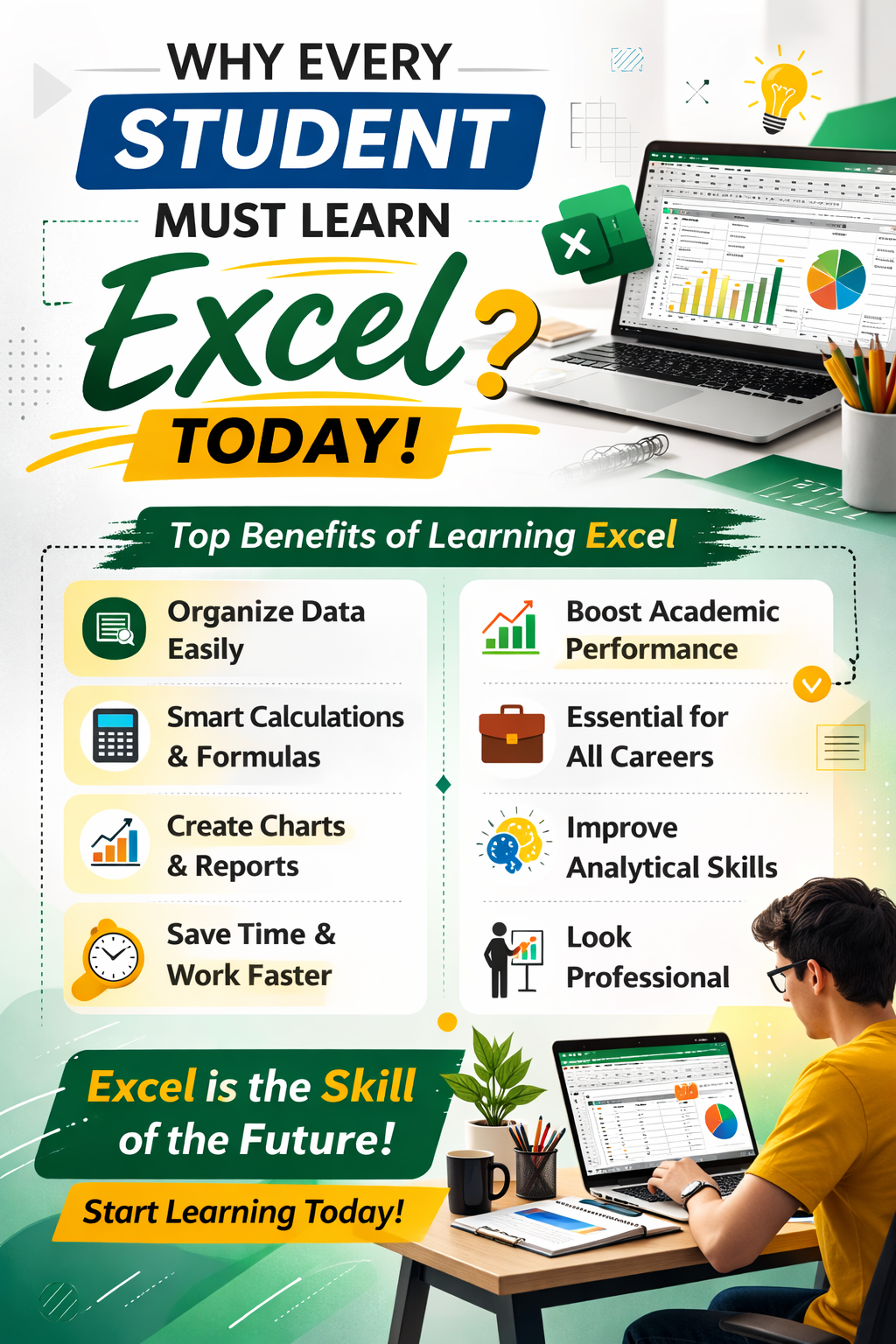
    In today’s fast-moving digital world, academic knowledge alone is not enough for success. Students are expected to develop practical skills that help them manage data, analyze information, and work efficiently. One such essential skill is Microsoft Excel. Once considered a tool only for accountants and office professionals, Excel has now become a must-learn skill for students of all streams. Learning Excel early can give students a strong advantage in academics, careers, and everyday life.

    Excel Is a Universal Skill

    Excel is used almost everywhere—schools, colleges, offices, businesses, research labs, and even startups. From maintaining attendance sheets to analyzing business data, Excel plays a vital role. Because it is used across industries like IT, finance, marketing, education, and data analysis, Excel is a universal skill that benefits students regardless of their career goals.

    When students learn Excel, they gain a tool that remains useful throughout life.

    Improves Data Understanding and Organization

    Students deal with data every day—marks, schedules, project details, expenses, and study plans. Excel helps organize this information neatly using rows, columns, tables, and charts. Instead of messy notebooks or scattered notes, Excel allows students to store and manage data efficiently.

    Learning Excel also improves understanding of data patterns, comparisons, and trends, which is especially useful for subjects like mathematics, economics, and science.

    Boosts Academic Performance

    Excel can be a powerful academic support tool. Students can use it to:

    • Track study schedules
    • Analyze test scores
    • Create charts for projects
    • Perform calculations quickly
    • Prepare assignments neatly

    For school and college projects, Excel helps present information professionally. This not only saves time but also improves the quality of submissions and presentations.

    Essential for Future Careers

    Almost every job today requires basic Excel knowledge. Employers expect candidates to know how to work with spreadsheets, formulas, and data. Students who already know Excel have a clear advantage during internships, campus placements, and job interviews.

    Fields like data analysis, finance, business management, engineering, marketing, and administration heavily rely on Excel. Even beginners with good Excel skills are often preferred over those without them.

    Builds Analytical and Logical Thinking

    Excel is not just about typing data—it’s about thinking logically. Using formulas, functions, and charts helps students develop analytical skills. They learn how to solve problems step by step, analyze results, and make decisions based on data.

    This logical thinking ability improves problem-solving skills, which are valuable not only in careers but also in daily life.

    Saves Time and Increases Efficiency

    Manual calculations and repetitive tasks take time and increase the chance of errors. Excel automates calculations and organizes information quickly. Tasks that may take hours manually can be completed in minutes using Excel formulas and tools.

    Students who use Excel smartly can manage time better and focus more on learning instead of repetitive work.

    Helps in Competitive Exams and Higher Studies

    Many competitive exams and professional courses require data interpretation, statistics, and logical reasoning. Excel practice strengthens these concepts. Students pursuing higher studies in commerce, management, science, or technology benefit greatly from Excel familiarity.

    Excel also helps during research work, surveys, and project analysis at college and university levels.

    Encourages Practical Learning

    Excel turns theoretical concepts into practical learning. Students don’t just read numbers—they work with them. Creating charts, graphs, and dashboards makes learning interactive and engaging. This practical exposure increases interest and confidence in handling real-world data.

    Easy to Learn and Beginner-Friendly

    One of the biggest advantages of Excel is that it is easy to start. Students can begin with basic operations like adding data and gradually move to advanced features such as formulas, charts, and data analysis tools. No programming background is required, making Excel suitable for beginners of all ages.

    Builds Confidence and Professionalism

    Students who know Excel appear more confident and professional. Whether it’s preparing a report, managing data, or presenting information, Excel skills make students stand out. This confidence helps during presentations, interviews, and teamwork situations.

    In a world driven by data and technology, Excel is no longer optional—it is essential. Every student, regardless of stream or career plan, must learn Excel to stay relevant and competitive. It improves academic performance, builds logical thinking, supports career growth, and makes everyday tasks easier. Learning Excel today is not just about software—it’s about preparing for a smarter, more efficient future.

    For More Information and Updates, Connect With Us

    Stay connected and keep learning with EEPL Classroom!

  • Start Python After Class 8 – Good or Bad?

    Start Python After Class 8 – Good or Bad?

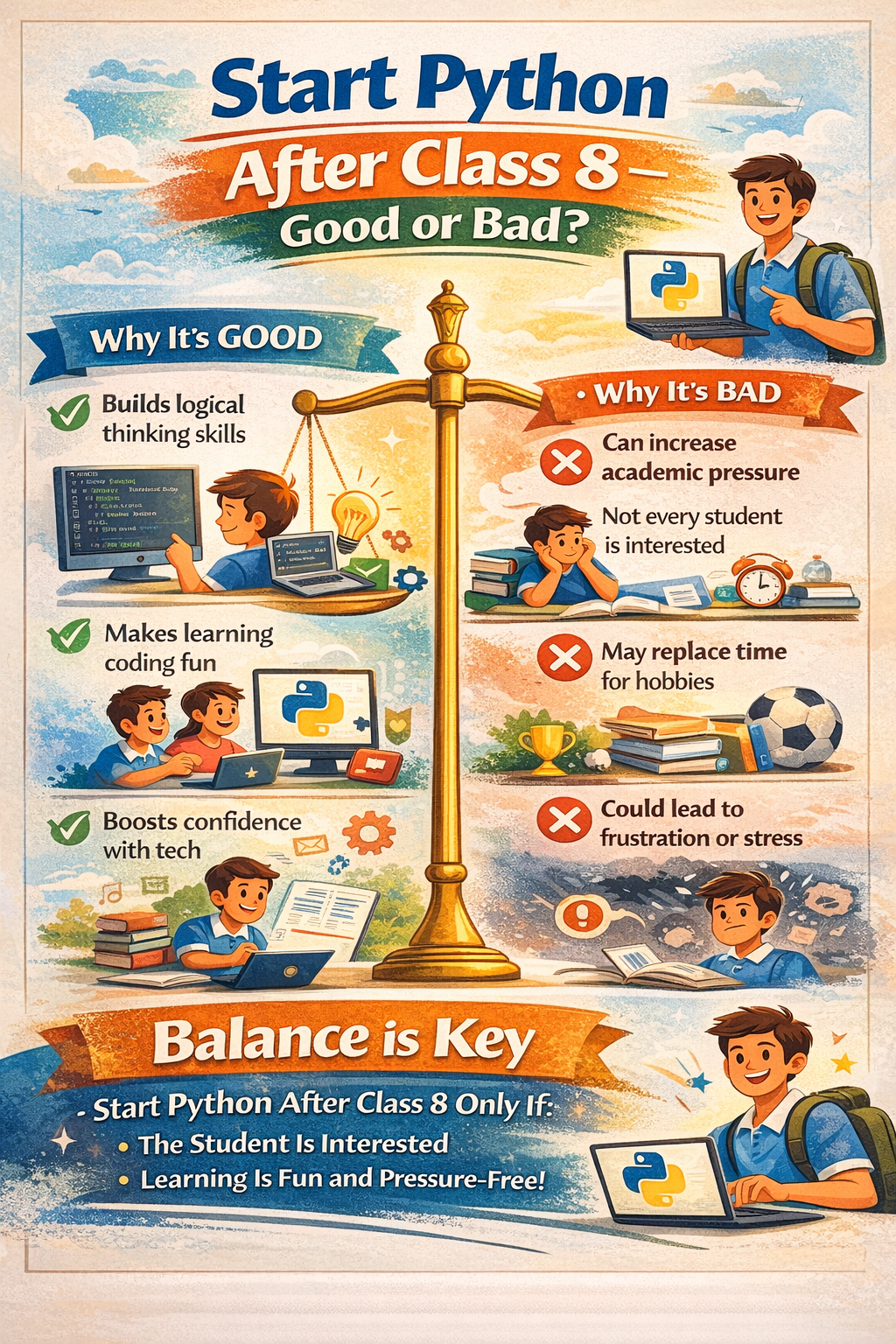
    With technology becoming a part of everyday life, many students and parents wonder whether learning programming at an early age is a good idea. One common question is: Should a student start learning Python after Class 8? Is it beneficial or too early? The short answer is—it can be very good if done the right way. Let’s explore both sides and understand how early Python learning can impact a student’s journey.

    Why Python Attracts Young Students

    Python is one of the simplest and most beginner-friendly programming languages. Its syntax is easy to read, almost like English, which makes it less intimidating for school students. Unlike some other languages, Python allows beginners to focus on logic and problem-solving instead of complex syntax rules.

    Because of this simplicity, Python has become a popular first language for students starting their coding journey after Class 8.

    Benefits of Starting Python After Class 8

    1. Builds Logical Thinking Early

    Learning Python helps students think logically and analytically. Writing code teaches how to break a big problem into smaller steps. This skill is useful not only in programming but also in mathematics, science, and daily problem-solving.

    2. Boosts Confidence With Technology

    When students learn Python early, they become creators instead of just users of technology. Writing small programs, games, or simple apps builds confidence and curiosity. This confidence often reflects positively in academics and overall learning attitude.

    3. Helps in Future Studies

    Students who start Python after Class 8 find it easier later in Classes 9–12, especially if they choose computer science. Concepts like loops, variables, and logic are already familiar, reducing learning pressure in higher classes.

    4. Encourages Creative Learning

    Python can be used to create games, simple animations, calculators, and mini projects. This makes learning fun and interactive, rather than boring or theoretical.

    5. Early Career Awareness

    Learning Python introduces students to fields like software development, data science, artificial intelligence, and automation. Even if they don’t choose these careers later, early exposure helps them understand modern career options better.

    Is It Too Early? Possible Concerns

    While there are many benefits, starting Python after Class 8 may not be ideal for everyone.

    1. Academic Pressure

    If Python learning is added forcefully along with school studies, tuition, and exams, it can increase stress. Students should not feel burdened or overwhelmed.

    2. Interest Matters More Than Age

    Not every student is interested in coding. Forcing a child to learn Python without interest can lead to frustration and loss of motivation. Learning should be curiosity-driven, not pressure-driven.

    3. Risk of Overloading

    Students still need time for sports, hobbies, relaxation, and social interaction. Coding should not replace a balanced lifestyle.

    How to Start Python the Right Way After Class 8

    If a student is interested, Python can be started in a light and enjoyable manner:

    • Begin with basics, not advanced topics
    • Learn through games, visuals, and simple projects
    • Practice small programs instead of memorizing code
    • Limit study time to short, focused sessions
    • Balance coding with school studies and fun activities

    The goal should be learning with interest, not racing ahead.

    Role of Parents and Teachers

    Parents and teachers play a key role in guiding students. Instead of asking “Will this help in a career?”, they should ask “Is the student enjoying learning this?” Encouragement, not pressure, leads to better outcomes.

    Supportive guidance helps students see Python as a skill, not a burden.

    Good or Bad? The Final Verdict

    Starting Python after Class 8 is good if:

    • The student is curious and interested
    • Learning is gradual and pressure-free
    • It complements school studies, not competes with them

    It can be bad only if:

    • The student is forced
    • It adds unnecessary stress
    • Expectations are unrealistic

    Starting Python after Class 8 is not about creating a programmer overnight. It’s about building curiosity, confidence, and logical thinking at an early age. When approached with balance and interest, learning Python can be a powerful and positive step in a student’s educational journey. Like any skill, the key lies not in when you start, but how you start.

    For More Information and Updates, Connect With Us

    Stay connected and keep learning with EEPL Classroom!
  • JEE Aspirants Daily Routine With School: A Practical Guide for Success

    JEE Aspirants Daily Routine With School: A Practical Guide for Success

    Preparing for the Joint Entrance Examination (JEE) while attending regular school is one of the biggest challenges a student can face. Managing school classes, homework, coaching, self-study, and personal well-being requires discipline, planning, and consistency. A well-structured daily routine helps JEE aspirants balance both school and competitive exam preparation without feeling overwhelmed. This blog explains an effective daily routine that school-going JEE aspirants can realistically follow.

    Understanding the Challenge

    JEE preparation demands deep conceptual understanding, regular practice, and revision. At the same time, school requires attendance, exams, assignments, and board exam preparation. Many students struggle because they either neglect school or compromise JEE preparation. The key is balance—not perfection.

    A good routine helps reduce stress, improves focus, and ensures steady progress in both areas.

    Importance of a Daily Routine for JEE Aspirants

    A fixed daily routine builds discipline and removes confusion about “what to study and when.” When time slots are predefined, students waste less time and stay consistent. A routine also ensures that important subjects like Physics, Chemistry, and Mathematics receive daily attention without ignoring school responsibilities.

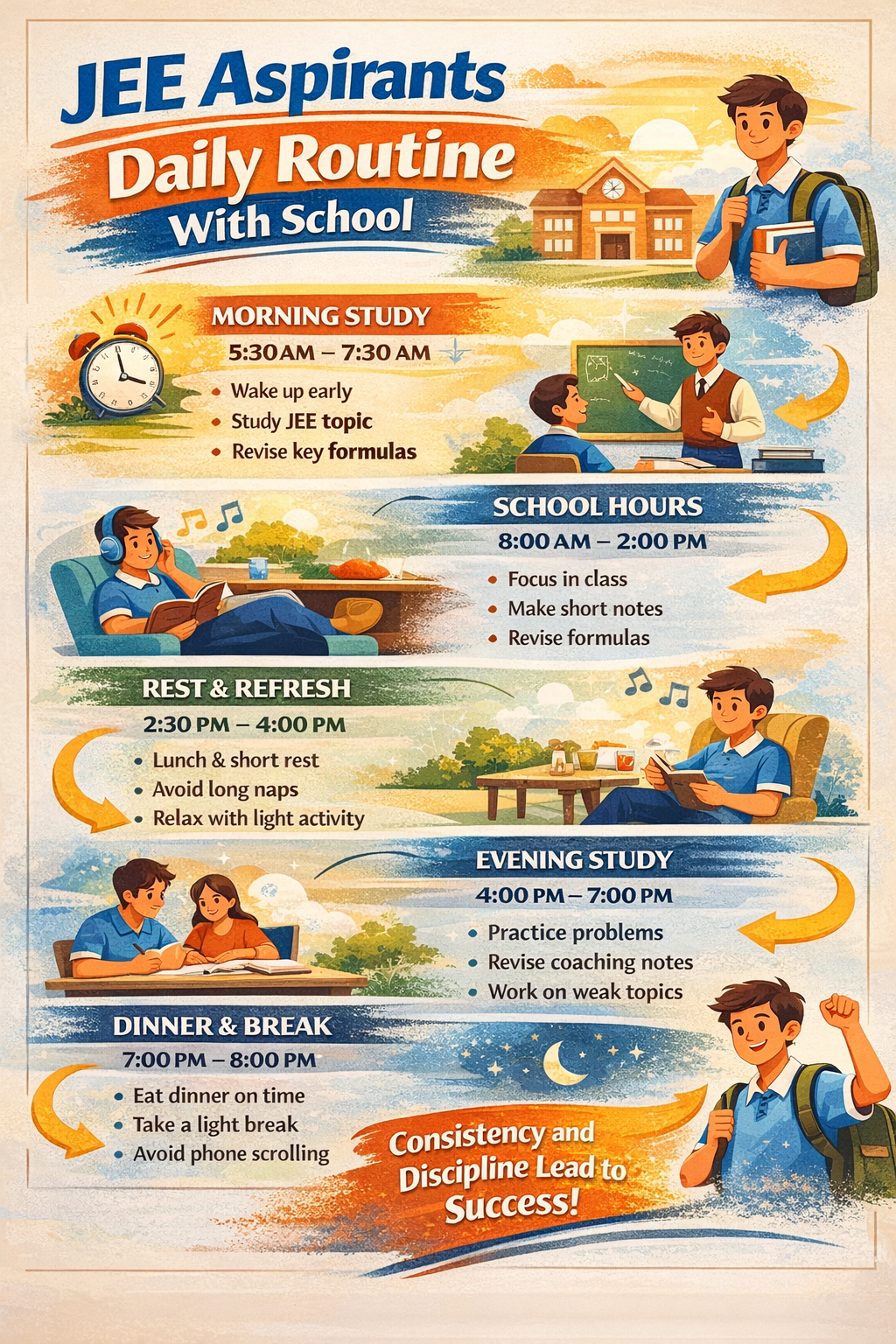
    Ideal Morning Routine (5:30 AM – 7:30 AM)

    Early mornings are best for focused study because the mind is fresh and distractions are minimal.

    • Wake up early and do light stretching or breathing exercises
    • Study one difficult JEE topic (Numericals or concepts)
    • Focus on problem-solving rather than reading theory
    • Revise formulas or short notes

    Studying in the morning builds confidence and gives a productive start to the day.

    School Time Management (8:00 AM – 2:00 PM)

    During school hours, stay attentive in class. Many school topics overlap with JEE syllabus, especially in Physics, Chemistry, and Mathematics. Treat school classes as revision sessions.

    • Listen carefully and clear doubts immediately
    • Make short notes during lectures
    • Avoid wasting time during breaks
    • Use free periods to revise formulas or concepts

    Being attentive in school reduces study load later in the day.

    Post-School Rest and Refresh (2:30 PM – 4:00 PM)

    After school, the brain needs rest. Studying continuously without breaks leads to burnout.

    • Have lunch and take a short rest
    • Avoid long naps
    • Refresh yourself with light activity or music

    This break prepares the mind for evening study sessions.

    Evening Study Session (4:00 PM – 7:00 PM)

    This is the most important study window for JEE preparation.

    • Study one major subject per day (rotate Physics, Chemistry, Math)
    • Practice numerical problems and previous questions
    • Revise coaching or online class notes
    • Focus on weak topics

    Consistency matters more than long hours. Even 2–3 focused hours daily are enough if done properly.

    Dinner and Light Break (7:00 PM – 8:00 PM)

    Have dinner on time and relax briefly. Avoid mobile scrolling or social media during this time. Light conversation with family helps refresh the mind emotionally.

    Night Study and School Work (8:00 PM – 10:00 PM)

    Night study should be lighter and more organized.

    • Complete school homework and assignments
    • Revise what was studied earlier in the day
    • Read theory or revise formulas
    • Plan tasks for the next day

    Avoid learning new or difficult topics at night.

    Sleep and Recovery (10:30 PM – 5:30 AM)

    Sleep is not optional—it is essential. A tired mind cannot retain concepts or solve problems effectively.

    • Aim for at least 6–7 hours of sleep
    • Avoid late-night studying regularly
    • Maintain a fixed sleep schedule

    Good sleep improves memory, focus, and emotional stability.

    Weekend Strategy for JEE Aspirants

    Weekends are crucial for deeper preparation.

    • Take mock tests or practice full-length papers
    • Analyze mistakes carefully
    • Revise the entire week’s syllabus
    • Cover backlog topics

    Avoid wasting weekends entirely on relaxation or entertainment.

    Tips to Stay Consistent

    • Set realistic daily goals
    • Avoid comparison with others
    • Limit mobile and social media usage
    • Stay motivated but not stressed
    • Take short breaks to avoid burnout

    Preparing for JEE along with school is challenging but completely achievable with the right daily routine. The key lies in discipline, smart time management, and consistency. Students who follow a balanced routine can excel in both board exams and JEE without sacrificing health or peace of mind. Remember, success in JEE is not about studying all day—it’s about studying the right way, every day.

    For More Information and Updates, Connect With Us

    Stay connected and keep learning with EEPL Classroom!

  • How Guidance Changes Student Life

    How Guidance Changes Student Life

    Student life is a journey filled with learning, challenges, decisions, and dreams. From choosing subjects to planning a career, students face many situations where the right direction can make a huge difference. This is where guidance plays a powerful role. Proper guidance not only helps students achieve academic success but also shapes their personality, confidence, and future outlook. The impact of guidance on student life is deep, long-lasting, and often life-changing.

    Understanding the Meaning of Guidance

    Guidance is the process of helping students understand themselves and the world around them so they can make informed decisions. It can come from parents, teachers, mentors, counselors, or even peers. Guidance is not about forcing decisions but about showing possibilities, offering support, and helping students think clearly.

    When students receive guidance, they feel supported rather than confused. They learn to approach problems with logic instead of fear and uncertainty.

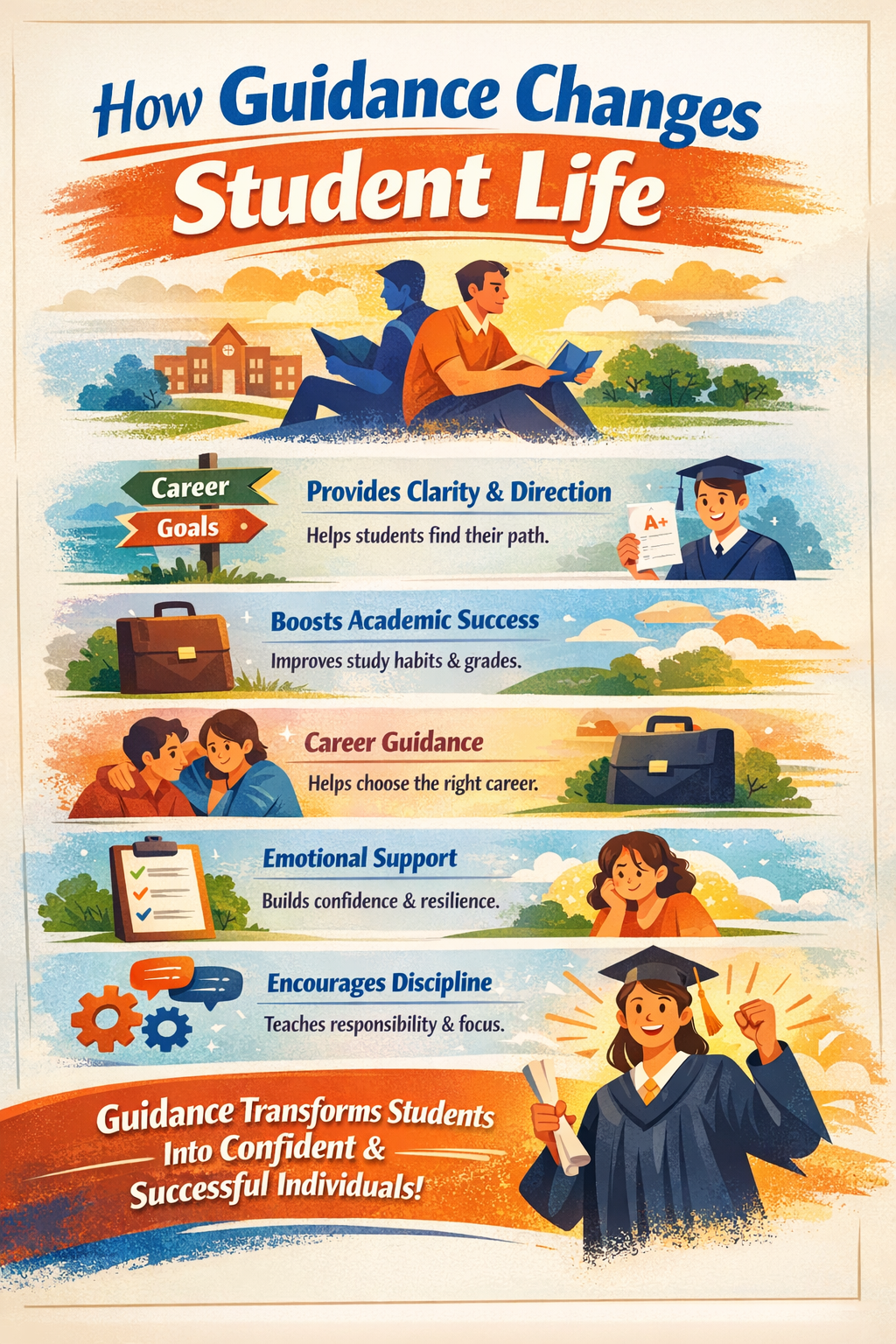
    Guidance Builds Clarity and Direction

    One of the biggest challenges students face is confusion—confusion about subjects, careers, goals, and priorities. Without guidance, students may feel lost or pressured to follow others blindly. Proper guidance helps students understand their strengths, interests, and abilities.

    When students know what they want and why they want it, their efforts become focused. This clarity reduces stress and improves performance, both academically and personally.

    Role of Guidance in Academic Growth

    Academic pressure is a major part of student life. Exams, deadlines, competition, and expectations can feel overwhelming. Guidance helps students learn effective study methods, time management, and goal setting.

    A guided student understands how to plan studies smartly instead of studying blindly. Teachers and mentors can help identify weak areas and suggest better learning strategies. As a result, students gain confidence and perform better in exams.

    Guidance Shapes Career Decisions

    Choosing a career is one of the most important decisions in a student’s life. Without guidance, students may choose careers based on trends, peer pressure, or incomplete information. This can lead to dissatisfaction later in life.

    Career guidance helps students explore different options, understand industry requirements, and align choices with their skills and interests. With the right guidance, students make informed career decisions that lead to long-term satisfaction and success.

    Emotional Support and Mental Strength

    Student life is not only about academics. Emotional challenges such as fear of failure, low self-esteem, anxiety, and stress are common. Guidance provides emotional support during such times.

    A mentor or counselor who listens without judgment can help students handle pressure and setbacks positively. Guidance teaches students that failure is not the end but a part of learning. This emotional strength helps students grow into resilient individuals.

    Guidance Encourages Discipline and Responsibility

    Guided students learn the importance of discipline, consistency, and responsibility. When someone guides a student regularly, the student becomes more accountable for actions and choices.

    Guidance helps students develop good habits like punctuality, self-study, and goal tracking. These habits not only help during student life but also prepare them for professional and personal responsibilities in the future.

    Boosting Confidence and Self-Belief

    Many students struggle with self-doubt. They may underestimate their abilities or fear taking risks. Proper guidance motivates students to believe in themselves.

    When a mentor recognizes a student’s potential and encourages growth, it builds confidence. Guided students are more willing to ask questions, explore opportunities, and step out of their comfort zones.

    Guidance Teaches Life Skills

    Beyond textbooks, guidance teaches essential life skills such as decision-making, communication, problem-solving, and adaptability. These skills are crucial for success in real life.

    Students who receive guidance learn how to handle challenges calmly, work in teams, and communicate effectively. These qualities make them well-rounded individuals, not just academically successful students.

    Long-Term Impact of Guidance

    The impact of guidance does not end with student life. Lessons learned through guidance influence future choices, work ethics, and relationships. Many successful people credit mentors and guides for helping them stay on the right path.

    Guidance creates a positive cycle—guided students often become mentors themselves, helping others grow and succeed.

    Guidance has the power to transform student life in meaningful ways. It provides direction, builds confidence, supports emotional well-being, and prepares students for the future. In a world full of choices and challenges, guidance acts as a guiding light that helps students move forward with clarity and confidence. When students receive the right guidance at the right time, they not only succeed academically but also grow into strong, responsible, and confident individuals ready to face life’s challenges.

    For More Information and Updates, Connect With Us

    Stay connected and keep learning with EEPL Classroom!

  • NEET Preparation + School Study Balance Plan with EEPL Classroom

    NEET Preparation + School Study Balance Plan with EEPL Classroom

    Preparing for NEET while managing regular school studies is one of the toughest challenges for students today. On one hand, there is school homework, exams, and syllabus pressure; on the other, the vast NEET syllabus demands deep focus, regular revision, and consistent practice. Many students feel exhausted, confused, and stressed trying to handle both. The good news? With the right strategy and guidance, balancing NEET preparation and school studies is absolutely possible—and EEPL Classroom plays a crucial role in making this balance achievable.

    Why Balancing NEET and School Feels Difficult

    NEET is a highly competitive exam that requires strong conceptual clarity in Physics, Chemistry, and Biology. School studies, meanwhile, focus on board exams, internal assessments, and assignments. Although both syllabi overlap, the approach required is different.

    Students often struggle because:

    • Time management feels overwhelming
    • School exams and NEET tests clash
    • Concepts are memorized for school but not deeply understood for NEET
    • Fatigue and stress reduce productivity

    Without a proper plan, students either neglect school or compromise NEET preparation—both of which can be risky.

    EEPL Classroom’s Integrated Learning Approach

    EEPL Classroom follows a smart, integrated approach where one preparation supports the other. Instead of treating school and NEET as separate battles, they are aligned into a single, structured plan.

    The teaching method focuses on:

    • Strong NCERT-based conceptual learning
    • NEET-oriented depth with school relevance
    • Regular revision linked to school syllabus progress

    This approach ensures that what students learn for NEET also helps them score well in school exams.

    Smart Time Management Strategy

    Time management is the backbone of NEET + school balance. EEPL Classroom helps students create realistic study schedules that prevent burnout.

    A typical balanced plan includes:

    • School hours focused on listening and understanding
    • Post-school sessions for NEET concept strengthening
    • Daily short revision slots
    • Weekly tests and analysis

    Instead of long, exhausting study hours, the focus is on quality study with consistency.

    Concept First, Memorization Later

    One major reason students struggle is memorizing without understanding. EEPL Classroom emphasizes concept clarity first. When students truly understand a topic, they don’t need to study it twice—once for school and once for NEET.

    For example:

    • NCERT Biology concepts are taught in detail for NEET
    • Physics numericals are linked to real problem-solving
    • Chemistry concepts are broken down step by step

    This saves time and builds long-term retention.

    Regular Testing Without Pressure

    Tests are essential for NEET preparation, but too many tests can increase stress. EEPL Classroom conducts well-planned assessments that match both school and NEET needs.

    Students benefit from:

    • Chapter-wise NEET practice tests
    • School exam-oriented revisions
    • Detailed performance feedback

    Instead of focusing only on marks, teachers help students understand mistakes and improve gradually.

    Handling School Exams Without Panic

    During school exam periods, many NEET aspirants panic and pause NEET preparation completely. EEPL Classroom helps students adjust their study plans during exam time without losing momentum.

    Strategies include:

    • Light NEET revision during exams
    • Focused school syllabus preparation
    • Post-exam NEET catch-up sessions

    This flexible approach keeps students confident and stress-free.

    Emotional Support and Motivation

    Balancing NEET and school can feel mentally exhausting. EEPL Classroom provides constant motivation and mentorship. Teachers guide students not just academically, but emotionally—helping them stay positive, disciplined, and focused.

    Students are encouraged to:

    • Ask doubts freely
    • Share stress or confusion
    • Set realistic goals

    This supportive environment prevents burnout and builds resilience.

    Long-Term Benefits of a Balanced Plan

    Students who follow a balanced NEET + school plan with EEPL Classroom experience:

    • Strong board exam performance
    • Consistent NEET readiness
    • Better time management skills
    • Reduced stress and higher confidence

    Instead of last-minute pressure, students feel prepared and in control.

    Final Thoughts

    Preparing for NEET does not mean sacrificing school life or mental peace. With the right guidance, smart planning, and concept-based learning, students can excel in both. EEPL Classroom proves that NEET preparation and school studies don’t have to clash—they can complement each other.

    Success in NEET is not about studying harder, but studying smarter. And with EEPL Classroom’s balanced approach, students can move closer to their medical dreams while staying confident and calm throughout their school journey. 🌱📘✨

    For More Information and Updates, Connect With Us

    Stay connected and keep learning with EEPL Classroom!
  • Choosing the Right Career Made Easy with EEPL Classroom

    Choosing the Right Career Made Easy with EEPL Classroom

    Career confusion is one of the biggest challenges students face today. With countless options, constant pressure from society, and fear of making the wrong choice, many students feel stuck and anxious about their future. Questions like “Which stream should I choose?”, “What career is right for me?”, or “What if I fail?” can feel overwhelming. This confusion often affects confidence, academic performance, and mental peace. For many students, clarity comes only when they find the right guidance—and that’s where EEPL Classroom plays a life-changing role.

    Why Career Confusion Is So Common

    In today’s competitive world, students are expected to decide their future at a very young age. Science, commerce, arts, professional courses, entrance exams—the choices are endless. Add parental expectations, peer pressure, and social media comparisons, and confusion becomes inevitable.

    Most students are never taught how to identify their strengths, interests, or abilities. Instead, they are pushed toward “popular” career paths without understanding whether those paths truly suit them. This often leads to stress, poor performance, and lack of motivation.

    The EEPL Classroom Approach to Career Guidance

    EEPL Classroom understands that career clarity is not about forcing decisions—it’s about discovering direction. Their approach focuses on helping students understand themselves before choosing a career.

    Instead of generic advice, EEPL Classroom provides structured guidance based on:

    • Student strengths and weaknesses
    • Academic interests and aptitude
    • Personality and learning style
    • Long-term goals and realistic opportunities

    This personalized approach helps students make informed and confident decisions.

    Clarity Through Strong Academic Foundations

    One major reason for career confusion is weak conceptual understanding. When students struggle academically, they lose confidence and start doubting their future options. EEPL Classroom addresses this problem at the root.

    By strengthening basics and improving subject clarity, students begin to understand where their true potential lies. As academic confidence grows, career options become clearer. A student who once feared subjects like math or science may discover a genuine interest once concepts are explained properly.

    Career Awareness Beyond Textbooks

    EEPL Classroom goes beyond syllabus teaching. Students are exposed to real-world career insights—what different professions actually involve, what skills are required, and what paths lead to success.

    Through mentoring sessions, discussions, and practical examples, students learn:

    • The difference between interest and pressure
    • Traditional vs. emerging career options
    • Academic paths and alternative routes
    • The importance of skill development

    This awareness removes fear of the unknown and replaces it with informed confidence.

    Reducing Pressure, Building Confidence

    One of the most powerful things EEPL Classroom offers is emotional support. Career confusion often creates anxiety, self-doubt, and fear of failure. Teachers here act as mentors, not just instructors.

    Students are encouraged to ask questions, express concerns, and explore possibilities without judgment. This safe and supportive environment helps them think clearly and make decisions without panic.

    Confidence-building sessions, regular feedback, and motivation play a huge role in helping students trust their choices.

    Helping Students Make Smart, Realistic Choices

    Not every student needs to follow the same path—and EEPL Classroom respects that. Some students are guided toward competitive exams, while others are helped to explore alternative academic or skill-based careers.

    The focus is always on long-term success and personal satisfaction, not temporary trends. Students learn that success is not defined by one career or one exam, but by consistent effort and informed decisions.

    Real Transformation, Real Results

    Many students who once felt lost and confused find clarity after joining EEPL Classroom. They gain:

    • Clear academic direction
    • Improved performance and focus
    • Confidence in decision-making
    • Reduced stress about the future

    Parents also feel reassured knowing their children are receiving the right guidance at the right time.

    Career confusion is not a weakness—it’s a natural part of growing up. What matters is how it’s addressed. With the right mentorship, academic clarity, and emotional support, students can turn confusion into confidence.

    EEPL Classroom doesn’t just help students choose a career—it helps them understand themselves, believe in their abilities, and move forward with clarity. For students feeling lost about their future, the right guidance can make all the difference—and sometimes, it can change everything. 🌟

    For More Information and Updates, Connect With Us

    Stay connected and keep learning with EEPL Classroom!
  • From Weak Student to Confident Learner: A Transformational Journey with EEPL Classroom

    From Weak Student to Confident Learner: A Transformational Journey with EEPL Classroom

    Every student’s learning journey is unique. Some move ahead smoothly, while others struggle quietly—confused, hesitant, and unsure of their own potential. I was one of those “weak students.” Low scores, constant self-doubt, and the fear of classrooms made learning feel overwhelming. But everything changed when I became part of EEPL Classroom. What followed was not just academic improvement, but a complete transformation in confidence, mindset, and self-belief.

    The Struggle Phase: Where It All Began

    Being labeled a weak student is tough. Concepts felt unclear, exams were stressful, and comparisons with peers only made things worse. I hesitated to ask questions, fearing judgment. Teachers moved fast, and I felt left behind. Over time, this created a mental block—maybe I’m just not good at studies. That belief was the biggest obstacle.

    The Turning Point: Enter EEPL Classroom

    Joining EEPL Classroom marked a turning point. From day one, the environment felt different. Instead of focusing only on marks, the teachers focused on understanding. They believed that every student can learn—just at a different pace. This simple belief changed everything for me.

    Classes at EEPL Classroom were structured, interactive, and student-friendly. Teachers explained concepts from the basics, ensuring no one felt lost. For the first time, I felt comfortable saying, “I didn’t understand.” And instead of criticism, I received guidance.

    Personalized Learning: The Game Changer

    One of the biggest strengths of EEPL Classroom is personalized attention. Teachers identified my weak areas and worked on them patiently. Doubts were welcomed, not rushed. Regular practice sessions, revision classes, and doubt-clearing hours helped reinforce learning.

    Slowly, concepts that once seemed impossible started making sense. Mathematics stopped being scary. Science became interesting. This clarity built confidence—step by step.

    Building Confidence Beyond Books

    Confidence doesn’t come only from good marks; it comes from feeling capable. EEPL Classroom focused equally on mindset. Teachers motivated us, shared practical tips for exams, and taught us how to manage stress and time effectively.

    Frequent tests were conducted, not to scare us, but to prepare us. Detailed feedback helped me understand where I went wrong and how to improve. Each small improvement felt like a victory.

    A Supportive Environment Matters

    What truly sets EEPL Classroom apart is its supportive atmosphere. There was no shame in making mistakes. Instead, mistakes were treated as part of learning. Surrounded by encouraging teachers and motivated classmates, I felt inspired to do better.

    Group discussions, interactive problem-solving, and regular encouragement helped me come out of my shell. I started participating in class, asking questions, and even helping others—something I never imagined before.

    The Results: More Than Just Marks

    Over time, my academic performance improved significantly. Scores went up, but more importantly, fear went down. Exams no longer felt terrifying. I learned how to approach problems calmly and logically.

    But the biggest result was internal—I started believing in myself. I no longer saw myself as a weak student, but as a learner who just needed the right guidance.

    The Transformation: Weak to Confident

    Today, I walk into classrooms with confidence. I know I can learn, improve, and succeed. This transformation wouldn’t have been possible without EEPL Classroom’s dedicated teachers, structured approach, and belief in students like me.

    The journey from a weak student to a confident learner is not easy, but it is absolutely possible—with the right support. EEPL Classroom doesn’t just teach subjects; it builds confidence, clarity, and character. If you’re a student struggling with self-doubt or academics, remember this: you’re not weak—you’re just waiting for the right environment to grow.

    For More Information and Updates, Connect With Us

    Stay connected and keep learning with EEPL Classroom!

  • DCA Course: First Step Toward Office Jobs

    DCA Course: First Step Toward Office Jobs

    In today’s digital age, basic computer knowledge is no longer optional—it’s essential. Whether you are a student, fresher, or someone looking to start a stable career, the DCA (Diploma in Computer Applications) course is one of the smartest first steps toward office jobs. It builds strong foundations in computers and prepares learners for real workplace requirements.

    What Is a DCA Course?

    The DCA course is designed to teach practical computer skills used in offices, businesses, schools, and organizations. It focuses on hands-on learning rather than theory, making it ideal for beginners with no technical background. From operating a computer to managing data and documents, DCA covers everything needed for entry-level office roles.

    Why DCA Is Important for Office Jobs

    Most office jobs today require basic digital skills. Employers expect candidates to know how to work with computers, prepare documents, manage data, and communicate digitally. The DCA course trains students in:

    • Computer fundamentals
    • MS Word, Excel, and PowerPoint
    • Internet and email usage
    • Basic accounting and data handling
    • Typing and office productivity tools

    These skills are essential for roles like office assistant, data entry operator, receptionist, computer operator, and back-office executive.

    Who Should Join a DCA Course?

    The DCA course is perfect for:

    • Students after 10th or 12th
    • College freshers
    • Non-technical students
    • Job seekers aiming for office roles
    • Housewives or career restarters
    • Anyone who wants computer confidence

    No prior computer knowledge is required, which makes DCA a great starting point for everyone.

    Career Opportunities After DCA

    After completing a DCA course, students can apply for various entry-level jobs such as:

    • Office Assistant
    • Computer Operator
    • Data Entry Executive
    • Back Office Staff
    • Receptionist
    • Junior Clerk

    DCA also creates a strong base for advanced courses like Tally, Digital Marketing, Programming, or other IT certifications.

    Why Learn DCA at EEPL, Ranchi?

    Choosing the right institute matters as much as choosing the right course. At EEPL, students get career-oriented DCA training with a focus on practical skills and confidence building. Located in Ranchi, EEPL offers a supportive classroom environment where beginners feel comfortable learning from scratch.

    Key benefits include:

    • Beginner-friendly teaching
    • Practical, hands-on sessions
    • Experienced trainers
    • Affordable fees
    • Classroom-based learning
    • Guidance for jobs and career growth

    The course is structured to match real office work, helping students become job-ready.

    Why DCA Is the Right First Step

    For many students, jumping directly into advanced IT courses can feel overwhelming. DCA acts as a bridge between education and employment, helping learners gain confidence with computers before moving ahead. It opens doors to office jobs while also preparing students for future learning.

    Admissions Open at EEPL, Ranchi

    If you are looking for a safe, affordable, and effective way to start your career, the DCA course at EEPL is the right choice. With growing demand for computer-literate professionals, now is the best time to enroll and secure your future.

    Start small, learn smart, and step confidently into the world of office jobs with DCA.


    For More Information and Updates, Connect With Us

    Stay connected and keep learning with EEPL Classroom!