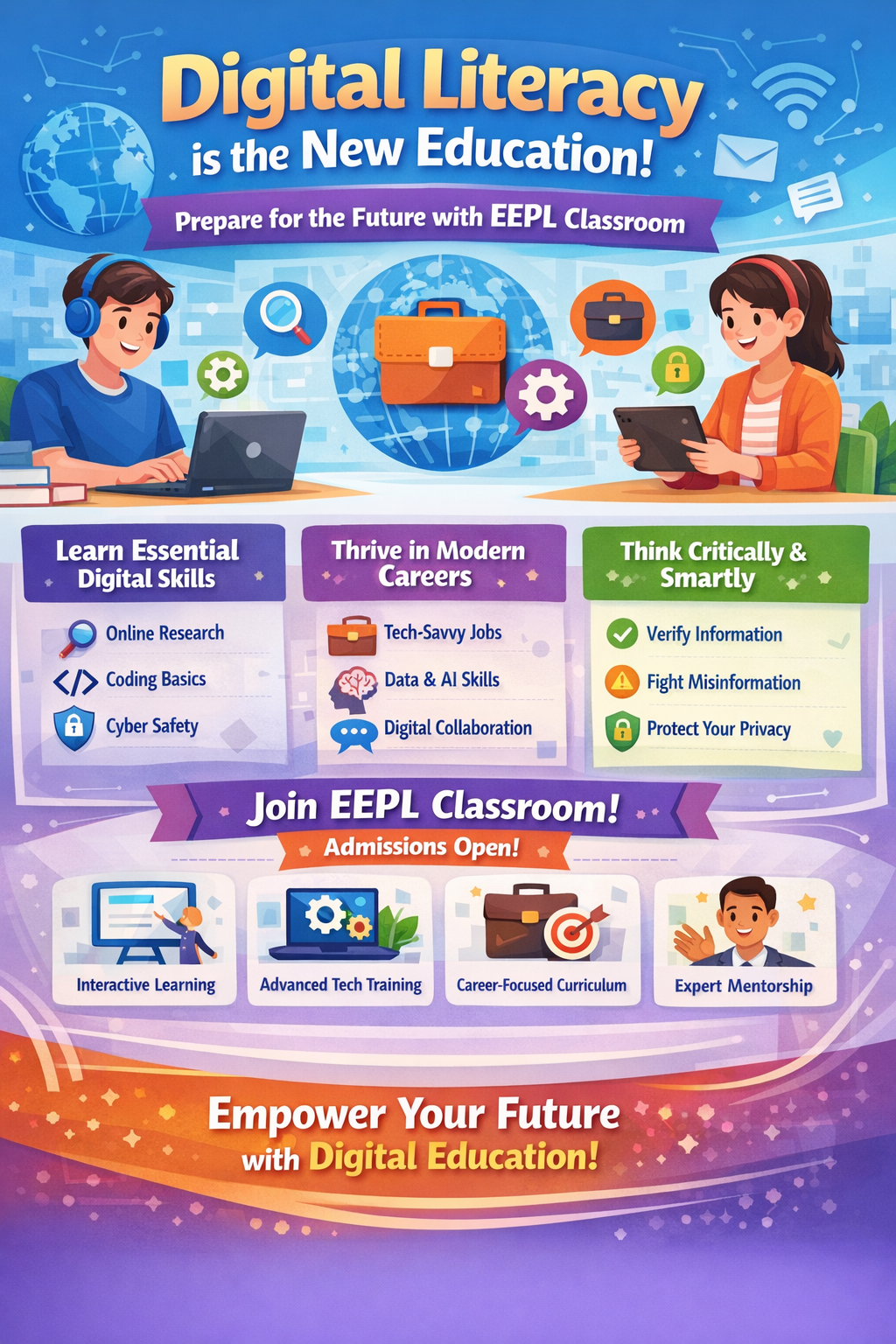
In the 21st century, education is no longer limited to textbooks, blackboards, and traditional classrooms. The world has moved online — and so must learning. Digital literacy is the new education, and students who master it are better prepared for academic success, career growth, and responsible citizenship.
Today’s learners are growing up in a world shaped by technology, artificial intelligence, and instant global communication. Platforms like Google, Microsoft, and Apple influence how we work, learn, and connect. Understanding how to navigate this digital ecosystem is no longer optional — it is essential.
What Is Digital Literacy?
Digital literacy goes beyond knowing how to use a smartphone or browse social media. It includes:
- Understanding how to search and evaluate online information
- Communicating professionally through digital platforms
- Using productivity tools like documents, spreadsheets, and presentations
- Practicing online safety and digital ethics
- Understanding basic coding and emerging technologies
In short, digital literacy empowers students to think critically, create confidently, and communicate effectively in a technology-driven world.
Why Digital Literacy Is the New Education
1. Education Has Gone Digital
From online assignments to virtual classrooms, technology is deeply integrated into modern education. Schools and colleges use digital platforms for attendance, assessments, project submissions, and collaboration.
Students who lack digital skills often struggle — not because they are not intelligent, but because they are not digitally prepared.
2. Careers Demand Digital Skills
Employers today expect graduates to be comfortable with digital tools. Whether in business, healthcare, engineering, marketing, or entrepreneurship, digital competency is a core requirement.
Even traditional industries now rely on:
- Data analysis
- Cloud platforms
- Online communication tools
- Digital marketing
- Automation systems
Students who develop digital literacy early gain a competitive advantage in college admissions and job placements.
3. Critical Thinking in the Age of Information
The internet is full of information — but not all of it is accurate. Digital literacy teaches students how to:
- Verify sources
- Identify misinformation
- Protect their personal data
- Maintain privacy online
This is essential for developing responsible and informed global citizens.
Digital Literacy in the Modern Classroom
Forward-thinking institutions are transforming traditional classrooms into digital learning environments. One strong example is EEPL Classroom, which focuses on integrating technology-driven education into student development.
The EEPL Classroom model emphasizes:
- Smart interactive learning
- Practical technology exposure
- Skill-based training
- Digital collaboration tools
- Career-oriented curriculum
This approach ensures that students are not just memorizing content — they are building real-world skills.
Why Parents Should Prioritize Digital Education
Parents today face a crucial question: Is traditional education alone enough for my child’s future?
The answer is increasingly clear — no.
Digital education prepares students to:
- Adapt to technological change
- Compete globally
- Innovate and solve real-world problems
- Build confidence in virtual environments
When parents choose institutions that emphasize digital literacy, they are investing in their child’s long-term success.
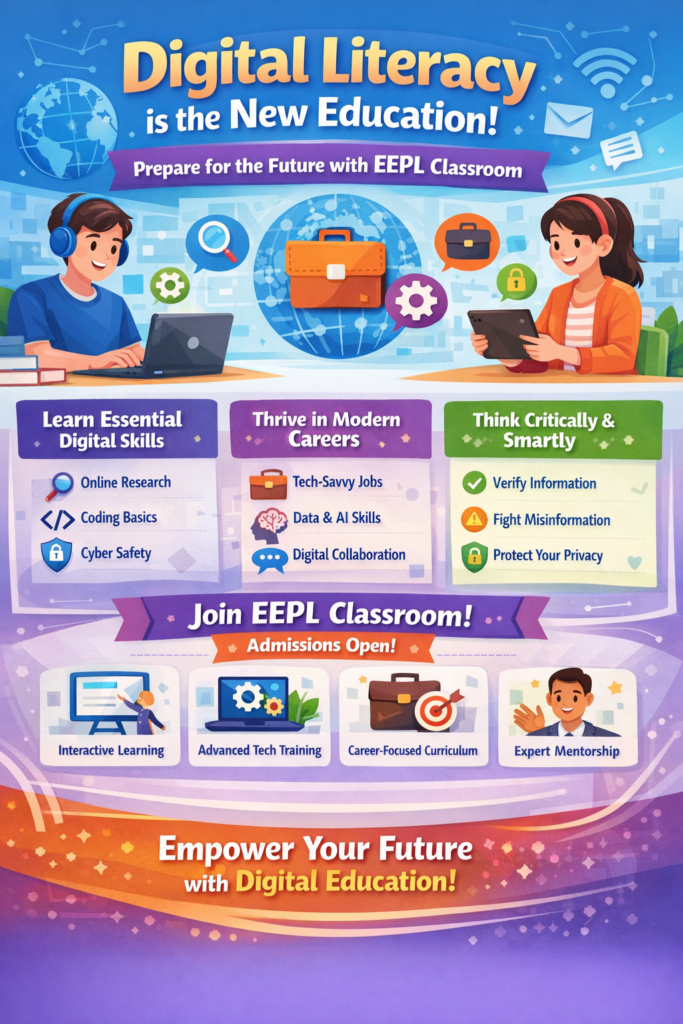
Student Admission: Step into the Future with EEPL Classroom
If you are looking for a future-ready learning environment, student admission at EEPL Classroom offers an opportunity to embrace modern education.
At EEPL Classroom, students gain:
- Exposure to advanced digital tools
- Structured skill development programs
- Mentorship and guidance
- A collaborative and interactive learning ecosystem
The admission process is designed to be simple and accessible, ensuring that every motivated learner can join and grow.
By enrolling in a digitally advanced classroom, students position themselves ahead of the curve — academically and professionally.
The Future Belongs to the Digitally Skilled
Technology is not slowing down. Artificial intelligence, automation, and digital transformation are shaping industries across the globe. Students who are digitally literate will not just survive — they will lead.
Digital literacy is no longer an additional subject; it is the foundation of modern education. Just as reading and writing were once revolutionary skills, today it is the ability to navigate, create, and innovate in digital spaces that defines true education.
The question is not whether digital literacy matters — it is whether we are ready to prioritize it.
For students aiming for academic excellence and career readiness, and for parents seeking meaningful education pathways, embracing digital literacy through progressive institutions like EEPL Classroom is the smart choice.
The future classroom is digital. The future student is digitally empowered. And the future begins now.

For More Information and Updates, Connect With Us
- Name Sumit singh
- Phone Number: +91-9835131568
- Email ID: emancipationedutech@gmail.com
- Our Platforms:
- Digilearn Cloud
- EEPL Test
- Live Emancipation
- Follow Us on Social Media:
- Instagram – EEPL Classroom
- Facebook – EEPL Classroom
Stay connected and keep learning with EEPL Classroom!
Leave a Reply