Author: Baby

  • Ecosystem: Understanding Biotic and Abiotic Components

    An ecosystem is one of the most important concepts in environmental science and biology. It refers to a community of living organisms interacting with each other and with their physical environment. Every ecosystem, whether small like a pond or large like a forest, functions through the interaction of two main components: biotic (living) and abiotic (non-living).

    Understanding these components helps us learn how nature works and how balance is maintained in the environment.


    What is an Ecosystem?

    An ecosystem is a system formed by the interaction of living organisms with their surroundings. It includes plants, animals, microorganisms, air, water, soil, and sunlight.

    Examples of ecosystems include:

    • Forest ecosystems
    • Desert ecosystems
    • Aquatic ecosystems (ponds, rivers, oceans)
    • Grassland ecosystems

    Each ecosystem has its own unique structure and function, but all depend on the interaction between biotic and abiotic components.


    Biotic Components of an Ecosystem

    The biotic components are all the living organisms present in an ecosystem. These include plants, animals, and microorganisms.

    Types of Biotic Components

    1. Producers (Autotrophs)

    Producers are organisms that can make their own food using sunlight through a process called photosynthesis.

    Examples:

    • Green plants
    • Algae

    They form the base of the food chain and provide energy for all other organisms.


    2. Consumers (Heterotrophs)

    Consumers depend on other organisms for food. They are divided into different types:

    • Herbivores: Eat plants (e.g., deer, गाय)
    • Carnivores: Eat other animals (e.g., lion)
    • Omnivores: Eat both plants and animals (e.g., humans)

    Consumers help transfer energy in the ecosystem.


    3. Decomposers

    Decomposers break down dead plants and animals into simpler substances.

    Examples:

    • Bacteria
    • Fungi

    They play a vital role in recycling nutrients back into the soil.


    Abiotic Components of an Ecosystem

    The abiotic components are the non-living parts of the ecosystem. These include physical and chemical factors that influence living organisms.

    Important Abiotic Factors

    1. Sunlight

    Sunlight is the primary source of energy for all ecosystems. It is essential for photosynthesis.


    2. Water

    Water is necessary for survival. It supports life processes in plants and animals.


    3. Air

    Air contains gases like oxygen and carbon dioxide, which are essential for respiration and photosynthesis.


    4. Soil

    Soil provides nutrients and support for plants. It also houses many microorganisms.


    5. Temperature

    Temperature affects the growth and survival of organisms. Different species adapt to different temperature ranges.


    6. Minerals and Nutrients

    Elements like nitrogen, phosphorus, and carbon are essential for life processes.


    Interaction Between Biotic and Abiotic Components

    The most important feature of an ecosystem is the interaction between its components.

    • Plants use sunlight, water, and carbon dioxide to produce food
    • Animals depend on plants or other animals for food
    • Decomposers break down dead matter and return nutrients to the soil

    This interaction creates a balanced system where energy flows and nutrients cycle continuously.


    Energy Flow in an Ecosystem

    Energy enters the ecosystem through sunlight. Producers convert it into food, which is then passed to consumers.

    The flow of energy follows a path called the food chain:

    • Sun → Plants → Animals → Decomposers

    Energy decreases at each level, making producers the most important part of the ecosystem.


    Importance of Ecosystem Balance

    A balanced ecosystem is essential for survival. If one component is disturbed, it affects the entire system.

    For example:

    • Deforestation reduces plant population
    • This affects animals that depend on plants
    • It also disturbs soil and water balance

    Thus, maintaining ecosystem balance is very important.


    Human Impact on Ecosystems

    Human activities are affecting ecosystems in many ways:

    • Pollution (air, water, soil)
    • Deforestation
    • Climate change
    • Overuse of natural resources

    These activities disturb both biotic and abiotic components, leading to environmental problems.


    How to Protect Ecosystems

    We can protect ecosystems by:

    • Planting more trees
    • Reducing pollution
    • Conserving water
    • Using resources wisely
    • Protecting wildlife

    Small actions can make a big difference.


    An ecosystem is a complex and dynamic system made up of biotic and abiotic components. Both are equally important and work together to maintain balance in nature. Biotic components include living organisms like plants, animals, and microorganisms, while abiotic components include non-living factors like air, water, sunlight, and soil.

    Understanding ecosystems helps us realize the importance of protecting our environment. By maintaining the balance between these components, we can ensure a healthy and sustainable future for all living beings.

    For More Information and Updates, Connect With Us

    Stay connected and keep learning with EEPL Classroom!

  • Convex Mirrors: Why They Always Form Virtual and Diminished Images

    Mirrors are an important part of optics and play a major role in our daily lives. From household mirrors to security systems and vehicles, different types of mirrors serve different purposes. One such type is the convex mirror, which is known for its unique property of always forming virtual, upright, and diminished images.

    we will explore what convex mirrors are, how they work, and why they always produce virtual and smaller images.


    What is a Convex Mirror?

    A convex mirror is a spherical mirror in which the reflecting surface is curved outward, like the outer side of a sphere. Because of this outward curvature, convex mirrors are also called diverging mirrors.

    They are commonly used in places where a wide field of view is needed, such as in vehicles and security systems.


    How Does a Convex Mirror Work?

    When light rays fall on a convex mirror, they diverge (spread out) after reflection. Unlike concave mirrors, the reflected rays do not meet at a point in front of the mirror. Instead, they appear to come from a point behind the mirror.

    This apparent point is called the virtual focus.


    Image Formation in a Convex Mirror

    No matter where the object is placed in front of a convex mirror, the image formed has the same characteristics:

    • Virtual (cannot be obtained on a screen)
    • Erect (upright)
    • Diminished (smaller than the object)
    • Formed behind the mirror, between the pole and the focus

    This is a unique feature of convex mirrors.


    Why is the Image Always Virtual?

    In a convex mirror, reflected rays always diverge and never actually meet. Since the rays do not physically intersect, the image cannot be formed on a screen. Instead, the image is formed by the apparent intersection of the rays when extended backward.

    This type of image is called a virtual image.


    Why is the Image Always Diminished?

    Because the reflected rays spread out, the image appears smaller than the actual object. The further the object is from the mirror, the smaller the image becomes.

    This happens because:

    • Light rays diverge after reflection
    • The image forms closer to the mirror
    • The spread of rays reduces image size

    Thus, convex mirrors always produce diminished images.


    Ray Diagram Explanation

    To understand image formation, we use ray diagrams:

    1. A ray parallel to the principal axis reflects and appears to come from the focus.
    2. A ray directed towards the center of curvature reflects back along the same path.

    These reflected rays diverge and appear to meet behind the mirror, forming a virtual, erect, and diminished image.


    Characteristics of Image in Convex Mirror

    PropertyDescription
    NatureVirtual
    PositionBehind the mirror
    SizeSmaller (diminished)
    OrientationUpright (erect)

    Real-Life Applications of Convex Mirrors

    Convex mirrors are widely used in daily life due to their ability to provide a wide field of view.

    1. Rear-View Mirrors in Vehicles

    They allow drivers to see a larger area behind them, reducing blind spots.

    2.Security Mirrors in Shops

    Used in stores and parking areas to monitor a wide area.

    3.Road Safety Mirrors

    Placed at sharp turns and intersections to prevent accidents.


    Advantages of Convex Mirrors

    • Provide a wide field of view
    • Always form upright images
    • Useful for safety and surveillance
    • Require no adjustment for different object distances

    Important Points for Exams

    • Convex mirrors always form virtual and diminished images
    • Image is always formed behind the mirror
    • They are also called diverging mirrors
    • Used in vehicles and security systems

    Convex mirrors are unique because they always produce virtual, erect, and diminished images, regardless of the object’s position. This happens because reflected rays diverge and only appear to meet behind the mirror.

    Their ability to provide a wide field of view makes them extremely useful in real-life applications such as vehicle mirrors, security systems, and road safety. Understanding convex mirrors not only helps in exams but also explains many everyday technologies around us.

    For More Information and Updates, Connect With Us

    Stay connected and keep learning with EEPL Classroom!
  • Rusting of Iron: Why Oxygen and Moisture Are Both Essential

    Rusting of iron is a common phenomenon that we observe in our daily lives. From old gates and bridges to tools and vehicles, iron objects often develop a reddish-brown coating over time. This process is known as rusting, and it is a form of corrosion. Understanding why rusting occurs is important not only for academic purposes but also for protecting materials in real life.

    One of the most important facts about rusting is that it requires both oxygen and moisture (water) to take place. If either of these elements is absent, rusting will not occur. Let’s explore this concept in detail.


    What is Rusting?

    Rusting is the process in which iron reacts with oxygen in the presence of water to form a compound called iron oxide, commonly known as rust. This rust appears as a flaky, reddish-brown layer on the surface of iron.

    Rusting is a chemical reaction and specifically an example of oxidation, where iron loses electrons and combines with oxygen.


    Role of Oxygen in Rusting

    Oxygen plays a crucial role in the rusting process. It reacts with iron atoms to form iron oxide. Without oxygen, this reaction cannot happen.

    In simple terms:

    • Oxygen acts as a reactant
    • It combines with iron to form rust
    • It helps in the oxidation process

    Even if moisture is present, rusting will not occur in the complete absence of oxygen.


    Role of Moisture in Rusting

    Moisture, or water, is equally important for rusting. It acts as a medium that allows the movement of ions and electrons during the reaction.

    Water helps in:

    • Dissolving oxygen
    • Acting as an electrolyte
    • Speeding up the chemical reaction

    In dry air, rusting occurs very slowly or may not occur at all because there is no moisture to support the reaction.


    Why Both Oxygen and Moisture Are Needed

    Rusting is an electrochemical process. It involves the transfer of electrons from iron to oxygen through a medium, which is water.

    • Oxygen helps in oxidation
    • Moisture enables the movement of ions
    • Together, they create ideal conditions for rust formation

    If either oxygen or water is missing, the process stops.


    Simple Experiment to Understand Rusting

    You can easily demonstrate this concept with a simple experiment using three test tubes:

    1. Test Tube 1 (Dry Air):
      Contains iron nails and dry air (no moisture).
      → No rusting occurs.
    2. Test Tube 2 (Water without Oxygen):
      Contains boiled water with a layer of oil to prevent air entry.
      → No rusting occurs because oxygen is absent.
    3. Test Tube 3 (Water + Air):
      Contains both water and air.
      → Rusting occurs.

    This experiment clearly proves that both oxygen and moisture are necessary for rusting.


    Chemical Reaction of Rusting

    The rusting process can be represented by a chemical equation:

    Iron + Oxygen + Water → Hydrated Iron Oxide (Rust)

    This reaction happens slowly over time but leads to the gradual weakening of iron objects.


    Effects of Rusting

    Rusting has several negative effects:

    • Weakens iron structures
    • Reduces durability of materials
    • Causes damage to machines and tools
    • Leads to financial losses in industries

    For example, rusting can damage bridges, pipelines, and vehicles, making them unsafe over time.


    Methods to Prevent Rusting

    Since rusting requires oxygen and moisture, preventing contact with either can stop the process.

    1. Painting

    A layer of paint prevents air and water from reaching the iron surface.

    2. Oiling or Greasing

    Forms a protective layer that blocks moisture.

    3. Galvanization

    Coating iron with zinc to prevent rusting.

    4. Electroplating

    Covering iron with another metal like chromium or nickel.

    5. Alloying

    Mixing iron with other metals to form alloys like stainless steel, which resist rusting.


    Real-Life Examples

    Rusting is commonly seen in:

    • Iron gates and fences
    • Old vehicles
    • Bridges and railway tracks
    • Tools exposed to moisture

    In coastal areas, rusting occurs faster due to high humidity and salt in the air.


    Importance of Understanding Rusting

    Learning about rusting helps us:

    • Protect valuable materials
    • Increase the lifespan of iron objects
    • Understand chemical reactions in daily life
    • Develop better materials for construction and industry

    Rusting of iron is a slow but important chemical process that requires both oxygen and moisture. Oxygen helps in oxidation, while moisture provides the medium for the reaction to occur. Without either of these elements, rusting cannot take place.

    Understanding this concept not only helps in academics but also in preventing damage to iron objects in real life. By using proper methods like painting, galvanization, and oiling, we can protect iron from rusting and extend its life.

    For More Information and Updates, Connect With Us

    Stay connected and keep learning with EEPL Classroom!
  • Class 10 Board Classes: Get Admission in EEPL Classroom Ranchi

    Class 10 is one of the most important stages in a student’s academic journey. The board exams not only test your knowledge but also play a crucial role in shaping your future stream and career path. To perform well, students need the right guidance, structured preparation, and a supportive learning environment. That’s why many students choose professional coaching institutes like EEPL Classroom in Ranchi.

    If you are looking for the best coaching for Class 10 board exams, EEPL Classroom Ranchi can be a great choice to help you achieve excellent results.


    Why Class 10 Board Exams Are Important

    The Class 10 board exam is a turning point in a student’s life. The marks you score help you choose your stream in Class 11—Science, Commerce, or Arts.

    Key Importance:

    • Builds a strong academic foundation
    • Helps in stream selection
    • Improves discipline and study habits
    • Prepares for future competitive exams

    With proper guidance, students can score high marks and build confidence for future challenges.


    Why Choose EEPL Classroom in Ranchi?

    EEPL Classroom in Ranchi is known for its quality education and student-focused teaching methods. It offers a perfect environment for Class 10 students to prepare effectively for board exams.

    ✔ Experienced Faculty

    Teachers at EEPL explain concepts in a simple and easy way, helping students understand even difficult topics.

    ✔ Concept-Based Learning

    Instead of rote learning, the focus is on understanding concepts, which helps in long-term retention.

    ✔ Regular Tests & Practice

    Frequent tests and assignments help students track their progress and improve performance.

    ✔ Doubt Clearing Sessions

    Students can ask questions freely and get their doubts resolved quickly.

    ✔ Affordable Fees

    Quality coaching is available at a reasonable cost, making it accessible to many students.


    Subjects Covered in Class 10 Coaching

    EEPL Classroom provides coaching for all major Class 10 subjects:

    • Mathematics
    • Science
    • English
    • Social Science

    Each subject is taught with a focus on board exam patterns, important questions, and concept clarity.


    Teaching Methodology

    The teaching approach at EEPL Classroom Ranchi is designed to ensure maximum understanding and performance.

    1. Structured Syllabus Coverage

    The entire syllabus is completed on time with proper planning.

    2. Revision Classes

    Regular revision sessions help students remember concepts effectively.

    3. Exam-Oriented Preparation

    Focus on previous year questions and important topics.

    4. Personalized Attention

    Small batch sizes ensure that every student gets individual attention.


    Admission Process

    Getting admission in EEPL Classroom Ranchi is simple and hassle-free.

    Steps:

    1. Visit the institute in Ranchi or contact them
    2. Attend a counseling session
    3. Choose your subjects
    4. Fill out the admission form
    5. Complete the fee payment
    6. Start your classes

    Early admission is recommended to cover the syllabus effectively.


    Benefits of Joining EEPL Classroom

    Students who join EEPL Classroom for Class 10 preparation enjoy several benefits:

    • Better understanding of concepts
    • Improved exam performance
    • Increased confidence
    • Regular practice and revision
    • Guidance from experienced teachers

    The institute focuses on both academic excellence and overall development.


    Tips to Score High in Class 10 Boards

    To get the best results, follow these simple tips:

    • Study regularly and avoid last-minute preparation
    • Make short notes for revision
    • Practice sample papers and previous year questions
    • Focus on weak subjects
    • Manage time effectively

    Consistency and discipline are the keys to success.


    Class 10 board exams are a crucial milestone, and the right coaching can make a big difference in your performance. EEPL Classroom in Ranchi provides the perfect combination of experienced faculty, structured learning, and exam-focused preparation.

    If you want to score high marks and build a strong foundation for your future, getting admission in EEPL Classroom Ranchi is a smart decision. Start your preparation today and take a confident step toward academic success.

    For More Information and Updates, Connect With Us

    Stay connected and keep learning with EEPL Classroom!
  • Computer Classes and Spoken English with EEPL Classroom Ranchi

    In today’s digital and competitive world, two skills stand out as essential for career success—computer knowledge and effective communication in English. Whether you are a student, job seeker, or working professional, mastering these skills can open doors to better opportunities. In a growing educational hub like Ranchi, institutes such as EEPL Classroom Ranchi are helping students build these crucial skills through structured and practical training programs.


    Why Computer Skills Are Important

    Computer literacy is no longer optional—it is a basic requirement in almost every field. From office jobs to business operations, computers are used everywhere.

    A basic computer course typically includes:

    • Fundamentals of computer operations
    • MS Office (Word, Excel, PowerPoint)
    • Internet usage and email handling
    • Basic software and applications

    At EEPL Classroom Ranchi, computer courses are designed in a beginner-friendly and practical way, helping students gain confidence in using technology effectively.


    Importance of Spoken English

    Along with technical skills, communication plays a major role in career growth. Spoken English is especially important for interviews, presentations, and workplace communication.

    Strong English skills help you:

    • Communicate clearly and confidently
    • Perform better in job interviews
    • Build professional relationships
    • Access global opportunities

    Training programs at EEPL Classroom Ranchi focus on real-life communication rather than just theory, making learning more effective.


    What You Learn in Computer Classes

    Computer courses at EEPL Classroom cover both basic and advanced topics:

    1. Computer Fundamentals

    Understanding hardware, software, and operating systems.

    2. MS Office Tools

    Practical knowledge of Word, Excel, and PowerPoint for office work.

    3. Internet Skills

    Learning how to browse, research, and communicate online.

    4. Advanced Courses

    Programs like DCA, ADCA, and Tally are also available for deeper learning.

    These skills are highly useful for office jobs, freelancing, and business management.


    What You Learn in Spoken English Classes

    Spoken English training at EEPL focuses on improving fluency and confidence through practical methods.

    Key Learning Areas:

    • Daily conversation practice
    • Vocabulary building
    • Grammar simplification
    • Pronunciation improvement
    • Personality development

    Students participate in activities like group discussions, role plays, and presentations to build confidence and overcome hesitation.


    Why Choose EEPL Classroom Ranchi?

    There are several reasons why EEPL Classroom Ranchi is a popular choice among students:

    ✔ Practical Learning Approach

    Focus on real-life skills rather than just theory.

    ✔ Experienced Faculty

    Teachers explain concepts in a simple and easy-to-understand manner.

    ✔ Structured Courses

    Well-planned syllabus ensures complete coverage.

    ✔ Personality Development

    Courses also improve confidence, communication, and presentation skills.

    ✔ Affordable Fees

    Quality education is accessible to students from different backgrounds.

    The institute also provides a supportive environment where students can learn without fear and improve steadily.


    Who Should Join These Courses?

    Computer and spoken English courses are ideal for:

    • School and college students
    • Job seekers preparing for interviews
    • Working professionals aiming for promotions
    • Small business owners
    • Beginners with no technical background

    Anyone who wants to improve skills and boost career growth can benefit from these programs.


    Career Opportunities After Training

    After completing computer and spoken English training, you can explore various career options:

    • Data entry operator
    • Office assistant
    • Customer support executive
    • Accountant (with Tally knowledge)
    • Freelancer or entrepreneur

    These skills are useful in almost every industry, including IT, education, banking, and corporate sectors.


    Tips to Succeed in These Courses

    To get the best results:

    • Practice computer skills regularly
    • Speak English daily without hesitation
    • Participate actively in class activities
    • Revise what you learn
    • Stay consistent and motivated

    Small daily efforts can lead to big improvements.


    In today’s competitive environment, having both technical and communication skills is essential for success. Computer knowledge helps you perform tasks efficiently, while spoken English improves your confidence and interaction skills.

    Institutes like EEPL Classroom Ranchi provide the right combination of both, making them an excellent choice for students in Ranchi. With proper training, practice, and dedication, you can enhance your skills and achieve your career goals.

    For More Information and Updates, Connect With Us

    Stay connected and keep learning with EEPL Classroom!

  • NEET Exam: A Complete Guide for Medical Aspirants

    The NEET (National Eligibility cum Entrance Test) is one of the most important entrance exams in India for students who dream of becoming doctors. It is the gateway to undergraduate medical courses like MBBS, BDS, and other allied health programs in government and private colleges across the country.

    Every year, millions of students appear for NEET, making it one of the most competitive exams. With the right strategy, dedication, and guidance, cracking NEET is achievable.


    What is NEET?

    NEET is a national-level entrance exam conducted by the National Testing Agency (NTA). It is the only medical entrance exam for admission to MBBS and BDS courses in India.

    The exam tests students on three main subjects:

    • Physics
    • Chemistry
    • Biology (Botany & Zoology)

    NEET Exam Pattern

    Understanding the exam pattern is crucial for effective preparation.

    • Mode: Offline (pen and paper-based)
    • Duration: 3 hours
    • Total Questions: 200 (180 to be attempted)
    • Subjects: Physics, Chemistry, Biology
    • Marking Scheme: +4 for correct answer, -1 for wrong answer

    The exam requires both speed and accuracy.


    NEET Syllabus

    The NEET syllabus is based on Class 11 and 12 NCERT curriculum.

    Key Topics:

    Physics: Mechanics, Thermodynamics, Optics, Modern Physics
    Chemistry: Organic, Inorganic, Physical Chemistry
    Biology: Human Physiology, Genetics, Ecology, Plant Biology

    A strong understanding of NCERT books is essential for success.


    Why Choose NEET?

    Choosing NEET opens doors to prestigious careers in the medical field.

    Career Options:

    • Doctor (MBBS)
    • Dentist (BDS)
    • Pharmacist
    • Physiotherapist
    • Medical Researcher

    The medical profession is respected and offers job stability and growth.


    Preparation Strategy for NEET

    Cracking NEET requires a well-planned strategy and consistent effort.

    1. Understand the Syllabus

    Focus on important topics and avoid wasting time on irrelevant content.

    2. Follow NCERT Books

    NCERT is the most important resource, especially for Biology.

    3. Make a Study Plan

    Create a daily schedule and stick to it.

    4. Practice Regularly

    Solve previous year papers and mock tests.

    5. Revise Frequently

    Revision is key to remembering concepts.


    Time Management Tips

    Managing time effectively is essential for NEET preparation.

    • Divide time among all subjects
    • Give more time to weak areas
    • Practice time-bound tests
    • Avoid distractions during study hours

    Consistency matters more than long study hours.


    Common Mistakes to Avoid

    Many students fail to perform well due to avoidable mistakes:

    • Ignoring NCERT textbooks
    • Lack of revision
    • Not practicing enough questions
    • Poor time management
    • Stress and lack of confidence

    Avoiding these mistakes can significantly improve your performance.


    Importance of Coaching and Guidance

    While self-study is important, coaching institutes can provide structured learning, expert guidance, and regular assessments.

    Benefits of coaching:

    • Clear understanding of concepts
    • Regular tests and performance analysis
    • Doubt-solving sessions
    • Competitive environment

    However, self-discipline remains the key to success.


    Tips for Exam Day

    • Stay calm and confident
    • Read questions carefully
    • Attempt easy questions first
    • Manage time wisely
    • Avoid guesswork to reduce negative marking

    A positive mindset can make a big difference.


    The NEET exam is a crucial step for students aspiring to enter the medical field. With proper planning, consistent practice, and dedication, you can achieve success.

    Remember, NEET is not just about hard work but also about smart work. Focus on concepts, practice regularly, and stay motivated throughout your preparation journey.

    Your dream of becoming a doctor is within reach—start preparing today and move one step closer to your goal.

    For More Information and Updates, Connect With Us

    Stay connected and keep learning with EEPL Classroom!

  • Class 11 & 12 Admission: Best Classes in EEPL Classroom Ranchi

    Choosing the right coaching institute for Class 11 and 12 is one of the most important decisions in a student’s academic journey. These two years are not just about passing exams—they build the foundation for board results, competitive exams, and future career paths. If you are looking for quality coaching in Ranchi, EEPL Classroom Ranchi is considered one of the best options for students.


    Why Class 11 & 12 Are Crucial

    Class 11 and 12 are the turning point in a student’s life. The concepts learned during these years are directly used in higher education and competitive exams like JEE, NEET, and CUET.

    • Builds strong subject fundamentals
    • Prepares students for board exams
    • Forms the base for competitive exams
    • Develops analytical and problem-solving skills

    Students who focus seriously during these years often achieve better academic and career success.


    About EEPL Classroom Ranchi

    EEPL Classroom Ranchi is a well-known coaching institute that provides quality education with a focus on concept clarity and practical learning. It offers a structured and student-friendly environment where learners can grow academically and personally.

    The institute is especially popular among Class 11 and 12 students due to its result-oriented teaching approach and affordable fee structure.


    Why EEPL Classroom is the Best Choice

    ✔ Experienced Faculty

    Teachers at EEPL explain concepts in a simple and easy-to-understand way, helping students grasp even difficult topics effectively.

    ✔ Structured Study Plan

    A well-organized syllabus ensures that all topics are covered on time, keeping students on track throughout the academic year.

    ✔ Regular Tests & Assessments

    Frequent tests help students evaluate their performance and improve accuracy before exams.

    ✔ Concept-Based Learning

    Instead of rote learning, EEPL focuses on understanding concepts, which is essential for both board and competitive exams.

    ✔ Affordable Fee Structure

    Quality education is provided at a budget-friendly cost, making it accessible to many students.


    Subjects Covered

    At EEPL Classroom Ranchi, students receive guidance in all major subjects:

    • Physics
    • Chemistry
    • Mathematics
    • Biology
    • English

    Each subject is taught with a focus on clarity, practice, and exam preparation, helping students perform well in both school and competitive exams.


    Admission Process

    Getting admission for Class 11 & 12 at EEPL Classroom Ranchi is simple and student-friendly:

    1. Visit the institute or contact the admission team
    2. Attend a counseling session
    3. Choose your stream (Science, Commerce, etc.)
    4. Fill out the admission form
    5. Complete fee payment
    6. Start attending classes

    This smooth process allows students to begin their preparation without delay.


    Benefits of Joining EEPL Classroom

    Students at EEPL Classroom Ranchi enjoy several advantages:

    • Personalized attention
    • Doubt-clearing sessions
    • Regular revision classes
    • Guidance for board and entrance exams
    • Supportive and motivating environment

    The institute focuses not only on academic performance but also on building confidence and discipline among students.


    Tips for Class 11 & 12 Students

    To succeed in these crucial years, follow these simple tips:

    • Attend classes regularly
    • Make notes and revise daily
    • Practice numerical and sample papers
    • Focus on understanding concepts
    • Maintain a proper study schedule

    Consistency and dedication are key to achieving success.


    Class 11 and 12 play a vital role in shaping your academic and professional future. Choosing the right coaching institute can make a huge difference in your performance and confidence.

    If you are searching for the best coaching in Ranchi, EEPL Classroom Ranchi stands out as a reliable and effective choice. With experienced faculty, structured learning, and a student-focused approach, it provides everything you need to succeed.

    Start your journey today and take a step closer to achieving your academic goals.

    For More Information and Updates, Connect With Us

    Stay connected and keep learning with EEPL Classroom!
  • ADCA Course for Career Growth: A Complete Guide

    In today’s digital world, computer knowledge is no longer optional—it’s a necessity. Whether you are a student, job seeker, or working professional, having basic to advanced computer skills can significantly improve your career opportunities. One of the most popular courses for building such skills is the ADCA course.

    ADCA, which stands for Advanced Diploma in Computer Applications, is designed to provide comprehensive knowledge of computer fundamentals, software applications, and practical skills required in the modern workplace.


    What is an ADCA Course?

    The ADCA course is a diploma-level program that focuses on both theoretical and practical aspects of computer applications. It is ideal for beginners who want to build a strong foundation in computers as well as for those looking to upgrade their existing skills.

    The course typically covers a wide range of topics, including basic computer operations, office tools, programming concepts, and internet applications.


    Why Choose ADCA for Career Growth?

    The ADCA course is highly beneficial for career development because it equips learners with essential digital skills that are in demand across industries.

    Key Benefits:

    • Develops strong computer fundamentals
    • Improves job readiness
    • Enhances productivity in the workplace
    • Opens opportunities in multiple fields
    • Affordable and time-efficient course

    In today’s competitive job market, candidates with computer skills have a clear advantage over others.


    Course Modules in ADCA

    The ADCA course is designed to provide a complete understanding of computer applications. Some of the key modules include:

    1. Computer Fundamentals

    Learn the basics of computers, including hardware, software, and operating systems.

    2. MS Office Tools

    Gain practical knowledge of tools like Word, Excel, and PowerPoint, which are essential for office work.

    3. Internet and Email

    Understand how to use the internet effectively, send emails, and work with online tools.

    4. Programming Basics

    Get introduced to programming languages and logic building.

    5. Database Management

    Learn how to manage and organize data efficiently.

    6. Accounting Software

    Some ADCA courses also include basic accounting tools like Tally.


    Who Should Join ADCA?

    The ADCA course is suitable for:

    • Students after 10th or 12th
    • College students (BCA, BBA, etc.)
    • Job seekers looking to improve skills
    • Working professionals wanting promotions
    • Small business owners and entrepreneurs

    No prior technical knowledge is required, making it accessible to everyone.


    Career Opportunities After ADCA

    After completing the ADCA course, you can explore various job roles such as:

    • Data Entry Operator
    • Computer Operator
    • Office Assistant
    • Accountant (with Tally knowledge)
    • Customer Support Executive
    • Freelancer or small business owner

    These roles are available in sectors like education, banking, IT, retail, and government offices.


    How ADCA Helps in Career Growth

    1. Improves Employability

    Employers prefer candidates who have practical computer knowledge.

    2. Builds Confidence

    You become confident in handling digital tools and office tasks.

    3. Supports Higher Studies

    ADCA provides a foundation for advanced IT courses like programming, data science, or software development.

    4. Increases Productivity

    You can complete tasks faster and more efficiently using computer applications.


    Tips to Get the Most Out of ADCA

    To maximize the benefits of your ADCA course:

    • Practice regularly on a computer
    • Focus on practical learning
    • Work on real-life projects
    • Stay updated with new technologies
    • Improve communication skills along with technical skills

    The ADCA course is an excellent choice for anyone looking to build a strong foundation in computer applications and boost their career. It provides practical skills that are highly relevant in today’s job market and opens doors to multiple career opportunities.

    Whether you want to get your first job, switch careers, or improve your professional skills, ADCA can be a stepping stone toward success. With dedication and consistent practice, this course can help you achieve your career goals and grow in the digital world.

    For More Information and Updates, Connect With Us

    Stay connected and keep learning with EEPL Classroom!
  • Desktop Publishing (DTP)

    Desktop Publishing, commonly known as DTP, is the process of creating visually appealing documents using computer software. It combines text, images, and design elements to produce professional-quality materials such as brochures, magazines, newspapers, posters, and books. In today’s digital world, DTP plays a crucial role in communication, marketing, and publishing.

    What is Desktop Publishing (DTP)?

    Desktop Publishing refers to the use of computer applications to design and arrange content for print or digital publication. Unlike simple word processing, DTP focuses on layout, typography, and visual design to make documents attractive and easy to read.

    With the help of DTP, users can control:

    • Font styles and sizes
    • Page layout and margins
    • Image placement
    • Colors and graphics

    This makes it possible to create high-quality professional documents.

    Popular DTP Software

    Several software tools are used in desktop publishing. Some of the most popular ones include:

    • Adobe InDesign – Widely used for magazines, books, and professional layouts
    • CorelDRAW – Ideal for vector graphics and creative designs
    • Microsoft Publisher – Beginner-friendly tool for basic designs
    • Adobe Photoshop – Used for editing images in DTP projects

    These tools help designers create visually appealing and well-structured content.

    Features of DTP

    Desktop Publishing offers many advanced features that make it different from regular document editing:

    1. Page Layout Design

    DTP allows users to design pages with proper alignment, spacing, and structure.

    2. Typography Control

    You can choose fonts, adjust spacing, and style text to improve readability.

    3. Image Integration

    Images, graphics, and illustrations can be added and edited easily.

    4. Color Management

    DTP software provides tools to manage colors for both print and digital media.

    5. High-Quality Output

    Documents created using DTP can be printed in high resolution.

    Applications of DTP

    Desktop Publishing is used in many fields:

    • Publishing Industry: Designing books, newspapers, and magazines
    • Marketing: Creating brochures, flyers, and advertisements
    • Education: Preparing study materials and presentations
    • Business: Designing reports, newsletters, and business cards

    DTP helps organizations communicate information effectively and professionally.

    Advantages of Desktop Publishing

    DTP offers several benefits:

    1. Professional Quality

    It enables users to create high-quality designs similar to those produced by professionals.

    2. Cost-Effective

    It reduces the need for expensive printing and design services.

    3. Easy Editing

    Changes can be made quickly without redoing the entire document.

    4. Creative Freedom

    Users can experiment with different layouts, fonts, and colors.

    5. Time-Saving

    Automation and templates speed up the design process.

    Skills Required for DTP

    To work effectively in desktop publishing, you need:

    • Basic computer knowledge
    • Understanding of design principles
    • Creativity and attention to detail
    • Knowledge of DTP software
    • Basic typography and color sense

    These skills help in creating visually attractive and effective designs.

    Career Opportunities in DTP

    DTP skills open up many career opportunities:

    • Graphic Designer
    • DTP Operator
    • Publishing Assistant
    • Freelance Designer
    • Advertising Designer

    With the growth of digital media, the demand for DTP professionals is increasing.

    Difference Between DTP and Word Processing

    FeatureDTPWord Processing
    FocusDesign & LayoutText Editing
    ToolsAdvanced design toolsBasic formatting
    OutputProfessional documentsSimple documents
    UsePublishing & marketingWriting & documentation

    Desktop Publishing (DTP) is a powerful tool that combines technology and creativity to produce professional-quality documents. It is widely used in publishing, marketing, education, and business. With the help of software like Adobe InDesign and CorelDRAW, anyone can create attractive and effective designs.

    As digital communication continues to grow, learning DTP can be a valuable skill for students and professionals. Whether you want to design a simple flyer or a full magazine, DTP provides the tools and flexibility to bring your ideas to life.

    For More Information and Updates, Connect With Us

    Stay connected and keep learning with EEPL Classroom!
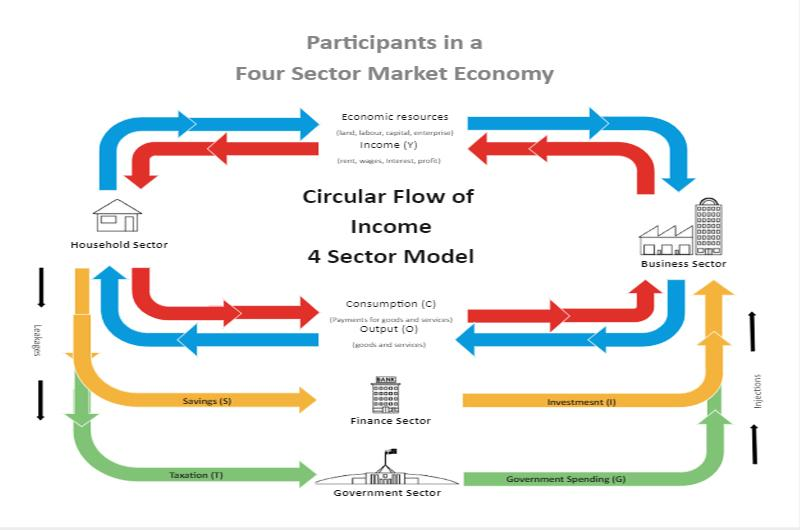
  • Circular Flow of Income in Commerce

    The circular flow of income is a fundamental concept in commerce and economics that explains how money, goods, and services move within an economy. It shows the continuous movement of income between different sectors such as households, firms, government, and the foreign sector. Understanding this concept helps students analyze how an economy functions and how different sectors are interdependent.

    What is Circular Flow of Income?

    The circular flow of income refers to the continuous movement of money and resources between producers and consumers in an economy. It illustrates how income is generated and spent repeatedly, creating a cycle.

    In simple terms:

    • Households provide factors of production (land, labor, capital)
    • Firms use these factors to produce goods and services
    • Firms pay wages, rent, interest, and profit to households
    • Households spend this income on goods and services

    This creates a continuous loop or “circular flow.”

    Two-Sector Model (Basic Economy)

    The simplest form of the circular flow is the two-sector model, which includes:

    1. Households

    Households are consumers. They provide labor and other resources to firms and earn income in return.

    2. Firms

    Firms produce goods and services. They pay income to households and receive money when households buy their products.

    Flow in Two-Sector Model:

    • Households → provide resources → Firms
    • Firms → pay wages → Households
    • Households → spend money → Firms

    This creates a simple and continuous cycle of income and expenditure.

    Four-Sector Model (Real Economy)

    In reality, the economy is more complex and includes four sectors:

    1. Households

    Consumers who spend money on goods and services.

    2. Firms

    Producers who create goods and services.

    3. Government

    The government collects taxes and spends on public services like education, health, and infrastructure.

    4. Foreign Sector

    Includes imports and exports with other countries.

    Flow in Four-Sector Model:

    • Government collects taxes and provides services
    • Firms and households interact with foreign countries through trade
    • Imports and exports affect the flow of income

    This model gives a more realistic picture of how economies operate.

    Leakages and Injections

    The circular flow is affected by two important factors:

    Leakages

    These are withdrawals from the flow of income:

    • Savings
    • Taxes
    • Imports

    Leakages reduce the flow of money in the economy.

    Injections

    These are additions to the flow:

    • Investment
    • Government spending
    • Exports

    Injections increase the flow of income.

    For an economy to remain stable, leakages and injections should be balanced.

    Importance of Circular Flow of Income

    Understanding the circular flow of income is important for several reasons:

    1. Explains Economic Activity

    It shows how production, income, and expenditure are connected.

    2. Helps in Policy Making

    Governments use this concept to design economic policies related to taxation and spending.

    3. Measures National Income

    It helps in understanding how national income is generated and distributed.

    4. Shows Interdependence

    It highlights how households, firms, and government depend on each other.

    Real-Life Example

    Consider a simple example:

    • A worker is employed by a company and earns a salary
    • The worker uses this money to buy goods from the market
    • The company receives this money and uses it to pay wages and invest in production

    This cycle continues, forming the circular flow of income.

    Limitations of the Model

    Although useful, the circular flow model has some limitations:

    • It assumes a simplified economy
    • It may ignore real-world complexities like inflation
    • It does not fully explain income inequality

    Despite these limitations, it remains a powerful tool for understanding basic economic concepts.

    The circular flow of income is a key concept in commerce that explains how money and resources move in an economy. It shows the continuous interaction between households, firms, government, and the foreign sector.

    By understanding this concept, students can better analyze economic activities, policies, and the functioning of markets. It provides a clear picture of how income is generated, distributed, and spent, making it essential for anyone studying commerce or economics.

    For More Information and Updates, Connect With Us

    Stay connected and keep learning with EEPL Classroom!