Author: Baby

  • Choosing the Right Career Made Easy with EEPL Classroom

    Choosing the Right Career Made Easy with EEPL Classroom

    Career confusion is one of the biggest challenges students face today. With countless options, constant pressure from society, and fear of making the wrong choice, many students feel stuck and anxious about their future. Questions like “Which stream should I choose?”, “What career is right for me?”, or “What if I fail?” can feel overwhelming. This confusion often affects confidence, academic performance, and mental peace. For many students, clarity comes only when they find the right guidance—and that’s where EEPL Classroom plays a life-changing role.

    Why Career Confusion Is So Common

    In today’s competitive world, students are expected to decide their future at a very young age. Science, commerce, arts, professional courses, entrance exams—the choices are endless. Add parental expectations, peer pressure, and social media comparisons, and confusion becomes inevitable.

    Most students are never taught how to identify their strengths, interests, or abilities. Instead, they are pushed toward “popular” career paths without understanding whether those paths truly suit them. This often leads to stress, poor performance, and lack of motivation.

    The EEPL Classroom Approach to Career Guidance

    EEPL Classroom understands that career clarity is not about forcing decisions—it’s about discovering direction. Their approach focuses on helping students understand themselves before choosing a career.

    Instead of generic advice, EEPL Classroom provides structured guidance based on:

    • Student strengths and weaknesses
    • Academic interests and aptitude
    • Personality and learning style
    • Long-term goals and realistic opportunities

    This personalized approach helps students make informed and confident decisions.

    Clarity Through Strong Academic Foundations

    One major reason for career confusion is weak conceptual understanding. When students struggle academically, they lose confidence and start doubting their future options. EEPL Classroom addresses this problem at the root.

    By strengthening basics and improving subject clarity, students begin to understand where their true potential lies. As academic confidence grows, career options become clearer. A student who once feared subjects like math or science may discover a genuine interest once concepts are explained properly.

    Career Awareness Beyond Textbooks

    EEPL Classroom goes beyond syllabus teaching. Students are exposed to real-world career insights—what different professions actually involve, what skills are required, and what paths lead to success.

    Through mentoring sessions, discussions, and practical examples, students learn:

    • The difference between interest and pressure
    • Traditional vs. emerging career options
    • Academic paths and alternative routes
    • The importance of skill development

    This awareness removes fear of the unknown and replaces it with informed confidence.
    Reducing Pressure, Building Confidence

    One of the most powerful things EEPL Classroom offers is emotional support. Career confusion often creates anxiety, self-doubt, and fear of failure. Teachers here act as mentors, not just instructors.

    Students are encouraged to ask questions, express concerns, and explore possibilities without judgment. This safe and supportive environment helps them think clearly and make decisions without panic.

    Confidence-building sessions, regular feedback, and motivation play a huge role in helping students trust their choices.

    Helping Students Make Smart, Realistic Choices

    Not every student needs to follow the same path—and EEPL Classroom respects that. Some students are guided toward competitive exams, while others are helped to explore alternative academic or skill-based careers.

    The focus is always on long-term success and personal satisfaction, not temporary trends. Students learn that success is not defined by one career or one exam, but by consistent effort and informed decisions.

    Real Transformation, Real Results

    Many students who once felt lost and confused find clarity after joining EEPL Classroom. They gain:

    • Clear academic direction
    • Improved performance and focus
    • Confidence in decision-making
    • Reduced stress about the future

    Parents also feel reassured knowing their children are receiving the right guidance at the right time.

    Career confusion is not a weakness—it’s a natural part of growing up. What matters is how it’s addressed. With the right mentorship, academic clarity, and emotional support, students can turn confusion into confidence.

    EEPL Classroom doesn’t just help students choose a career—it helps them understand themselves, believe in their abilities, and move forward with clarity. For students feeling lost about their future, the right guidance can make all the difference—and sometimes, it can change everything. 🌟

    For More Information and Updates, Connect With Us

    Stay connected and keep learning with EEPL Classroom!
  • From Weak Student to Confident Learner: A Transformational Journey with EEPL Classroom

    From Weak Student to Confident Learner: A Transformational Journey with EEPL Classroom

    Every student’s learning journey is unique. Some move ahead smoothly, while others struggle quietly—confused, hesitant, and unsure of their own potential. I was one of those “weak students.” Low scores, constant self-doubt, and the fear of classrooms made learning feel overwhelming. But everything changed when I became part of EEPL Classroom. What followed was not just academic improvement, but a complete transformation in confidence, mindset, and self-belief.

    The Struggle Phase: Where It All Began

    Being labeled a weak student is tough. Concepts felt unclear, exams were stressful, and comparisons with peers only made things worse. I hesitated to ask questions, fearing judgment. Teachers moved fast, and I felt left behind. Over time, this created a mental block—maybe I’m just not good at studies. That belief was the biggest obstacle.

    The Turning Point: Enter EEPL Classroom

    Joining EEPL Classroom marked a turning point. From day one, the environment felt different. Instead of focusing only on marks, the teachers focused on understanding. They believed that every student can learn—just at a different pace. This simple belief changed everything for me.

    Classes at EEPL Classroom were structured, interactive, and student-friendly. Teachers explained concepts from the basics, ensuring no one felt lost. For the first time, I felt comfortable saying, “I didn’t understand.” And instead of criticism, I received guidance.

    Personalized Learning: The Game Changer

    One of the biggest strengths of EEPL Classroom is personalized attention. Teachers identified my weak areas and worked on them patiently. Doubts were welcomed, not rushed. Regular practice sessions, revision classes, and doubt-clearing hours helped reinforce learning.

    Slowly, concepts that once seemed impossible started making sense. Mathematics stopped being scary. Science became interesting. This clarity built confidence—step by step.

    Building Confidence Beyond Books

    Confidence doesn’t come only from good marks; it comes from feeling capable. EEPL Classroom focused equally on mindset. Teachers motivated us, shared practical tips for exams, and taught us how to manage stress and time effectively.

    Frequent tests were conducted, not to scare us, but to prepare us. Detailed feedback helped me understand where I went wrong and how to improve. Each small improvement felt like a victory.

    A Supportive Environment Matters

    What truly sets EEPL Classroom apart is its supportive atmosphere. There was no shame in making mistakes. Instead, mistakes were treated as part of learning. Surrounded by encouraging teachers and motivated classmates, I felt inspired to do better.

    Group discussions, interactive problem-solving, and regular encouragement helped me come out of my shell. I started participating in class, asking questions, and even helping others—something I never imagined before.

    The Results: More Than Just Marks

    Over time, my academic performance improved significantly. Scores went up, but more importantly, fear went down. Exams no longer felt terrifying. I learned how to approach problems calmly and logically.

    But the biggest result was internal—I started believing in myself. I no longer saw myself as a weak student, but as a learner who just needed the right guidance.

    The Transformation: Weak to Confident

    Today, I walk into classrooms with confidence. I know I can learn, improve, and succeed. This transformation wouldn’t have been possible without EEPL Classroom’s dedicated teachers, structured approach, and belief in students like me.

    The journey from a weak student to a confident learner is not easy, but it is absolutely possible—with the right support. EEPL Classroom doesn’t just teach subjects; it builds confidence, clarity, and character. If you’re a student struggling with self-doubt or academics, remember this: you’re not weak—you’re just waiting for the right environment to grow.

    For More Information and Updates, Connect With Us

    Stay connected and keep learning with EEPL Classroom!
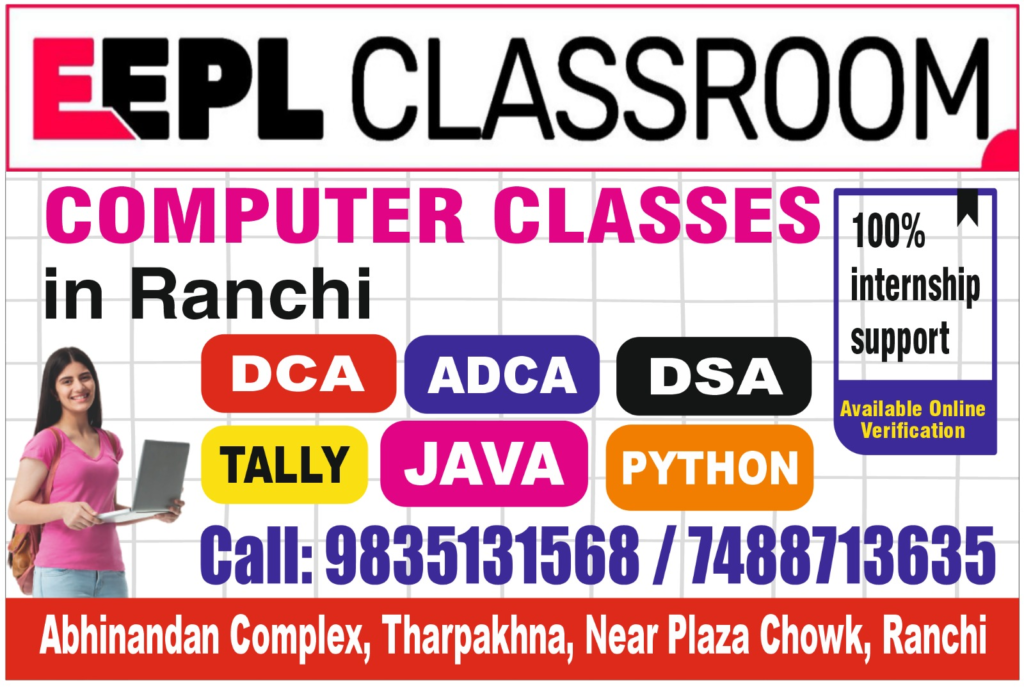
  • DCA Course: First Step Toward Office Jobs

    DCA Course: First Step Toward Office Jobs

    In today’s digital age, basic computer knowledge is no longer optional—it’s essential. Whether you are a student, fresher, or someone looking to start a stable career, the DCA (Diploma in Computer Applications) course is one of the smartest first steps toward office jobs. It builds strong foundations in computers and prepares learners for real workplace requirements.

    What Is a DCA Course?

    The DCA course is designed to teach practical computer skills used in offices, businesses, schools, and organizations. It focuses on hands-on learning rather than theory, making it ideal for beginners with no technical background. From operating a computer to managing data and documents, DCA covers everything needed for entry-level office roles.

    Why DCA Is Important for Office Jobs

    Most office jobs today require basic digital skills. Employers expect candidates to know how to work with computers, prepare documents, manage data, and communicate digitally. The DCA course trains students in:

    • Computer fundamentals
    • MS Word, Excel, and PowerPoint
    • Internet and email usage
    • Basic accounting and data handling
    • Typing and office productivity tools

    These skills are essential for roles like office assistant, data entry operator, receptionist, computer operator, and back-office executive.

    Who Should Join a DCA Course?

    The DCA course is perfect for:

    • Students after 10th or 12th
    • College freshers
    • Non-technical students
    • Job seekers aiming for office roles
    • Housewives or career restarters
    • Anyone who wants computer confidence

    No prior computer knowledge is required, which makes DCA a great starting point for everyone.

    Career Opportunities After DCA

    After completing a DCA course, students can apply for various entry-level jobs such as:

    • Office Assistant
    • Computer Operator
    • Data Entry Executive
    • Back Office Staff
    • Receptionist
    • Junior Clerk

    DCA also creates a strong base for advanced courses like Tally, Digital Marketing, Programming, or other IT certifications.

    Why Learn DCA at EEPL, Ranchi?

    Choosing the right institute matters as much as choosing the right course. At EEPL, students get career-oriented DCA training with a focus on practical skills and confidence building. Located in Ranchi, EEPL offers a supportive classroom environment where beginners feel comfortable learning from scratch.

    Key benefits include:

    • Beginner-friendly teaching
    • Practical, hands-on sessions
    • Experienced trainers
    • Affordable fees
    • Classroom-based learning
    • Guidance for jobs and career growth

    The course is structured to match real office work, helping students become job-ready.

    Why DCA Is the Right First Step

    For many students, jumping directly into advanced IT courses can feel overwhelming. DCA acts as a bridge between education and employment, helping learners gain confidence with computers before moving ahead. It opens doors to office jobs while also preparing students for future learning.

    Admissions Open at EEPL, Ranchi

    If you are looking for a safe, affordable, and effective way to start your career, the DCA course at EEPL is the right choice. With growing demand for computer-literate professionals, now is the best time to enroll and secure your future.

    Start small, learn smart, and step confidently into the world of office jobs with DCA.


    For More Information and Updates, Connect With Us

    Stay connected and keep learning with EEPL Classroom!


  • Digital Literacy Is the New Education: Why Every Student Needs It Today

    Digital Literacy Is the New Education: Why Every Student Needs It Today

    In the 21st century, education is no longer limited to textbooks, blackboards, and traditional classrooms. The world has moved online — and so must learning. Digital literacy is the new education, and students who master it are better prepared for academic success, career growth, and responsible citizenship.

    Today’s learners are growing up in a world shaped by technology, artificial intelligence, and instant global communication. Platforms like Google, Microsoft, and Apple influence how we work, learn, and connect. Understanding how to navigate this digital ecosystem is no longer optional — it is essential.

    What Is Digital Literacy?

    Digital literacy goes beyond knowing how to use a smartphone or browse social media. It includes:

    • Understanding how to search and evaluate online information
    • Communicating professionally through digital platforms
    • Using productivity tools like documents, spreadsheets, and presentations
    • Practicing online safety and digital ethics
    • Understanding basic coding and emerging technologies

    In short, digital literacy empowers students to think critically, create confidently, and communicate effectively in a technology-driven world.

    Why Digital Literacy Is the New Education

    1. Education Has Gone Digital

    From online assignments to virtual classrooms, technology is deeply integrated into modern education. Schools and colleges use digital platforms for attendance, assessments, project submissions, and collaboration.

    Students who lack digital skills often struggle — not because they are not intelligent, but because they are not digitally prepared.

    2. Careers Demand Digital Skills

    Employers today expect graduates to be comfortable with digital tools. Whether in business, healthcare, engineering, marketing, or entrepreneurship, digital competency is a core requirement.

    Even traditional industries now rely on:

    • Data analysis
    • Cloud platforms
    • Online communication tools
    • Digital marketing
    • Automation systems

    Students who develop digital literacy early gain a competitive advantage in college admissions and job placements.

    3. Critical Thinking in the Age of Information

    The internet is full of information — but not all of it is accurate. Digital literacy teaches students how to:

    • Verify sources
    • Identify misinformation
    • Protect their personal data
    • Maintain privacy online

    This is essential for developing responsible and informed global citizens.

    Digital Literacy in the Modern Classroom

    Forward-thinking institutions are transforming traditional classrooms into digital learning environments. One strong example is EEPL Classroom, which focuses on integrating technology-driven education into student development.

    The EEPL Classroom model emphasizes:

    • Smart interactive learning
    • Practical technology exposure
    • Skill-based training
    • Digital collaboration tools
    • Career-oriented curriculum

    This approach ensures that students are not just memorizing content — they are building real-world skills.

    Why Parents Should Prioritize Digital Education

    Parents today face a crucial question: Is traditional education alone enough for my child’s future?

    The answer is increasingly clear — no.

    Digital education prepares students to:

    • Adapt to technological change
    • Compete globally
    • Innovate and solve real-world problems
    • Build confidence in virtual environments

    When parents choose institutions that emphasize digital literacy, they are investing in their child’s long-term success.

    Student Admission: Step into the Future with EEPL Classroom

    If you are looking for a future-ready learning environment, student admission at EEPL Classroom offers an opportunity to embrace modern education.

    At EEPL Classroom, students gain:

    • Exposure to advanced digital tools
    • Structured skill development programs
    • Mentorship and guidance
    • A collaborative and interactive learning ecosystem

    The admission process is designed to be simple and accessible, ensuring that every motivated learner can join and grow.

    By enrolling in a digitally advanced classroom, students position themselves ahead of the curve — academically and professionally.

    The Future Belongs to the Digitally Skilled

    Technology is not slowing down. Artificial intelligence, automation, and digital transformation are shaping industries across the globe. Students who are digitally literate will not just survive — they will lead.

    Digital literacy is no longer an additional subject; it is the foundation of modern education. Just as reading and writing were once revolutionary skills, today it is the ability to navigate, create, and innovate in digital spaces that defines true education.

    The question is not whether digital literacy matters — it is whether we are ready to prioritize it.

    For students aiming for academic excellence and career readiness, and for parents seeking meaningful education pathways, embracing digital literacy through progressive institutions like EEPL Classroom is the smart choice.

    The future classroom is digital. The future student is digitally empowered. And the future begins now.

    For More Information and Updates, Connect With Us

    Stay connected and keep learning with EEPL Classroom!

  • The Benefits of Spoken English: Unlocking Opportunities with EEPL Ranchi

    The Benefits of Spoken English: Unlocking Opportunities with EEPL Ranchi

    English has become more than just a language—it’s a key that opens doors to education, career opportunities, and personal growth. While reading and writing are important, spoken English has a special power: it connects people, builds confidence, and enables effective communication. Whether you are a student, a professional, or someone looking to improve everyday interactions, speaking English fluently can truly change your life.

    Let’s face it—communication is everything. Think about a job interview, a classroom discussion, or even traveling abroad. You might have excellent ideas, great knowledge, or impressive skills, but if you can’t express yourself clearly, those talents might go unnoticed. Spoken English allows you to communicate your thoughts effectively, helping you share your ideas with clarity and precision. It makes you confident in both personal and professional situations.

    One of the biggest benefits of spoken English is confidence. Speaking in a language you’re comfortable with gives you a sense of self-assurance. Imagine asking questions in a meeting or expressing opinions without hesitation. The more you practice speaking English, the more confident you become. This confidence doesn’t just stay in language—it spills over into other areas of life, helping you participate actively in discussions, debates, and group activities.

    Another key benefit is career growth. In many industries, English is the language of business. Companies, especially multinational ones, value employees who can communicate fluently in English. Whether it’s negotiating with clients, attending virtual meetings, or writing emails, strong spoken English skills can set you apart. Many placement drives and recruitment processes also assess communication skills alongside technical knowledge. A professional who can speak English well often gets better opportunities, higher chances of promotion, and the ability to work on international projects.

    This is where EEPL Ranchi can make a real difference. Their spoken English classes are designed to improve fluency, pronunciation, and confidence through practical exercises, interactive sessions, and real-life simulations. By attending these classes, students learn to speak confidently in interviews, workplace discussions, and presentations. Regular practice in a structured environment helps learners overcome hesitation and become comfortable expressing themselves in English.

    Spoken English also enhances social interactions. Life isn’t just about work—it’s about relationships. From making new friends to traveling abroad, the ability to speak English opens up countless avenues for connection. You can engage with people from different cultures, understand global perspectives, and enjoy movies, books, and online content more fully. EEPL Ranchi encourages students to practice English through group discussions, role-plays, and peer interactions, making learning natural, fun, and effective.

    Learning spoken English also improves other language skills. When you practice speaking, you naturally work on pronunciation, grammar, vocabulary, and listening skills. You start thinking in English rather than translating from your native language, which makes conversations faster, more natural, and more engaging.

    For students, spoken English is particularly beneficial. It makes classroom participation, group discussions, and presentations much easier. Many competitive exams and placement tests also focus on English communication. EEPL Ranchi’s placement-oriented spoken English programs give students a real advantage, preparing them to communicate effectively in interviews and workplace settings.

    Another important benefit is personal growth. Learning to speak English exposes you to new ideas, perspectives, and cultures. You learn to express emotions, share stories, and connect with people beyond your immediate community. Spoken English enhances critical thinking, empathy, and global awareness, making you not just professionally competent but personally enriched.

    In conclusion, spoken English is more than just a language—it’s a bridge to opportunity, growth, and connection. It boosts confidence, enhances career prospects, improves social interactions, and supports personal development. With the right guidance and regular practice, anyone can improve their spoken English, and EEPL Ranchi provides the perfect platform for this. Their experienced instructors, interactive teaching methods, and focus on real-world application ensure that students gain the skills they need to succeed.

    So, whether you are preparing for placements, aiming for a promotion, or simply wanting to express yourself more clearly, invest time in learning spoken English. Attend classes at EEPL Ranchi, practice regularly, and speak with confidence. Every conversation is a step closer to fluency, and every word you speak is a step closer to new opportunities.

    Remember: English is not just a subject—it’s a skill that empowers you to express your ideas, share your voice, and navigate the world with confidence. Start speaking today, and watch how it transforms your personal and professional life.

    For More Information and Updates, Connect With Us

    Stay connected and keep learning with EEPL Classroom!

  • Fast Fingers, Big Opportunities: Typing Speed and Career Growth

    Fast Fingers, Big Opportunities: Typing Speed and Career Growth

    Typing is no longer just a skill—it’s a doorway to opportunities. From students submitting assignments to professionals managing emails, reports, and presentations, our lives revolve around the keyboard. Yet, many underestimate how much typing speed and accuracy can influence career growth. It’s not just about hitting keys faster; it’s about efficiency, confidence, and adaptability in an increasingly tech-driven workplace.

    Imagine this: two candidates walk into an office for a job interview. Both are equally talented and qualified on paper. One can type 40 words per minute, while the other types 80 with accuracy. Who do you think will impress a modern employer more? In roles where digital communication, documentation, and real-time reporting are crucial, the ability to type swiftly isn’t just convenient—it can be a game-changer. Typing speed reflects your comfort with technology and your ability to handle tasks efficiently, which employers highly value today.

    Key Points: EEPL Ranchi Advantage

    • Professional Typing Training: EEPL Ranchi offers specialized courses to improve typing speed and accuracy, designed to prepare students for corporate and government placements.
    • Hands-on Practice: With state-of-the-art computer labs, students get daily practice sessions to build speed, accuracy, and confidence.
    • Placement-Oriented Learning: Typing is integrated with skill development programs, ensuring that students are ready for real-world job requirements.
    • Certification & Recognition: EEPL Ranchi provides recognized certificates that enhance resumes and boost employability in data entry, administrative roles, and IT sectors.
    • Career Opportunities: Alumni of EEPL Ranchi have successfully secured placements in reputed companies where typing proficiency was a key factor.

    Typing speed also shapes confidence. There’s a subtle difference between someone who hesitates on the keyboard and someone who types effortlessly. The latter exudes competence, often leaving a positive impression on colleagues, clients, and supervisors. During meetings, for example, taking notes in real-time without constantly looking back at the screen shows attention, engagement, and reliability. These small but significant factors can influence promotions, appraisals, and career growth, making typing proficiency a skill that goes beyond the keyboard.

    Moreover, typing opens doors to a wide range of opportunities. Careers in data entry, transcription, virtual assistance, content writing, programming, and digital marketing all demand fast, accurate typing. Even in roles that aren’t purely technical, proficiency with keyboards and digital tools is increasingly considered a basic professional skill. Typing is no longer just a tool; it’s a foundation for adaptability in a workplace that is progressively online.

    This is where institutions like EEPL Ranchi make a significant difference. They understand that typing speed isn’t innate—it can be developed and refined with proper guidance. EEPL Ranchi provides specialized courses that focus on speed, accuracy, and professional readiness. Students get access to state-of-the-art computer labs where they can practice daily, building both speed and confidence. With structured lessons, online tools, and hands-on exercises, learners are prepared not just to type, but to excel in real-world professional environments.

    EEPL Ranchi also integrates typing with placement-oriented programs, ensuring students are ready for corporate and government job requirements. Certifications from EEPL Ranchi add credibility to resumes and enhance employability, particularly in careers where typing speed is a key factor. Many alumni have successfully secured roles in reputed organizations where typing efficiency played a pivotal role in their selection.

    Like any skill, typing speed improves with practice. Modern platforms, typing games, and structured tests make learning enjoyable and effective. Consistency is key: dedicating just 15–20 minutes per day to focused practice can yield remarkable results over a few weeks.

    It’s also worth noting the humanistic side of typing. While technology evolves and AI tools become more advanced, the human touch—your ability to think critically, express ideas clearly, and respond empathetically—remains irreplaceable. Typing speed amplifies these qualities by enabling humans to communicate ideas efficiently. Faster typing doesn’t just mean quicker work; it means ideas reach the world sooner, voices are heard, and collaboration becomes seamless. Typing proficiency, therefore, doesn’t just affect careers—it strengthens human connections and amplifies impact.

    Finally, typing aligns with the philosophy of lifelong learning. In every career, adapting to new tools and workflows is vital. Those who prioritize typing skills demonstrate discipline, commitment, and foresight. Small improvements today can create a cascading effect, boosting career prospects tomorrow.

    In conclusion, typing speed is far more than a technical skill—it reflects efficiency, confidence, and adaptability. Whether you are a student preparing for placements, a professional climbing the corporate ladder, or a freelancer managing multiple clients, your typing ability can make a measurable difference. EEPL Ranchi ensures students develop this crucial skill, providing training, practice, and certification to remain competitive in any workplace.

    So, the next time you sit at your keyboard, remember: each keystroke is a step toward opportunity, growth, and success. Don’t just type—type with purpose, speed, and precision. Your career might just depend on it.

    For More Information and Updates, Connect With Us

    Stay connected and keep learning with EEPL Classroom!

  • Maths Strong + Coding Strong = Tech Future

    Maths Strong + Coding Strong = Tech Future

    A Fresh Perspective for Students at EEPL Ranchi

    In today’s fast-paced digital world, excelling in academics alone is no longer enough. To thrive in the technology-driven economy, students need a combination of strong mathematical foundations and coding proficiency. This powerful combination — Maths Strong + Coding Strong = Tech Future — is becoming the key to unlocking opportunities in software development, data science, artificial intelligence, and emerging tech fields.

    At institutions like EEPL Ranchi, students are being trained to integrate these skills, ensuring they not only excel in exams but are also prepared for real-world tech challenges.


    Why Mathematics Matters in Technology

    Mathematics is the backbone of logical reasoning, analytical thinking, and problem-solving. Concepts learned in school and college — from algebra and calculus to probability and statistics — are more than numbers on paper. They form the language of technology.

    • Algorithms: Coding is all about algorithms, which rely heavily on mathematical logic.
    • Data Analysis: Statistics and probability are crucial for interpreting data and making decisions.
    • Machine Learning & AI: These fields are built on linear algebra, calculus, and probability models.
    • Problem-Solving Skills: Mathematical thinking strengthens structured approaches to tackling complex challenges.

    Students who are confident in mathematics can write more efficient code, design smarter algorithms, and understand advanced tech concepts with ease.


    Coding: The Skill That Turns Ideas into Reality

    While mathematics provides the foundation, coding is the tool that transforms abstract ideas into practical applications. Learning programming languages like Python, Java, C++, and JavaScript allows students to bring concepts to life — from building web apps to creating AI models.

    At EEPL Ranchi, coding is taught not just as syntax and functions, but as a creative problem-solving tool:

    • Hands-On Projects: Students implement theoretical concepts into live projects.
    • Real-World Applications: Coding skills are applied in app development, game design, and automation.
    • Collaboration: Group coding projects develop teamwork and communication skills.
    • Portfolio Building: Projects showcase skills to future employers or clients.

    By combining coding practice with mathematical reasoning, students gain a deep understanding of technology and develop the confidence to innovate.


    The Magic of Maths + Coding

    When strong mathematical knowledge meets coding proficiency, the results are transformative:

    1. Efficient Algorithms: Maths allows students to design algorithms that are optimized and scalable.
    2. Data-Driven Decision Making: Students can write programs that analyze and interpret complex datasets accurately.
    3. Innovation in Emerging Technologies: Fields like AI, machine learning, robotics, and blockchain require both coding and mathematical modeling.
    4. Problem-Solving Mastery: Students can tackle complex real-world problems using logical and computational thinking.

    This combination ensures that students are not just coders, but technology innovators — individuals who can analyze, design, and implement solutions in any tech environment.


    How EEPL Ranchi Prepares Students

    EEPL Ranchi focuses on nurturing both mathematical reasoning and coding proficiency through structured programs:

    • Integrated Training: Maths concepts are taught alongside coding exercises to reinforce learning.
    • Practical Labs: Students solve real-world problems using both math and programming skills.
    • Mentorship: Experienced trainers guide students to apply theory into practical applications.
    • Workshops & Hackathons: Events encourage innovation and teamwork while testing skills under real-world conditions.
    • Career Guidance: Students are prepared for placements, internships, and higher education opportunities in technology.

    This holistic approach ensures students leave with knowledge, confidence, and market-ready skills.


    Career Opportunities for Maths + Coding Experts

    Students who master both mathematics and coding are highly sought after in multiple industries:

    • Software Development: Efficient coding and algorithm design for applications and platforms.
    • Data Science & Analytics: Interpreting large datasets to drive business decisions.
    • Artificial Intelligence & Machine Learning: Designing predictive models and intelligent systems.
    • Cybersecurity: Developing secure algorithms and analyzing system vulnerabilities.
    • Finance & FinTech: Building tools for data-driven financial analysis and trading.

    By strengthening both math and coding skills, students future-proof their careers in a competitive digital landscape.


    Developing a Growth Mindset

    Beyond technical skills, Maths + Coding training also fosters critical soft skills:

    • Logical Thinking: Breaking down complex problems into manageable steps.
    • Creativity: Coding allows for experimenting and developing innovative solutions.
    • Persistence: Debugging code and solving challenging problems builds resilience.
    • Collaboration: Group projects teach communication and teamwork, essential in professional environments.

    EEPL Ranchi emphasizes this growth mindset, ensuring students are prepared for both technical challenges and professional success.


    Building the Tech Future

    The formula is simple but powerful: Maths Strong + Coding Strong = Tech Future. Students who embrace this combination gain more than academic success — they gain confidence, creativity, and the skills to thrive in a digital-first world.

    EEPL Ranchi empowers students to bridge the gap between theory and practice, preparing them not just to excel in exams but to innovate, create, and lead in the technology landscape.

    In the 21st century, marks alone are not enough. Skills alone are not enough. The future belongs to students who combine mathematical reasoning with coding expertise — students who can analyze, design, and implement solutions that shape the world.

    Start strong in maths, code confidently, and your tech future awaits.

    For More Information and Updates, Connect With Us

    Stay connected and keep learning with EEPL Classroom!
  • Beyond Grades: Practical Knowledge + School Marks = Student Success at EEPL Ranchi

    Beyond Grades: Practical Knowledge + School Marks = Student Success at EEPL Ranchi

    A Fresh Perspective for Students at EEPL Ranchi

    For generations, students have been told that good marks are the key to a successful future. Score high, rank well, secure admission, and life will fall into place. While academic performance is important, today’s competitive world demands more than report cards. Real success lies at the intersection of school marks and practical knowledge.

    At institutions like EEPL Ranchi, this balance is becoming the foundation of student growth. Because in the modern world, knowledge must not only be learned — it must be applied.


    The Value of School Marks

    Let’s begin with the basics. School marks matter.

    They reflect discipline, consistency, and understanding of academic concepts. Good marks:

    • Strengthen fundamental knowledge
    • Open doors to higher education
    • Build academic credibility
    • Demonstrate dedication and focus

    Subjects like mathematics, science, and language develop logical thinking, analytical ability, and communication skills. These are essential life tools.

    However, marks alone do not guarantee success. Many students with excellent academic records struggle when asked to apply their knowledge in real-world situations. That is where practical learning changes everything.


    Why Practical Knowledge Matters

    Practical knowledge transforms theory into action.

    It answers questions like:

    • How does this concept work in real life?
    • How do I solve real problems?
    • How can I use my skills to earn and grow?

    Today’s employers look beyond certificates. They seek students who can:

    • Think critically
    • Communicate effectively
    • Work in teams
    • Adapt to new challenges
    • Use technology confidently

    Practical exposure — internships, workshops, live projects, and skill-based training — develops these abilities.

    In a fast-changing economy driven by technology, innovation, and entrepreneurship, practical knowledge is not optional. It is essential.


    The Power of Combination

    Imagine two students.

    One has excellent marks but no hands-on experience.
    The other has practical skills but weak academic foundations.

    Both may face limitations.

    Now imagine a third student — one who combines strong academic performance with practical exposure. This student understands concepts deeply and knows how to apply them. This is the student who stands out in interviews, competitions, and real-world environments.

    That is the formula:

    School Marks + Practical Knowledge = Real Success

    It is not about choosing one over the other. It is about integration.


    The Role of Skill-Based Training

    Modern education is evolving. Institutions and training centers are recognizing the need to bridge the gap between classroom learning and industry expectations.

    Skill-based programs in areas like:

    • Computer programming
    • Digital marketing
    • Web development
    • Communication skills
    • Entrepreneurship
    • Financial literacy

    help students translate academic knowledge into real capabilities.

    When a student learns mathematics in school and then applies logic to coding, the learning becomes powerful. When a student studies business theory and then builds a small startup project, confidence grows.

    Practical learning builds courage — the courage to experiment, fail, learn, and improve.


    Confidence: The Hidden Advantage

    Marks can build pride.
    Practical experience builds confidence.

    Confidence comes from doing.

    The first time a student completes a live project.
    The first time they present in front of a group.
    The first time they solve a real client problem.

    These moments shape personality.

    Students become proactive instead of passive. They stop waiting for instructions and start taking initiative. This mindset shift is what prepares them for leadership roles in the future.


    Preparing for the Real World

    The world today values adaptability. Industries are changing rapidly due to automation, artificial intelligence, and digital transformation. Students who rely only on textbook knowledge may struggle to keep up.

    But students who combine academic excellence with hands-on skills are ready for change.

    They can:

    • Learn new tools quickly
    • Solve unfamiliar problems
    • Work independently
    • Create opportunities instead of waiting for them

    This adaptability ensures long-term success — not just short-term achievement.


    Parents and Students: A Shared Responsibility

    Parents often emphasize marks because they want stability and security for their children. This intention is valid. But success today requires a broader perspective.

    Students must take initiative to:

    • Participate in workshops
    • Join internships
    • Develop technical skills
    • Improve communication
    • Build portfolios

    When families, schools, and training institutions work together, students receive a balanced education — one that prepares them not only for exams, but for life.


    Redefining Success

    Success is no longer defined by marks alone. It is defined by impact, independence, skills, and the ability to adapt.

    A student who scores well and can apply knowledge practically is prepared for:

    • Higher education
    • Competitive exams
    • Job opportunities
    • Entrepreneurship
    • Personal growth

    This is real success — sustainable, confident, and future-ready.


    Marks open doors.
    Skills keep them open.

    At EEPL Ranchi, the vision is clear: empower students with both academic strength and practical expertise. Because when theory meets application, potential becomes performance.

    The future belongs to students who understand this simple truth:

    School Marks + Practical Knowledge = Real Success.

    For More Information and Updates, Connect With Us

    Stay connected and keep learning with EEPL Classroom!
    📍 Location: 1st Floor, Abhinandan Complex, Near Plaza Chowk, Near Government Women’s Polytechnic(GWP) Ranchi – 01

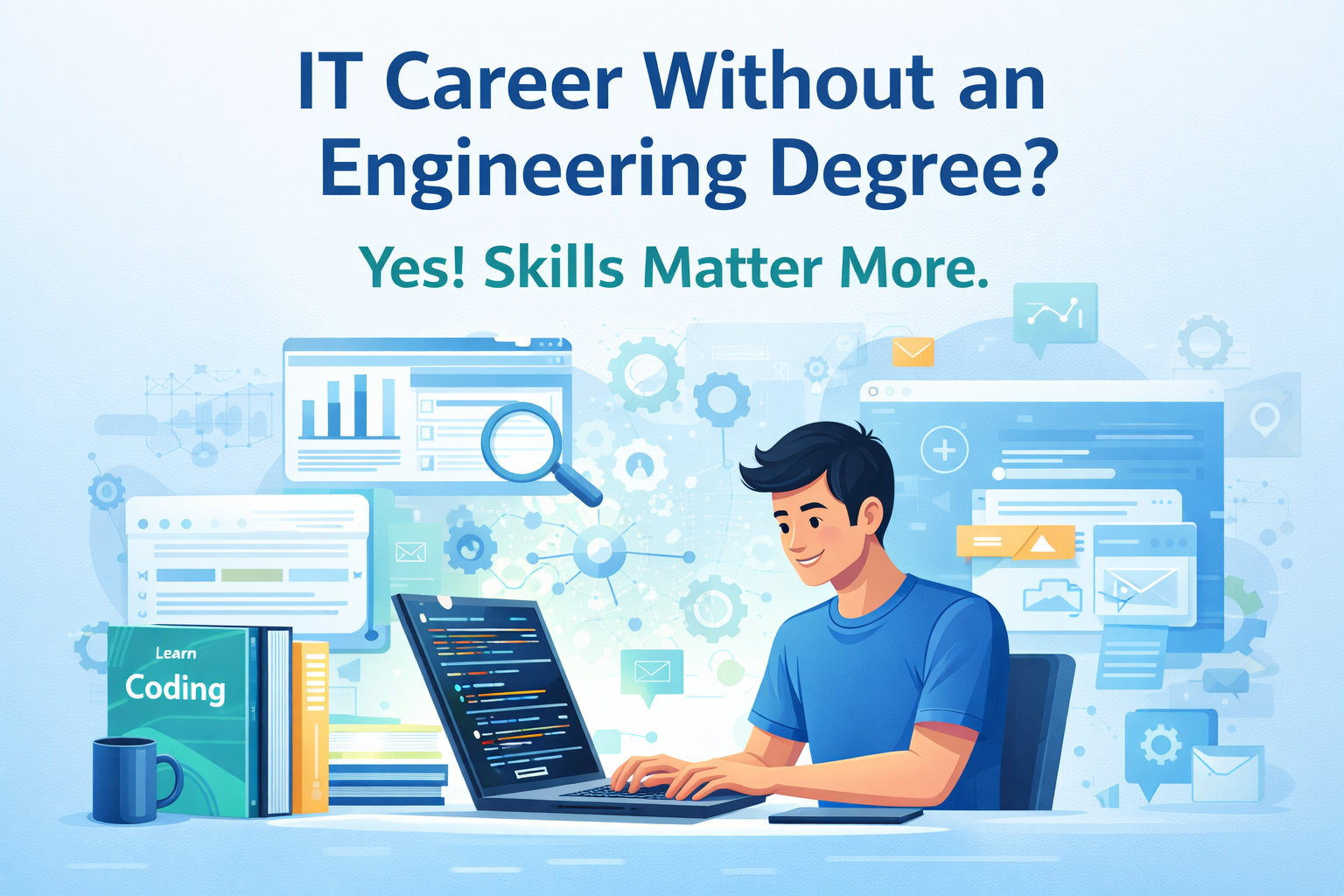
  • IT Career Without an Engineering Degree: Is It Really Possible?

    IT Career Without an Engineering Degree: Is It Really Possible?

    For a long time, many people believed that an engineering degree was the only way to build a successful career in the IT industry. If you didn’t study engineering, you were often told that IT was “not for you.” However, times have changed. Today, the IT industry values skills more than degrees.

    So, the big question is: Can you really build an IT career without an engineering degree?
    The short answer is yes, absolutely.

    Let’s break it down in a simple and honest way.


    Why the IT Industry Has Changed

    Earlier, IT jobs were limited, and companies mostly hired engineering graduates. But now, technology is everywhere. Businesses need websites, apps, data analysis, digital marketing, automation, and AI solutions. Because of this massive growth, companies are struggling to find skilled professionals.

    As a result, employers now focus more on what you can do rather than what degree you have. If you can solve problems, write code, or manage systems efficiently, you are valuable—degree or no degree.


    Skills Matter More Than Degrees

    In IT, skills are everything. Whether you are a programmer, data analyst, web developer, or cybersecurity professional, your practical knowledge matters the most.

    For example:

    • A company will test your coding skills, not your college name
    • Clients care about project results, not your degree certificate
    • Freelance platforms judge you by your portfolio and reviews

    Therefore, if you have strong skills and real-world experience, you can compete with engineering graduates confidently.


    IT Roles You Can Get Without an Engineering Degree

    Many IT roles clearly do not require an engineering background. Here are some popular options:

    1. Web Developer

    Web development focuses on building websites and web applications. With skills in HTML, CSS, JavaScript, and frameworks, you can start a career easily.

    2. Software Tester / QA

    Testing roles focus on finding bugs and improving software quality. These roles value attention to detail more than degrees.

    3. Data Analyst

    If you enjoy working with data, numbers, and insights, data analysis is a great option. Tools like Excel, SQL, Python, and Power BI are more important than degrees.

    4. Digital Marketing Specialist

    Digital marketing is tech-driven but creative. SEO, social media, ads, and analytics skills can lead to high-paying jobs without engineering.

    5. UI/UX Designer

    Designers focus on user experience and interface design. Creativity, tools, and design thinking matter more than formal education.

    6. IT Support and System Administration

    These roles focus on managing systems, networks, and troubleshooting. Certifications and hands-on practice are key here.


    How to Start an IT Career Without Engineering

    Starting without an engineering degree requires the right approach. The good news is that you don’t need to know everything from day one.

    Step 1: Choose One Skill

    Instead of learning everything, pick one IT domain that interests you—coding, data, design, or networking.

    Step 2: Learn Practically

    Online courses, training institutes, and practice projects help you learn real skills. Focus on hands-on learning rather than theory.

    Step 3: Build Projects

    Projects prove your skills. Create websites, apps, dashboards, or automation scripts. This becomes your portfolio.

    Step 4: Get Certified

    Certifications help build trust, especially if you don’t have a degree. They show commitment and knowledge.

    Step 5: Apply Smartly

    Start with internships, entry-level jobs, freelance work, or startups. Experience matters more than job titles in the beginning.


    What Employers Really Look For

    Employers today look for:

    • Problem-solving ability
    • Practical skills and tools knowledge
    • Willingness to learn
    • Communication and teamwork
    • Real project experience

    In fact, many hiring managers openly say they prefer skilled candidates over degree holders who lack hands-on experience.


    Real Success Stories Are Everywhere

    Many successful IT professionals today are from non-engineering backgrounds—arts, commerce, science, or even self-taught learners. Some started as freelancers, some learned online, and others switched careers after years in different fields.

    What they all have in common is consistency, curiosity, and continuous learning.


    Challenges You Might Face

    Let’s be honest—there can be challenges. You may face rejection initially, or some companies may still prefer degrees. However, these challenges reduce quickly as your experience and skills grow.

    Once you have strong projects and work experience, your degree becomes far less important.


    Degree Is Optional, Skills Are Mandatory

    So, is an IT career without an engineering degree possible?
    Yes—and it’s already happening every day.

    If you are willing to learn, practice regularly, and improve your skills, the IT industry welcomes you. Your background does not define your future—your skills do.

    In the end, IT is not about degrees. It’s about what you can build, solve, and deliver.

    For More Information and Updates, Connect With Us

    Stay connected and keep learning with EEPL Classroom!
  • DTP Skills: What They Are and How They Help You Earn Through Freelancing

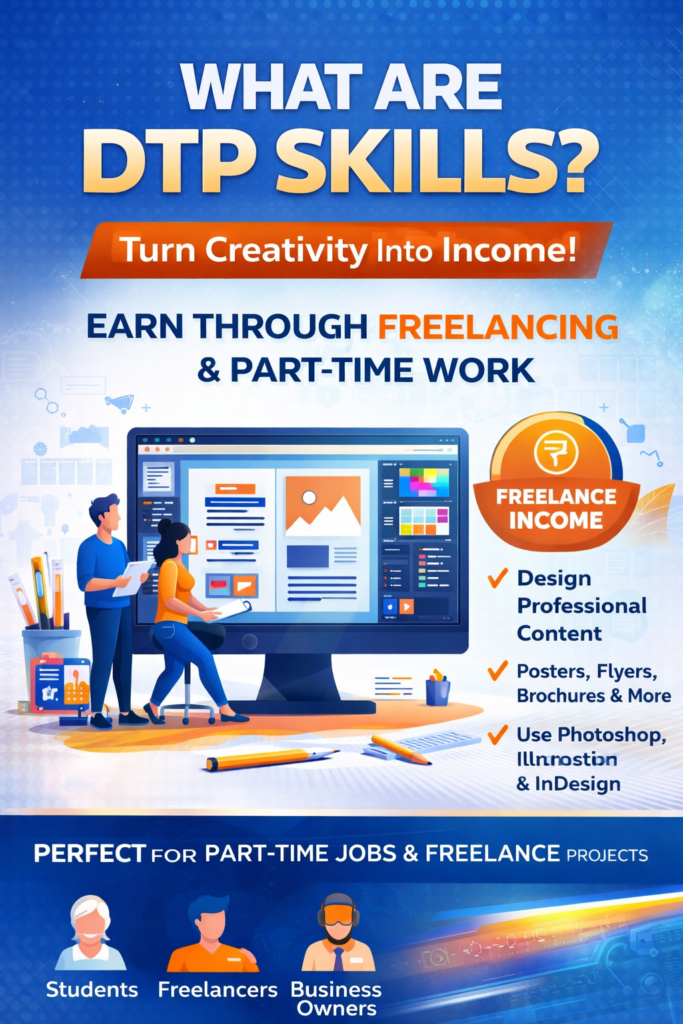
    DTP skills (Desktop Publishing skills) are the abilities used to design, format, and prepare content for print and digital publishing. In simple words, DTP skills help you create professional-looking documents, graphics, and layouts.

    In today’s digital world, visual content plays a major role in communication. Whether it is a poster, brochure, banner, or social media graphic, everything needs proper design to look professional and attractive. This is where DTP skills come in. Desktop Publishing (DTP) skills are creative and technical abilities that help individuals design, format, and prepare content for print and digital platforms.

    As businesses grow and online marketing increases, the demand for skilled DTP professionals is also rising. Therefore, learning DTP skills can open doors to freelancing, part-time income, and even full-time career opportunities.


    What Are DTP Skills?

    DTP skills refer to the knowledge and ability to use computer software to create visually appealing designs and layouts. In simple words, DTP skills help you turn text and images into professional-quality designs.

    For example, a simple document becomes a polished brochure after applying correct fonts, colors, spacing, and images. As a result, the final output looks attractive, readable, and suitable for printing or online sharing.


    What Can You Create Using DTP Skills?

    With DTP skills, you can design a wide range of materials. Moreover, these designs are required in almost every industry.

    Some common examples include:

    • Posters and flyers for promotions
    • Banners and hoardings for advertisements
    • Business cards and visiting cards
    • Brochures, pamphlets, and catalogs
    • Magazines, newspapers, and books
    • Social media posts and digital ads

    Therefore, DTP professionals are needed by print shops, advertising agencies, businesses, and online clients.


    Key DTP Skills You Learn with EEPL CLASSROOM

    When you start learning DTP, you develop multiple creative and technical skills. In addition, these skills improve with practice and real projects.

    1. Page Layout and Design

    This involves arranging text, images, and graphics properly. For instance, spacing, alignment, and margins play an important role in professional design.

    2. Typography

    Typography means working with fonts and text styles. Moreover, choosing the right font improves readability and design quality.

    3. Image Editing

    DTP professionals often edit images to improve quality. As a result, photos look sharper, brighter, and more attractive.

    4. Color Management

    Understanding colors is very important in DTP. Therefore, designers learn how to use color combinations correctly for print and digital designs.

    5. Print and Digital Formatting

    Designing for print is different from digital platforms. Hence, DTP skills teach how to prepare files correctly for both uses.


    Popular Software Used in DTP

    To apply DTP skills, professionals use industry-standard software. Additionally, these tools are widely accepted by clients and companies.

    Commonly used DTP tools include:

    • Adobe Photoshop for image editing
    • Adobe Illustrator for vector graphics
    • Adobe InDesign for page layouts
    • CorelDRAW for print and design work

    As a result, learning these tools increases job and freelancing opportunities.


    Why Are DTP Skills Important Today?

    DTP skills are valuable because they combine creativity with earning potential. Moreover, they allow flexible work options.

    Some key benefits include:

    • Opportunity to work as a freelancer
    • Scope for part-time income while studying or working
    • High demand in advertising and printing industries
    • Ability to work from home or local print shops
    • Low investment with quick skill development

    Therefore, DTP skills are ideal for beginners who want to start earning early.


    DTP Skills for Freelancing and Part-Time Income

    Freelancing is one of the biggest advantages of DTP skills. For example, designers can take projects like poster design, social media creatives, or visiting card designs from online platforms or local clients.

    Meanwhile, part-time opportunities are available in printing presses, advertising agencies, and coaching centers. As a result, learners can earn while gaining experience.


    Who Should Learn DTP Skills?

    DTP skills are suitable for many people. In particular, they are ideal for:

    • Students looking for part-time income
    • Freelancers and creative individuals
    • Small business owners
    • Printing press staff
    • Anyone interested in graphic design

    Therefore, DTP is a great option for anyone who enjoys creativity and design.


    Turn Creativity Into Income with DTP Skills

    In conclusion, DTP skills are powerful, practical, and career-oriented. Not only do they help you design professional content, but also they allow you to earn through freelancing and part-time work. With the growing need for digital and print designs, DTP skills offer long-term opportunities.

    So, if you want to learn a skill that combines creativity with income, DTP is an excellent choice to start your journey today.

    For More Information and Updates, Connect With Us

    Stay connected and keep learning with EEPL Classroom!