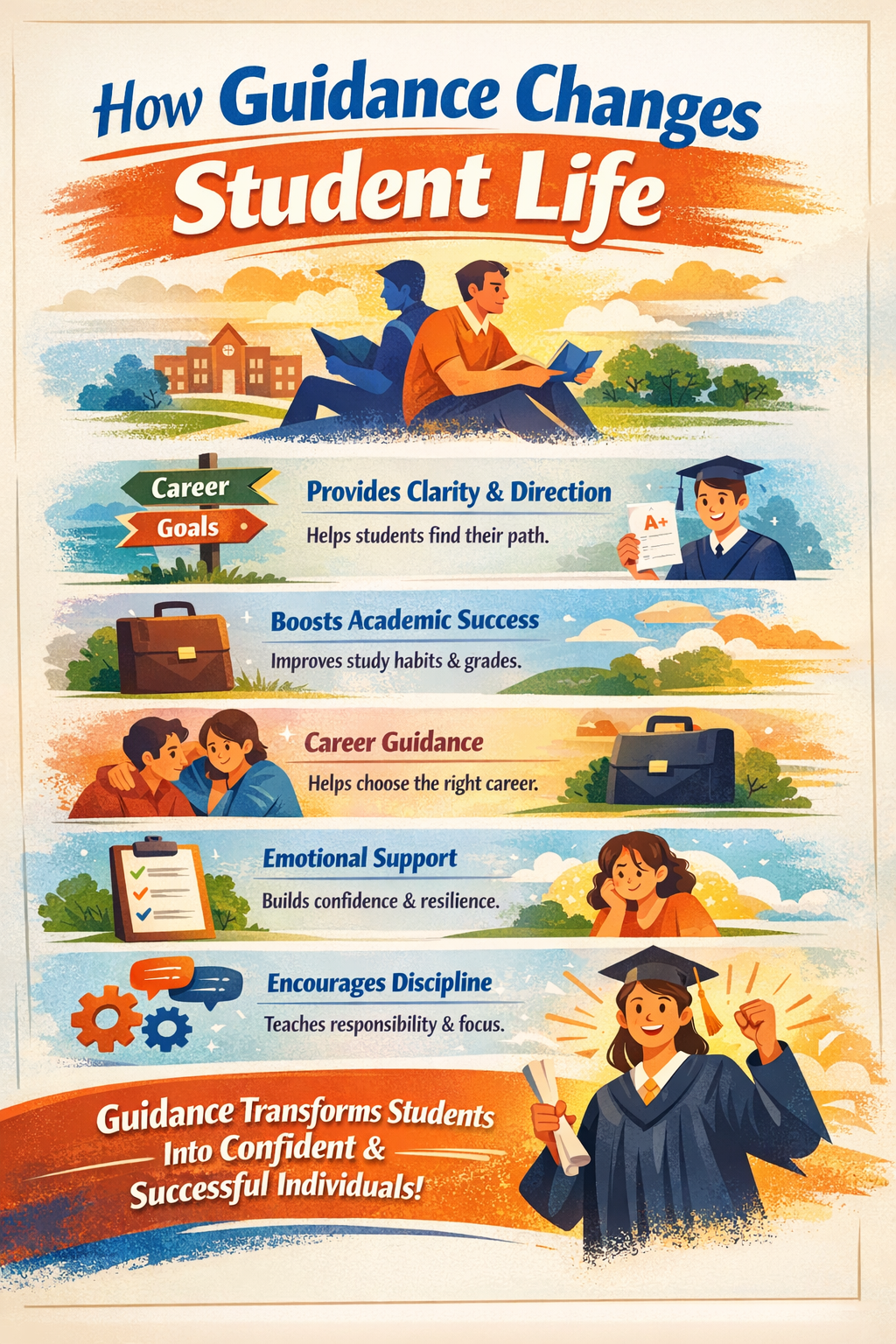
Student life is a journey filled with learning, challenges, decisions, and dreams. From choosing subjects to planning a career, students face many situations where the right direction can make a huge difference. This is where guidance plays a powerful role. Proper guidance not only helps students achieve academic success but also shapes their personality, confidence, and future outlook. The impact of guidance on student life is deep, long-lasting, and often life-changing.
Understanding the Meaning of Guidance
Guidance is the process of helping students understand themselves and the world around them so they can make informed decisions. It can come from parents, teachers, mentors, counselors, or even peers. Guidance is not about forcing decisions but about showing possibilities, offering support, and helping students think clearly.
When students receive guidance, they feel supported rather than confused. They learn to approach problems with logic instead of fear and uncertainty.
Guidance Builds Clarity and Direction
One of the biggest challenges students face is confusion—confusion about subjects, careers, goals, and priorities. Without guidance, students may feel lost or pressured to follow others blindly. Proper guidance helps students understand their strengths, interests, and abilities.
When students know what they want and why they want it, their efforts become focused. This clarity reduces stress and improves performance, both academically and personally.
Role of Guidance in Academic Growth
Academic pressure is a major part of student life. Exams, deadlines, competition, and expectations can feel overwhelming. Guidance helps students learn effective study methods, time management, and goal setting.
A guided student understands how to plan studies smartly instead of studying blindly. Teachers and mentors can help identify weak areas and suggest better learning strategies. As a result, students gain confidence and perform better in exams.
Guidance Shapes Career Decisions
Choosing a career is one of the most important decisions in a student’s life. Without guidance, students may choose careers based on trends, peer pressure, or incomplete information. This can lead to dissatisfaction later in life.
Career guidance helps students explore different options, understand industry requirements, and align choices with their skills and interests. With the right guidance, students make informed career decisions that lead to long-term satisfaction and success.
Emotional Support and Mental Strength
Student life is not only about academics. Emotional challenges such as fear of failure, low self-esteem, anxiety, and stress are common. Guidance provides emotional support during such times.
A mentor or counselor who listens without judgment can help students handle pressure and setbacks positively. Guidance teaches students that failure is not the end but a part of learning. This emotional strength helps students grow into resilient individuals.
Guidance Encourages Discipline and Responsibility
Guided students learn the importance of discipline, consistency, and responsibility. When someone guides a student regularly, the student becomes more accountable for actions and choices.
Guidance helps students develop good habits like punctuality, self-study, and goal tracking. These habits not only help during student life but also prepare them for professional and personal responsibilities in the future.
Boosting Confidence and Self-Belief
Many students struggle with self-doubt. They may underestimate their abilities or fear taking risks. Proper guidance motivates students to believe in themselves.
When a mentor recognizes a student’s potential and encourages growth, it builds confidence. Guided students are more willing to ask questions, explore opportunities, and step out of their comfort zones.
Guidance Teaches Life Skills
Beyond textbooks, guidance teaches essential life skills such as decision-making, communication, problem-solving, and adaptability. These skills are crucial for success in real life.
Students who receive guidance learn how to handle challenges calmly, work in teams, and communicate effectively. These qualities make them well-rounded individuals, not just academically successful students.
Long-Term Impact of Guidance
The impact of guidance does not end with student life. Lessons learned through guidance influence future choices, work ethics, and relationships. Many successful people credit mentors and guides for helping them stay on the right path.
Guidance creates a positive cycle—guided students often become mentors themselves, helping others grow and succeed.
Guidance has the power to transform student life in meaningful ways. It provides direction, builds confidence, supports emotional well-being, and prepares students for the future. In a world full of choices and challenges, guidance acts as a guiding light that helps students move forward with clarity and confidence. When students receive the right guidance at the right time, they not only succeed academically but also grow into strong, responsible, and confident individuals ready to face life’s challenges.

For More Information and Updates, Connect With Us
- Name Sumit singh
- Phone Number: +91-9835131568
- Email ID: emancipationedutech@gmail.com
- Our Platforms:
- Digilearn Cloud
- EEPL Test
- Live Emancipation
- Follow Us on Social Media:
- Instagram – EEPL Classroom
- Facebook – EEPL Classroom
Stay connected and keep learning with EEPL Classroom!
Leave a Reply