Respiration is a vital biological process that takes place in all living organisms. It is the process by which cells break down food, mainly glucose, to release energy required for various life activities such as movement, growth, and repair. There are two main types of respiration: aerobic respiration and anaerobic respiration. While both processes produce energy, anaerobic respiration produces much less energy compared to aerobic respiration. Understanding why this happens is important for students studying biology and life sciences.
What is Aerobic Respiration?
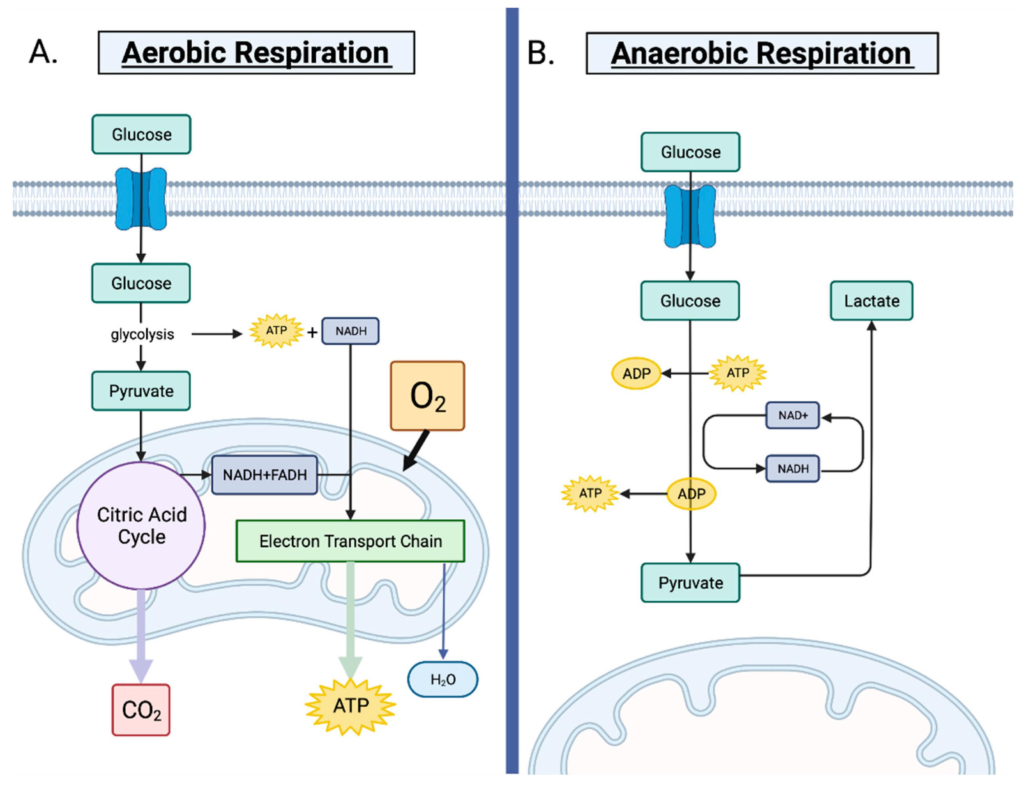
Aerobic respiration is the process of breaking down glucose in the presence of oxygen. This process occurs mainly in the mitochondria of cells and is highly efficient. In aerobic respiration, one molecule of glucose is completely broken down into carbon dioxide and water, releasing a large amount of energy.
The energy released is stored in the form of ATP (adenosine triphosphate), which is the energy currency of the cell. Aerobic respiration produces around 36–38 ATP molecules from one molecule of glucose, making it a highly efficient process.
What is Anaerobic Respiration?
Anaerobic respiration occurs in the absence of oxygen. It takes place in the cytoplasm of the cell and involves the partial breakdown of glucose. Instead of producing carbon dioxide and water, it produces substances like lactic acid (in animals) or alcohol and carbon dioxide (in yeast).
Because glucose is not completely broken down, less energy is released. Anaerobic respiration produces only about 2 ATP molecules per glucose molecule, which is significantly lower than aerobic respiration.
Key Difference in Energy Production
The main reason anaerobic respiration produces less energy is due to the incomplete breakdown of glucose. In aerobic respiration, oxygen helps in fully oxidizing glucose, releasing maximum energy. However, in anaerobic respiration, the absence of oxygen stops the process at an early stage, leaving much of the energy still stored in the by-products.
Reasons Why Anaerobic Respiration Produces Less Energy
1. Incomplete Breakdown of Glucose
In anaerobic respiration, glucose is only partially broken down. This means that a large amount of energy remains unused in the end products like lactic acid or ethanol.
2. Lack of Oxygen
Oxygen plays a crucial role in energy production. It acts as the final electron acceptor in the electron transport chain, allowing the complete release of energy. Without oxygen, this process cannot occur.
3. No Use of Mitochondria
Aerobic respiration takes place in the mitochondria, where advanced processes like the Krebs cycle and electron transport chain occur. Anaerobic respiration happens only in the cytoplasm and does not involve these energy-producing stages.
4. Fewer ATP Molecules
Aerobic respiration produces around 36–38 ATP molecules, while anaerobic respiration produces only 2 ATP molecules. This huge difference shows how inefficient anaerobic respiration is in terms of energy production.
Real-Life Examples
- Muscle cells: During intense exercise, when oxygen supply is limited, muscles switch to anaerobic respiration, leading to the formation of lactic acid and causing fatigue.
- Yeast fermentation: Yeast cells perform anaerobic respiration to produce alcohol and carbon dioxide, which is used in baking and brewing industries.
Importance of Anaerobic Respiration
Although it produces less energy, anaerobic respiration is still important. It allows organisms to survive in conditions where oxygen is not available. It also provides quick energy for short bursts of activity, such as sprinting or heavy lifting.
Limitations of Anaerobic Respiration
- Produces less energy
- Leads to accumulation of toxic by-products like lactic acid
- Not suitable for long-term energy needs
Anaerobic respiration produces less energy than aerobic respiration because it involves the incomplete breakdown of glucose and does not utilize oxygen. While aerobic respiration is more efficient and produces a higher amount of ATP, anaerobic respiration serves as an alternative in the absence of oxygen. Both processes are essential for life, but their efficiency and roles differ significantly. Understanding these differences helps us appreciate how our bodies and other living organisms manage energy under different conditions.
For More Information and Updates, Connect With Us
- Name Survi kumari
- Phone Number: +91-7488713635
- Email ID: survi.eeplclassroom@gmail.com
- Our Platforms:
- Digilearn Cloud
- EEPL Test
- Live Emancipation
- Follow Us on Social Media:
- Instagram – EEPL Classroom
- Facebook – EEPL Classroom
Stay connected and keep learning with EEPL Classroom!

Leave a Reply