Semiconductor electronics is one of the most important fields in modern science and technology. It is the foundation of almost all electronic devices we use today, such as mobile phones, computers, televisions, and even advanced systems like satellites and medical equipment.
In simple terms, semiconductor electronics deals with materials and devices that control the flow of electric current. These materials are neither perfect conductors nor perfect insulators, but something in between.
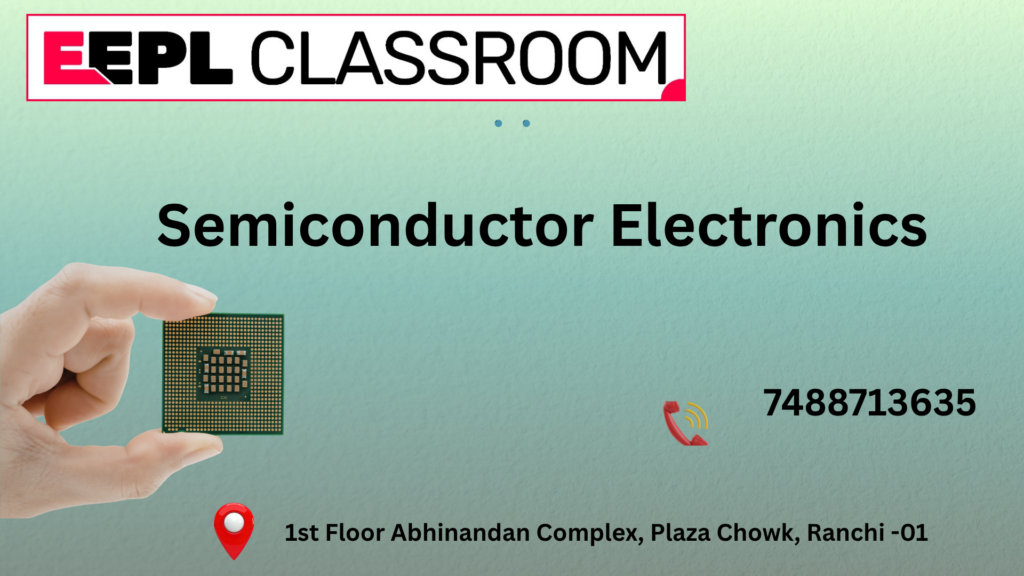
What is a Semiconductor?
A semiconductor is a material whose electrical conductivity lies between a conductor and an insulator. This means it can sometimes allow electricity to flow and sometimes block it, depending on conditions like temperature or impurities.
The most commonly used semiconductor material is silicon, followed by germanium.
Examples of Semiconductors:
- Silicon (Si)
- Germanium (Ge)
- Gallium arsenide (GaAs)
Silicon is widely used because it is abundant, stable, and cost-effective.
Why Are Semiconductors Important?
Semiconductors are important because they form the basis of modern electronics. Without semiconductors, devices like smartphones, computers, and digital systems would not exist.
They are used to:
- Control electrical signals
- Amplify signals
- Convert energy
- Store and process information
In short, semiconductors are the backbone of the digital world.
Properties of Semiconductors
Semiconductors have unique properties that make them useful:
- Their conductivity increases with temperature
- They can be modified by adding impurities (doping)
- They have both electron and hole charge carriers
- They behave as conductors or insulators depending on conditions
These properties make semiconductors highly flexible for electronic applications.
Types of Semiconductors
Semiconductors are mainly classified into two types:
1. Intrinsic Semiconductors
These are pure semiconductors without any impurities.
Characteristics:
- Equal number of electrons and holes
- Low conductivity
- Pure silicon or germanium
2. Extrinsic Semiconductors
These are semiconductors that are doped with impurities to improve conductivity.
They are further divided into:
a) N-type Semiconductor
- Doped with elements like phosphorus or arsenic
- Has extra electrons
- Electrons are majority charge carriers
b) P-type Semiconductor
- Doped with elements like boron or gallium
- Has more holes (positive charge carriers)
- Holes are majority charge carriers
P-N Junction
A P-N junction is formed when a P-type semiconductor is joined with an N-type semiconductor. It is the basic building block of electronic devices.
At the junction:
- A depletion region is formed
- It allows current to flow in one direction only
This property is used in diodes and other electronic components.
Semiconductor Devices
Semiconductors are used to make many important electronic devices:
1. Diode
A diode allows current to flow in only one direction. It is used in rectifiers and signal processing.
2. Transistor
A transistor is used to amplify or switch electronic signals. It is a key component in computers and mobile phones.
3. Integrated Circuit (IC)
An IC is a small chip that contains many electronic components. It is used in almost all modern electronic devices.
Applications of Semiconductor Electronics
Semiconductor electronics is used in almost every field:
Consumer Electronics
- Smartphones
- Laptops
- Televisions
- Cameras
Communication Systems
- Mobile networks
- Satellites
- Internet devices
Medical Field
- MRI machines
- X-ray systems
- Monitoring devices
Industrial Use
- Automation systems
- Robotics
- Power control systems
Advantages of Semiconductors
Semiconductors offer many benefits:
- Small size and lightweight devices
- Low power consumption
- High efficiency
- Fast processing speed
- Reliable performance
These advantages make them essential for modern technology.
Future of Semiconductor Electronics
The future of semiconductor technology is very bright. With advancements in nanotechnology and artificial intelligence, semiconductors are becoming faster, smaller, and more powerful.
Future developments may include:
- Faster microprocessors
- Advanced quantum computing chips
- More efficient energy devices
- Smarter electronic systems
Semiconductors will continue to drive innovation in science and technology.
Semiconductor electronics is the backbone of the modern digital world. It enables the creation of almost all electronic devices we use today. From simple diodes to powerful microprocessors, semiconductors play a vital role in shaping technology.
Understanding semiconductor electronics helps us appreciate how modern devices work and how technology continues to evolve. It is one of the most important fields in electronics and engineering, with endless possibilities for the future.
For More Information and Updates, Connect With Us
- Name Survi kumari
- Phone Number: +91-7488713635
- Email ID: survi.eeplclassroom@gmail.com
- Our Platforms:
- Digilearn Cloud
- EEPL Test
- Live Emancipation
- Follow Us on Social Media:
- Instagram – EEPL Classroom
- Facebook – EEPL Classroom
Stay connected and keep learning with EEPL Classroom!

Leave a Reply